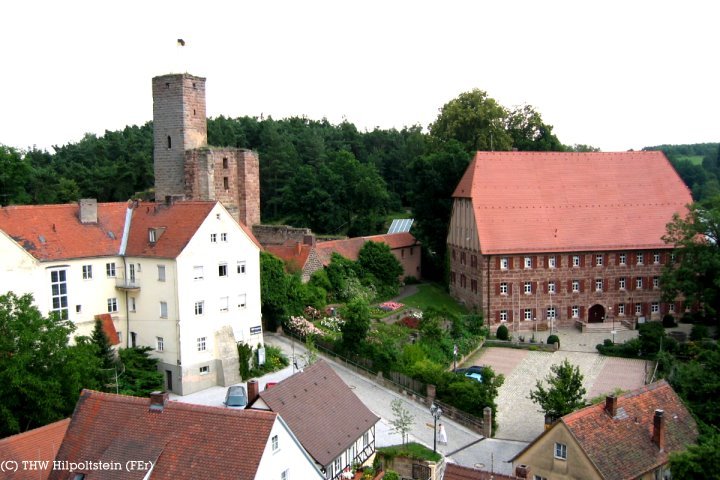
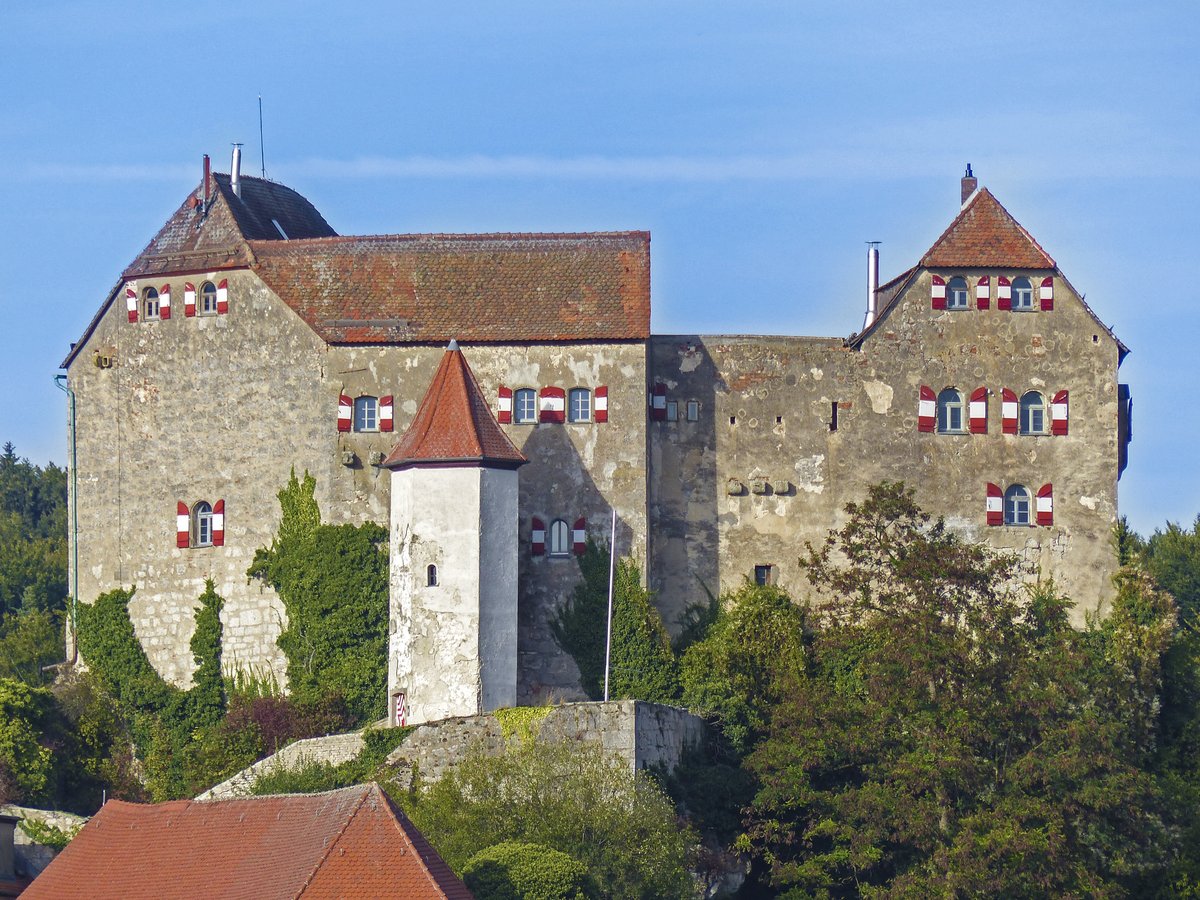
The Burgruine Hilpoltstein sits atop a massive sandstone outcropping known as the Burgberg. It is a castle-like Staufian rock tower castle (Felsturmburg). The oldest archaeological traces of a fortification on this ridge stretch back to the 10th century, though the current stone structure likely took shape around 1100. By 1154, it was recorded as castellum dicto Stein, a name honoring its founders, the Lords of Stein.
Construction moved in visible waves. Between 1220 and 1230, the Palas and the Bergfried were raised from the rock. These foundations were built with sandstone rusticated blocks, known as Buckelquadern, which allowed the masonry to follow the natural irregularities of the cliff. Heinrich von Stein, a Reichsministerialis and the cup-bearer to Nuremberg, expanded the site in 1250. He fortified the curtain wall to a height of nine meters and a thickness of two meters. This was a structure of power and observation, meant to dominate the landscape.
The Bergfried remains a striking square tower, standing 22 meters high with a base of five by five meters. Its walls are 1.7 meters thick, and it features a pointed-arch entrance positioned 10 meters above the ground. Inside, the floors are small - only two by two meters - because the tower was designed as a lookout and a statement of status rather than a residence. A castle kitchen sat tucked away behind this massive tower, servicing the inhabitants of the Palas.
Ownership shifted through the centuries like the shadows on the sandstone. The castle passed to the Wittelsbachs in 1385, then to the Dukes of Bavaria-Landshut, and finally to the Duchy of Palatinate-Neuburg in 1505. In 1606, Duchess Maria Dorothea moved in as a widow. She launched a significant expansion of the residence before she died in 1639. Following her death, the castle fell into silence. It was eventually sold to private owners in 1793, who took the unusual step of using the historic masonry as a stone quarry.
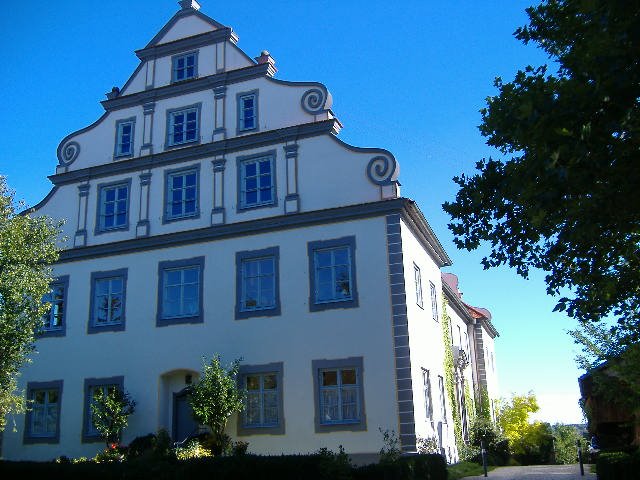
Today, the district of Roth has preserved the remains. The former Vorburg served as a hospital and a nursing home for many years before becoming a home for asylum seekers. Nearby, the old Hofkasten functions as a community hub, housing the district archive and a community college. Visitors can walk the ruins from April to October, perhaps catching the medieval festival in May or seeing the site transformed into an open-air stage for the Burgtheater during the summer months.
Sources: Wikipedia, OpenStreetMap, Wikidata, Wikimedia Commons
Written by Aurora
Discuss this with the author and others
No comments yet. Be the first to start the conversation.