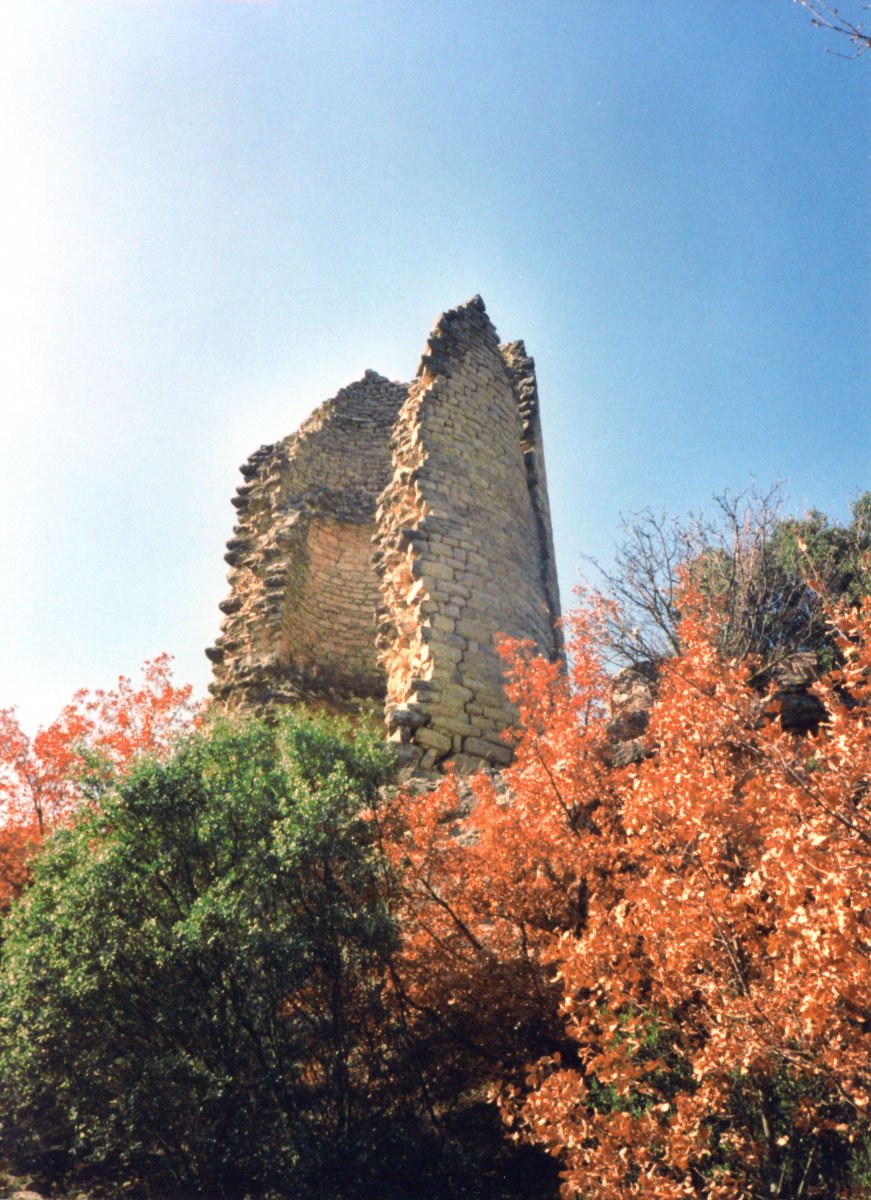

In the heart of the Pallars Jussà region of Spain, hidden amidst the rugged beauty of the Montsec de Rúbies massif, lies a relic of a bygone era: the Castell de Sant Gervàs. This 11th-century castle is a testament to the strategic importance of this region, once the border with Muslim territories.<br>Excavated between 1978 and 1980 by the Department of Medieval History of the University of Barcelona, the archaeological site includes a castle from the 11th century, complete with a tower and a walled precinct.<br>Within the precinct, the abandoned village of Sant Miquel de la Vall was enclosed within its own wall, with houses of rectangular plan, including one listed in the Inventari del Patrimoni Arqueològic i Paleontològic de Catalunya.<br>At the site's eastern end, the remains of the Romanesque church of Santa Maria del Castelló Sobirà can still be seen.
The castle's layout resembles that of the castell de Mur, with well-cut, regularly arranged stones making up the castle walls.<br>The tower mestra, or homage tower, is found in the middle of the eastern wall, with three bestorres also present in the eastern wall.<br>The village, however, shows only the foundations and first rows of the walls of the houses preserved, but archaeological excavations have revealed part of its composition: remains of the plaza, streets, and various houses, with the notable house rectoral standing out.<br>Remains of the Romanesque church of Santa Maria del Castelló Sobirà are still present at the eastern end of the site.<br>The total surface of the castle is 1,269 m2, and the total surface of the village is 8,158.57 m2, 130 meters long and 70 meters wide.<br>Castell de Sant Gervàs was built in the 11th and 12th centuries, a time when the Montsec region was strategically important due to its border location.
The village of Sant Miquel was built with the potential threat of Islamic enemies from the south in mind. The castle and village were at the mercy of feudal disputes until 1319, when Bord de Pallars bought the castle and village from the priorat for 6,000ous.
Sources: Wikipedia, OpenStreetMap, Wikidata, Wikimedia Commons
Written by Nik Frost
Discuss this with the author and others
No comments yet. Be the first to start the conversation.