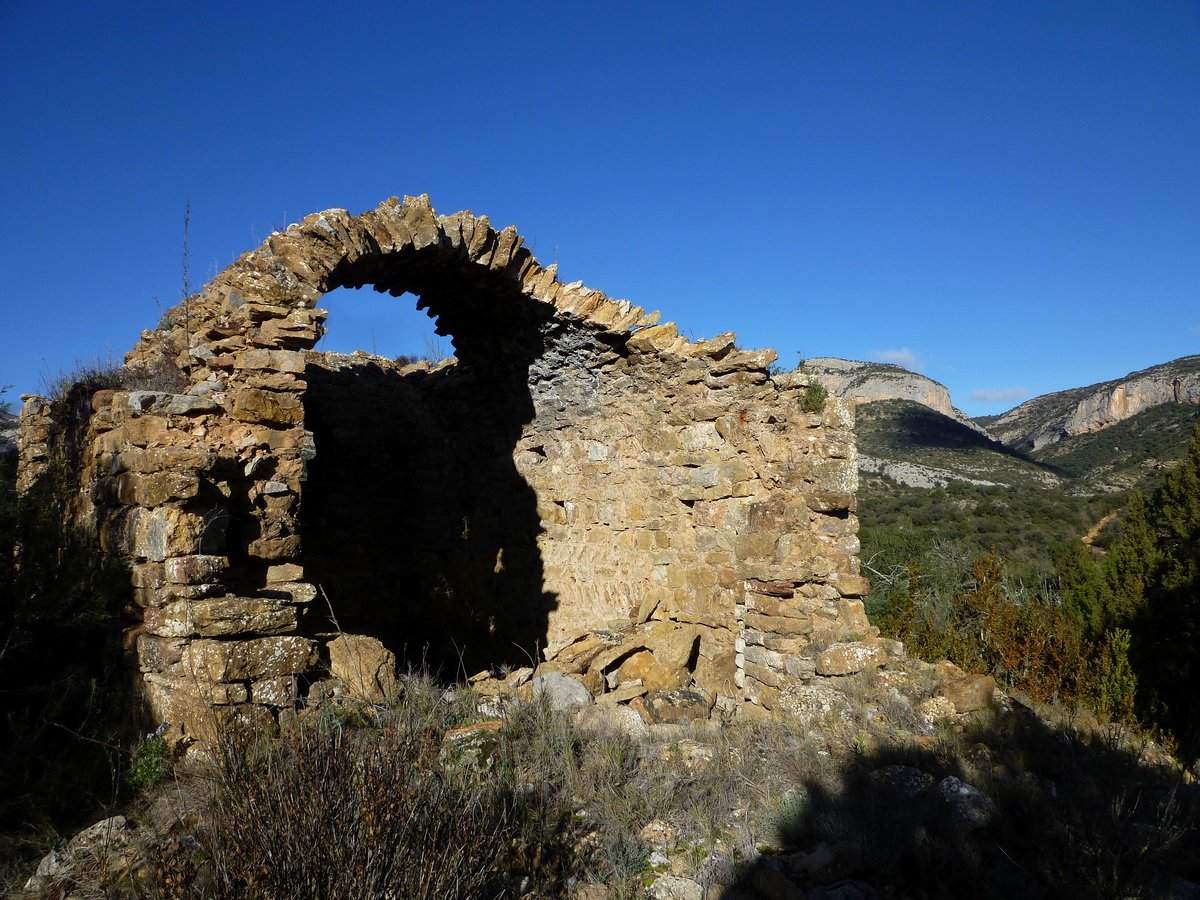

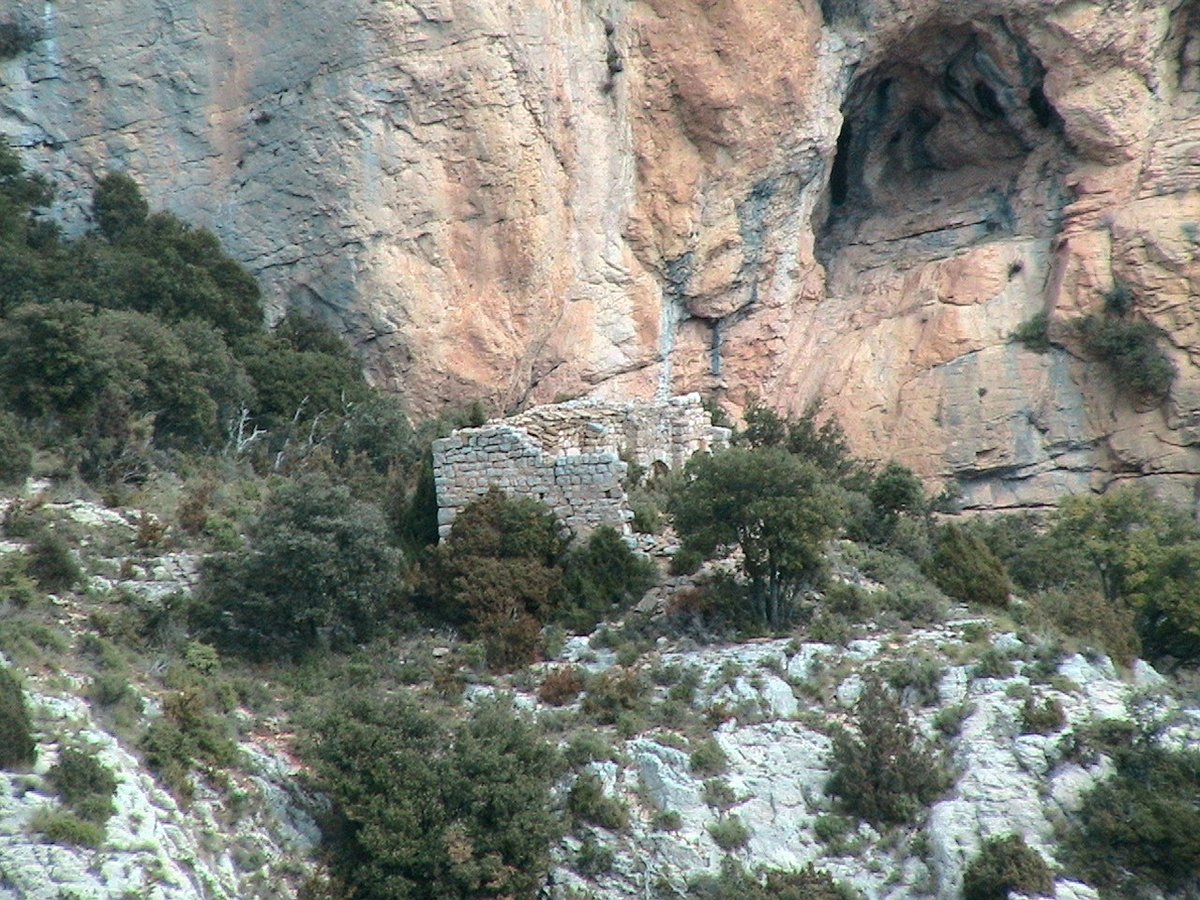
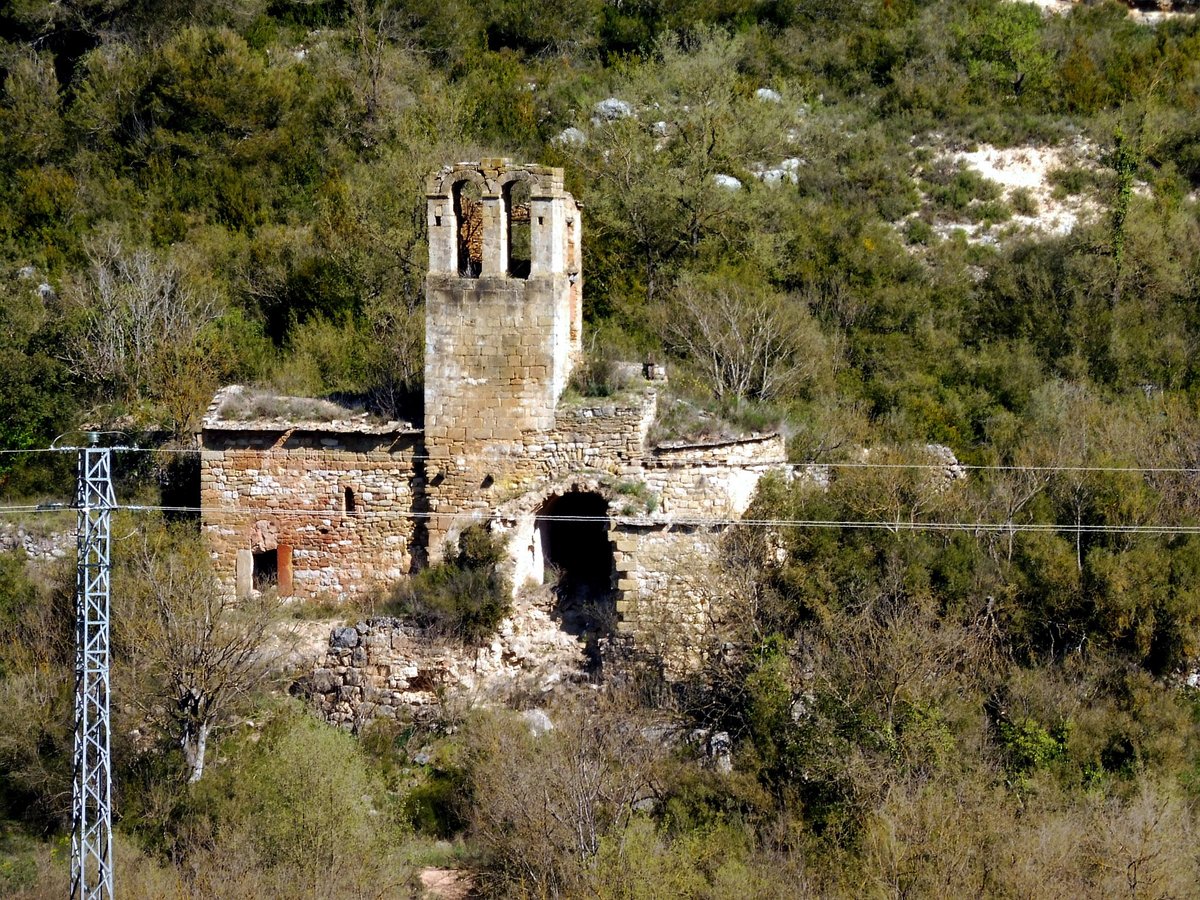
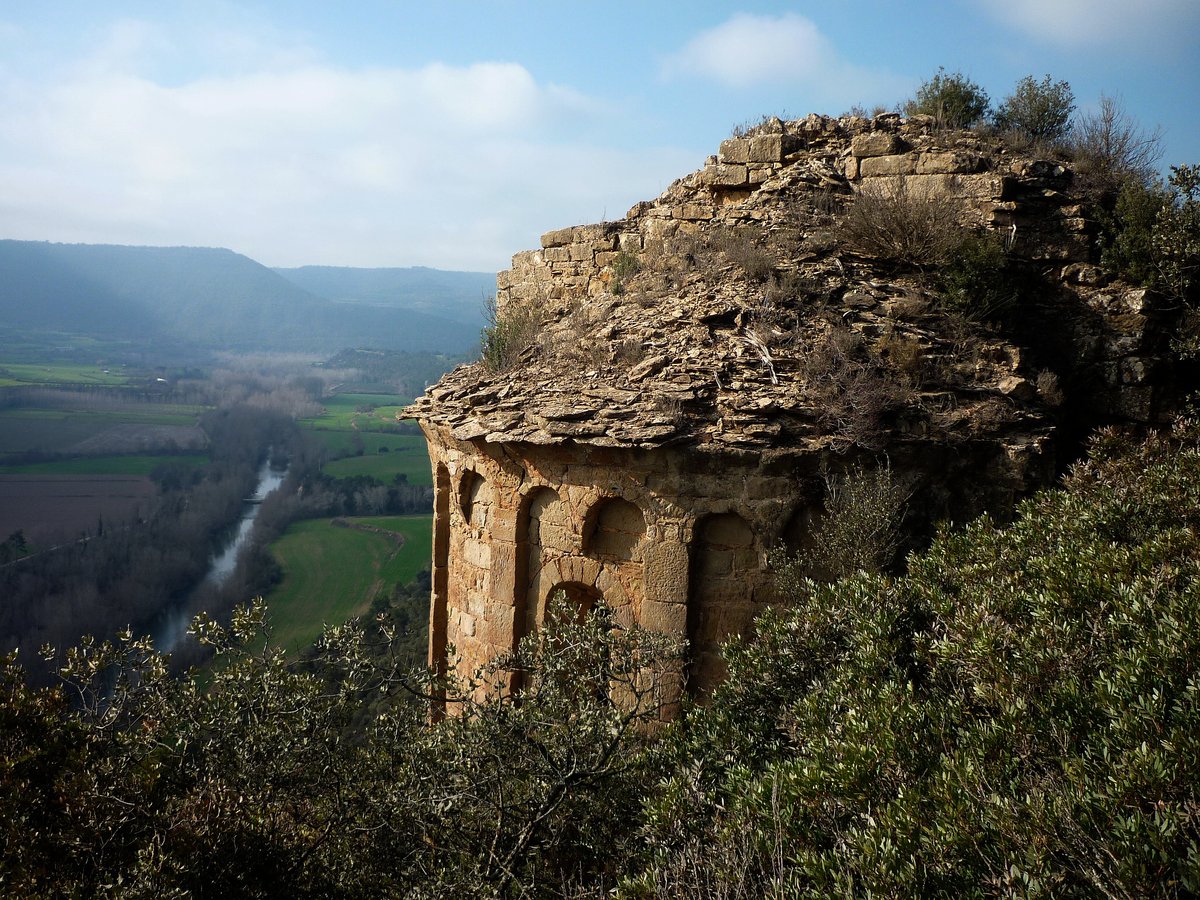
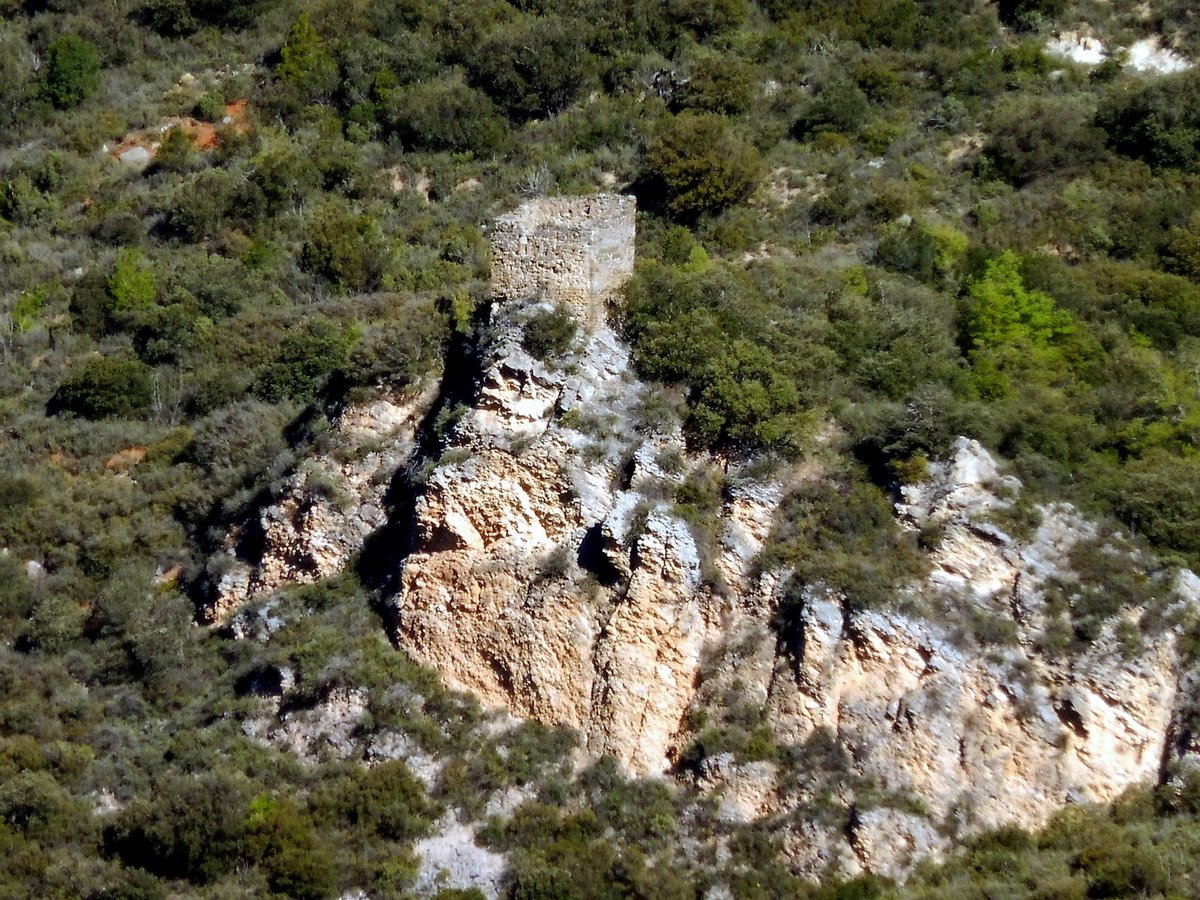
Santa Cecília de la Fabregada stands alone on a hilltop along the southern slopes of the Serra de lo Tamany, at the foot of the Roca Roja, overlooking the barranc de Cuba. While the parish of Sant Sadurní dates back to 1094, no early records exist for this specific site. It likely assumed responsibility for the area only after Sant Sadurní ceased to be used.
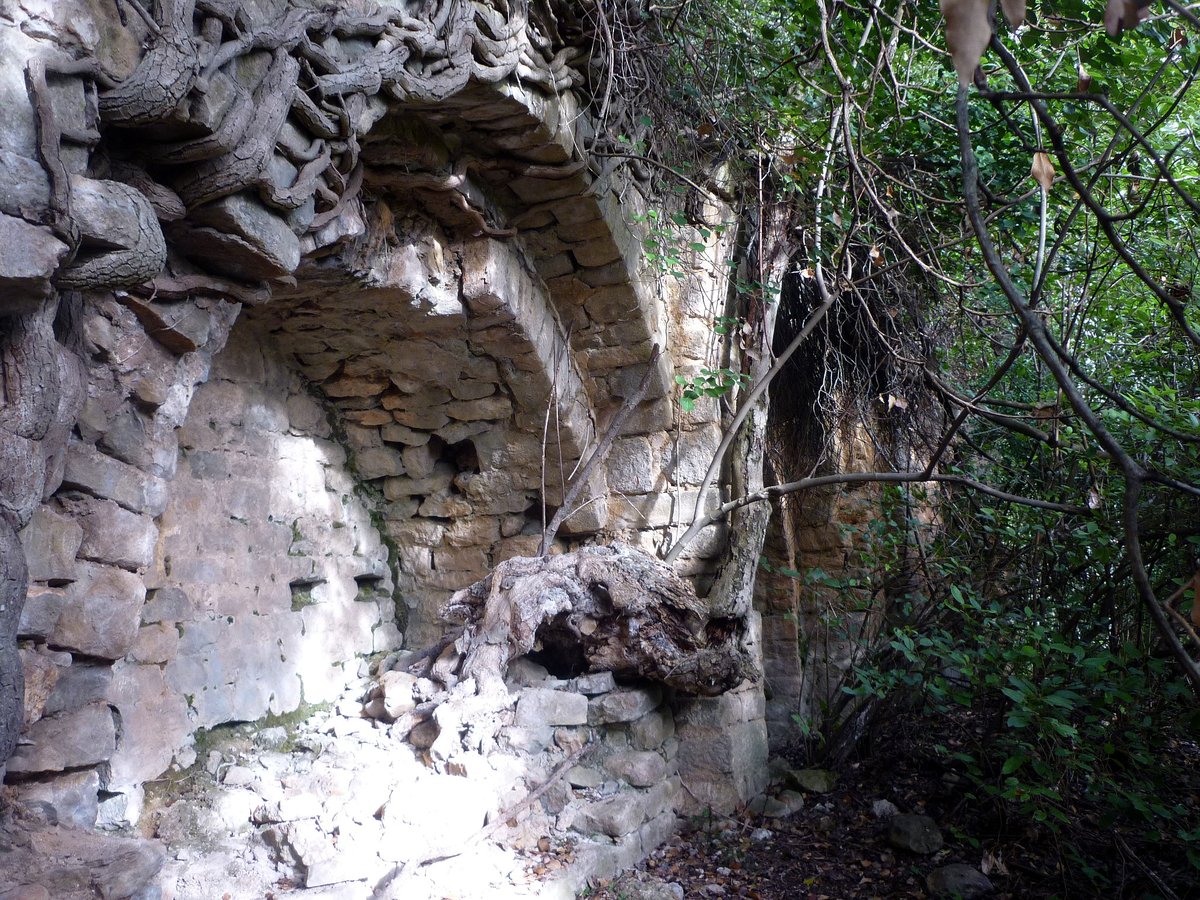
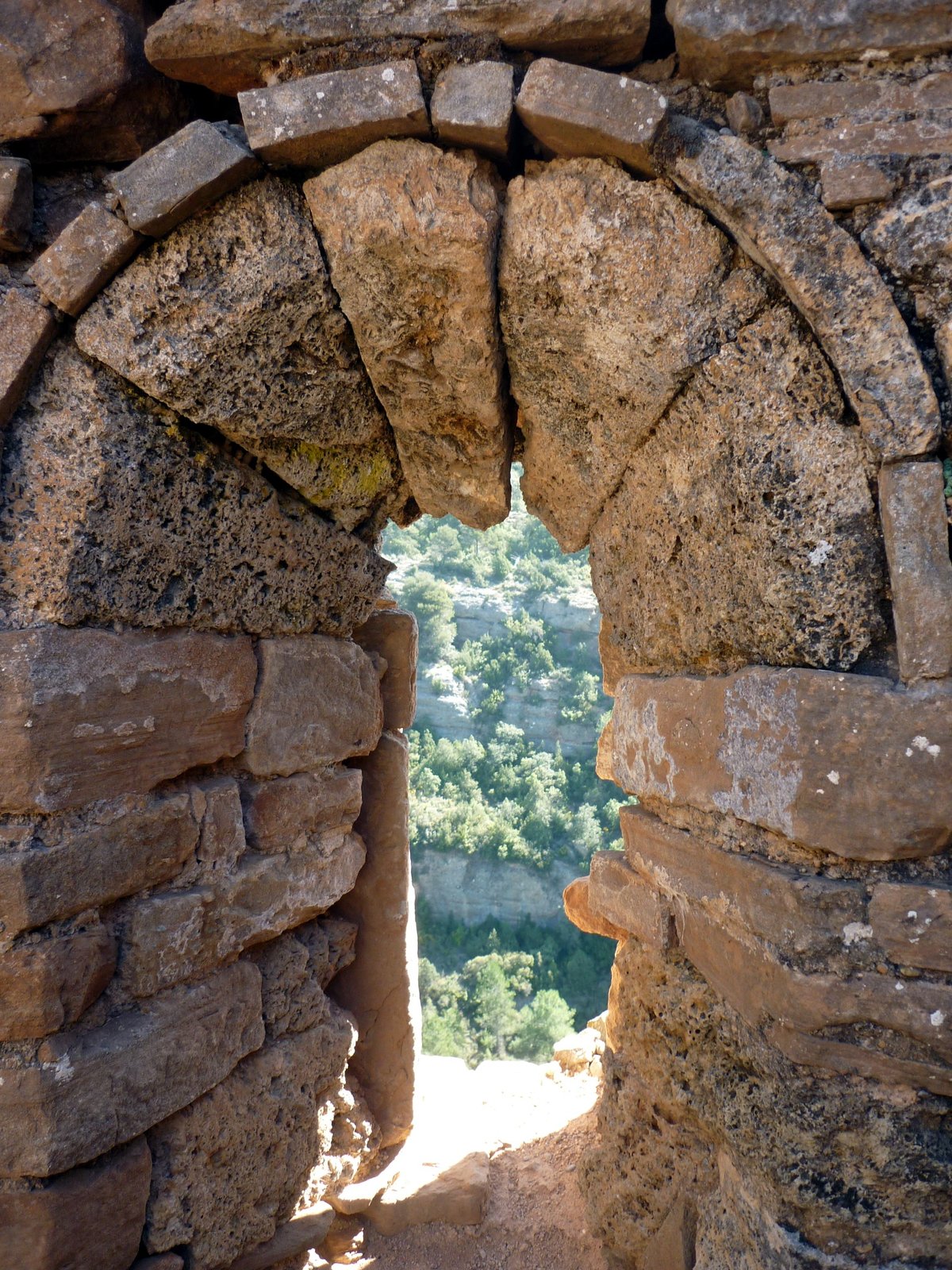
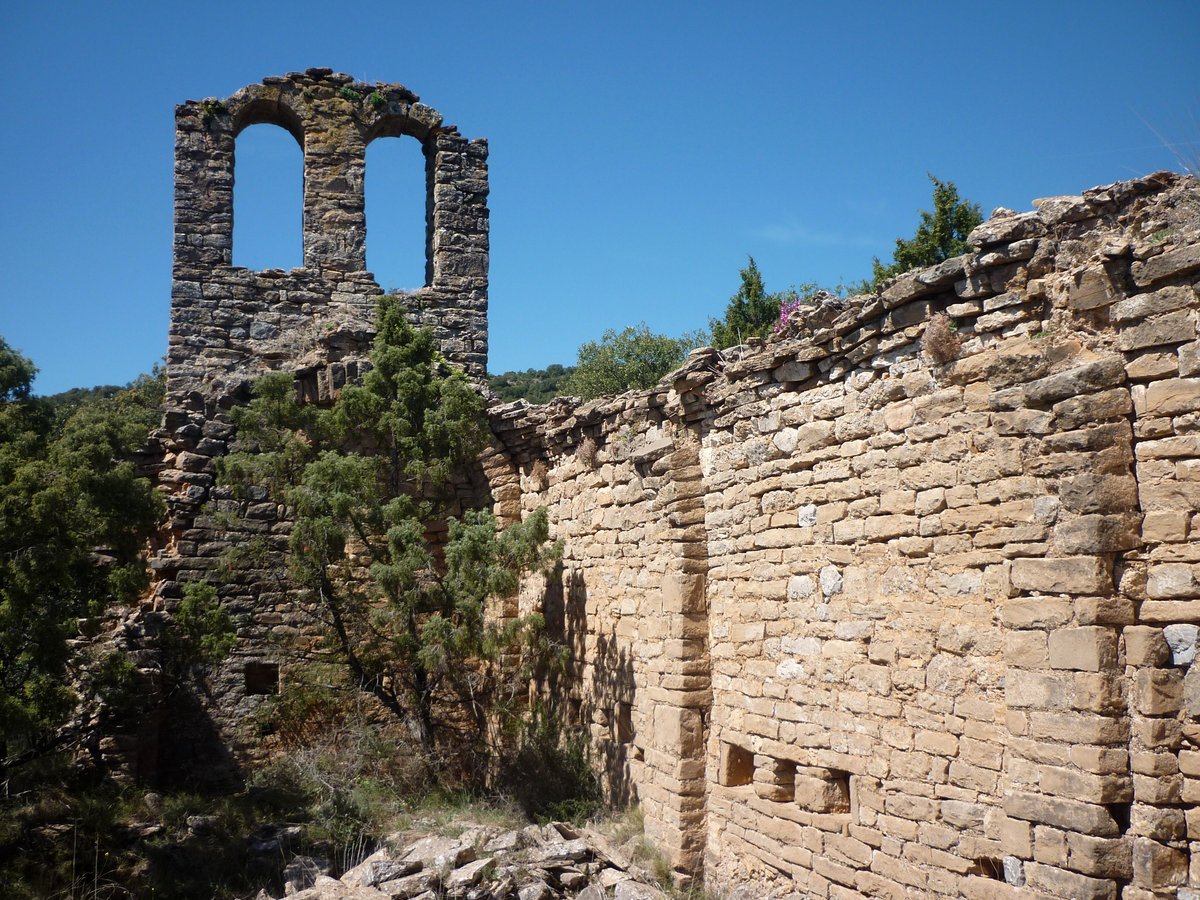
Historical observations from the mid 17th century already highlighted the chapel's role within the Fabregada district. The building consists of a single nave under a barrel vault that has partially collapsed at the ends. The masonry is made of well-dressed quarry stone arranged in regular horizontal rows. One can still observe the herringbone pattern of the opus spicatum technique at the base of the western wall, which appears to be a later addition.
Subtle details invite us to explore its humble past. A cross-shaped window marks the western facade while three rectangular niches are carved into the interior wall. The construction techniques suggest the 11th century despite a lack of ornate decoration.
Sources: Wikipedia, OpenStreetMap, Wikidata, Wikimedia Commons
Written by Nik Frost
Discuss this with the author and others
No comments yet. Be the first to start the conversation.