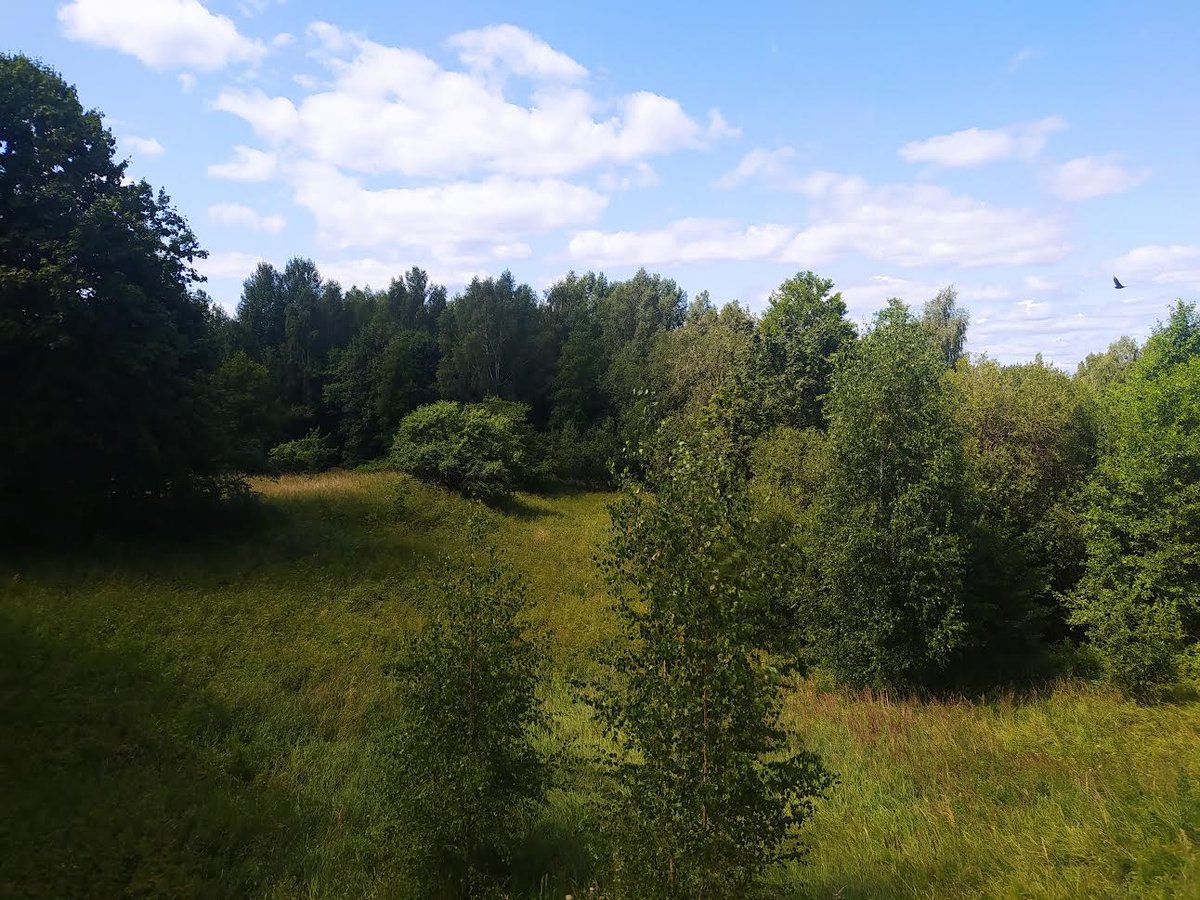
The Čeberakai hillfort, a historical site situated in the Visaginas municipality of Lithuania, lies atop a hill with an elevation of 11 meters and a flat top of 6 meters. Once known as Beržalotas, Kumša, Barankiškė, and Šlininė, this archaeological site has eventually been identified as either Pasamanės piliakalnis or Čeberaku piliakalnis. Its oval enclosure, measuring 60x20 meters, houses cultural layers holding fragments of burned stones and ceramics. A 0.5-meter high wall surrounds the enclosure's inner perimeter, about 10 meters wide near the ground, while a 1-meter deep terrace lies approximately 1.5 meters below the wall. Other notable features include a closed-roofed corridor, a 2-meter-long groove carved into a stone, and a 12-meter-wide terrace with a 2-meter-high access wall.
Sources: Wikipedia, OpenStreetMap, Wikidata, Wikimedia Commons
Written by Nicolo Ciampini
Discuss this with the author and others
No comments yet. Be the first to start the conversation.