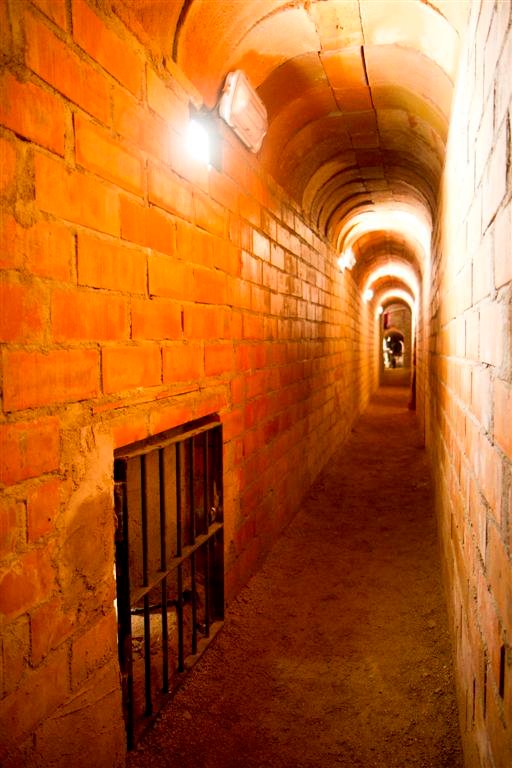

Beneath the houses and streets of El Masnou, Spain, lies a subterranean network of canals, built over centuries to collect and channel the water that seeps through the subsoil. The mines were essential for the water distribution network of the population, solving the problem of water scarcity. Excavated since the 18th century, they drew and channeled the water that seeped through the subsoil. During the Spanish Civil War, some mines also worked as anti-aircraft shelters.
A mine consists of a water spring or underground well, a set of galleries with conduits to channel the water, and a pond to collect it. Today, there are three mines that are still in operation: the Malet, the Cresta, and the Murot-Patrana. The Malet mine is the one that is visited during the tour, and covers a subterranean gallery of 43.50 meters that was reinforced to facilitate access and ensure safety. The old butcher’s shop located on plaza d'Ocata was rehabilitated as the reception center and center of interpretation of the mine of water.
Visitors can see a museum exhibition with a recreation of the exit or courtyard of a house of the village with the typical washhouse, rebuilt from original pieces. There is also a collection of objects related to the construction of this network for the supply of water and the video 'Les mines d'aigua del Masnou', a patrimony of all and of all. Tours to the mine and the center of interpretation are managed by Masnou's Municipal Nautical Museum.
Sources: Wikipedia, OpenStreetMap, Wikidata, Wikimedia Commons
Written by Nik Frost
Discuss this with the author and others
No comments yet. Be the first to start the conversation.