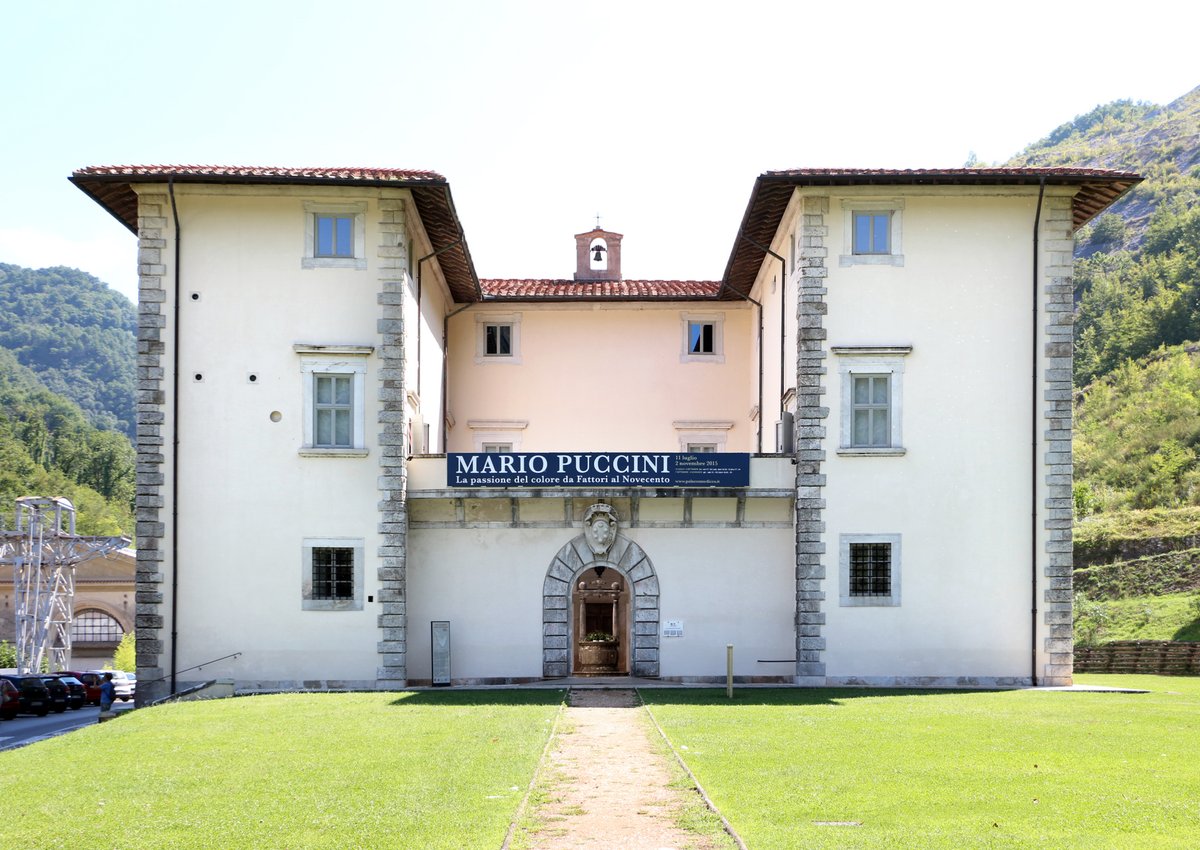

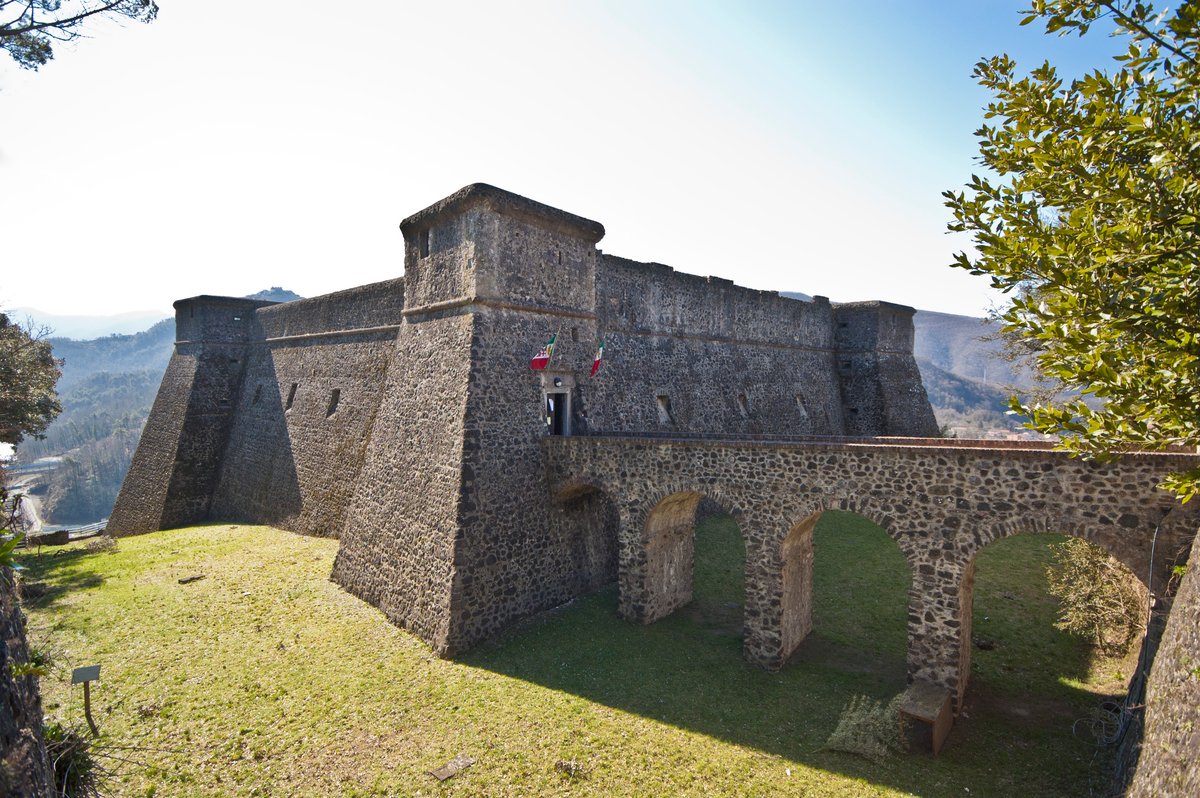
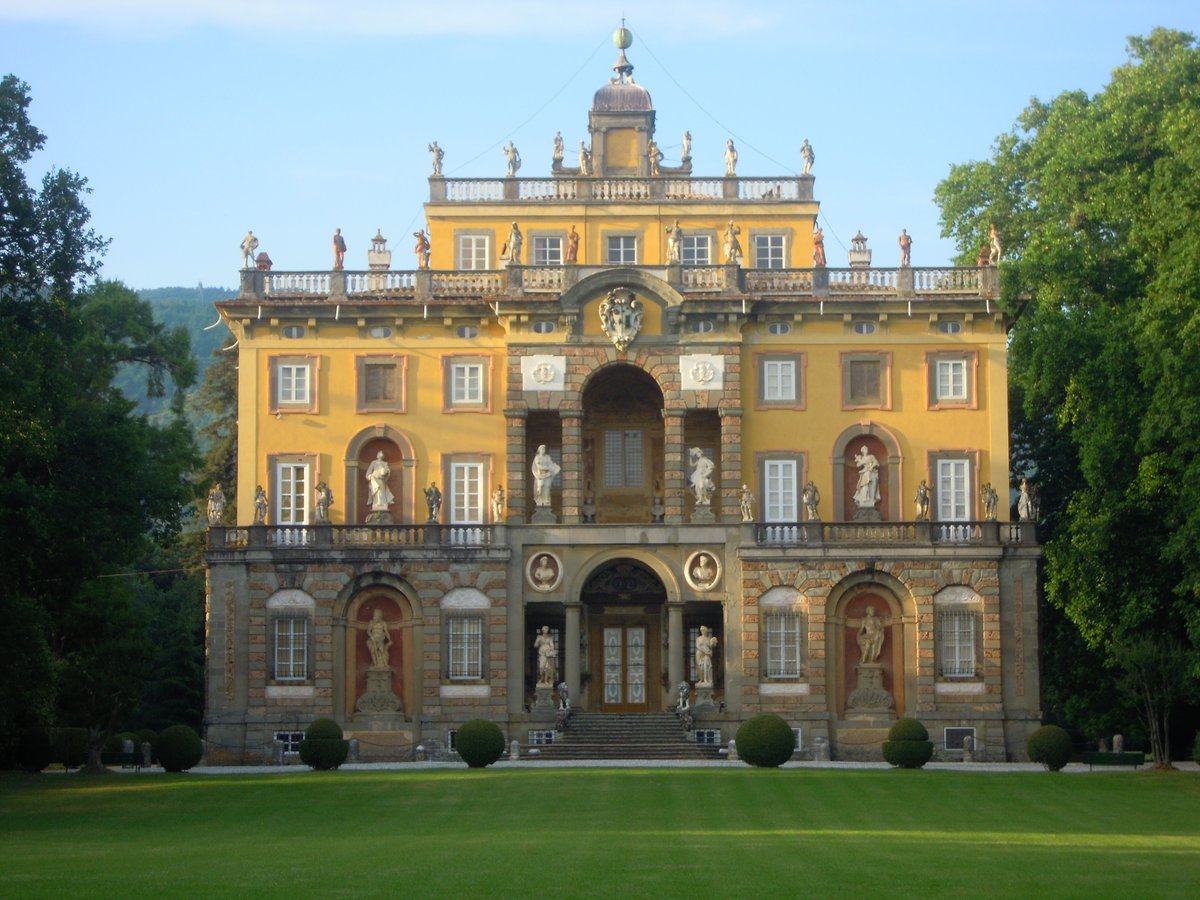
On the banks of the rivers Serra and Vezza, the palazzo di Seravezza took shape between 1560 and 1564, reflecting Cosimo I de' Medici's strategic vision. While its architect remains debated, with some attributing it to Bartolomeo Ammannati and others to Bernardo Buontalenti, the building features a solid and compact structure with corners and embrasures on the ground floor, functioning as a defensive outpost.
The villa included a chapel, grand ducal stables, an orchard, and a geometric Italian garden. Situated near the river Vezza for summer coolness, it was a frequent destination for members of the Medici court, including Bianca Cappello and Cristina di Lorena. The nearby area was also strategically important for marble and silver mining, which Cosimo I revived. The villa passed to the Lorena in the 18th century, when a portion was used for the administrative offices and warehouses of an ironworks built in 1786. After the ironworks closed in 1835, it returned to being a grand ducal residence.
Today, the palazzo is home to the Museo del Lavoro e delle Tradizioni Popolari della Versilia Storica, the Sirio Giannini community library, and the historical archive. It also hosts exhibitions of modern and contemporary art.
Sources: Wikipedia, OpenStreetMap, Wikidata, Wikimedia Commons
Written by Nicolo Ciampini
Discuss this with the author and others
No comments yet. Be the first to start the conversation.