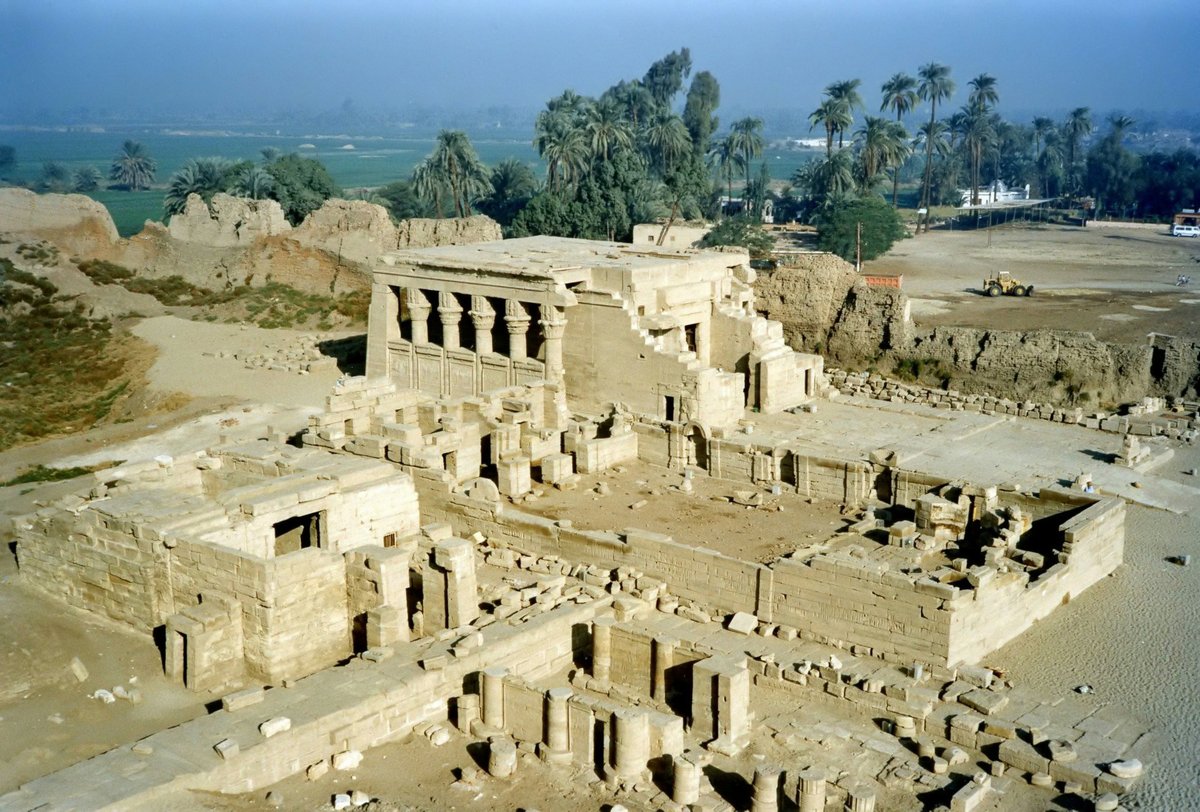

The Temple of Hathor dominates the Dendera temple complex, a site located about 2.5 kilometres south-east of Dendera, Egypt. While the area saw building activity as early as 2250 B.C.E, the current temple structure began construction in 54 B.C.E. during the late Ptolemaic period. The Romans later added to these structures, with the hypostyle hall built under Tiberius and the names of Domitian and Trajan appearing in offering scenes on the propylaeum.
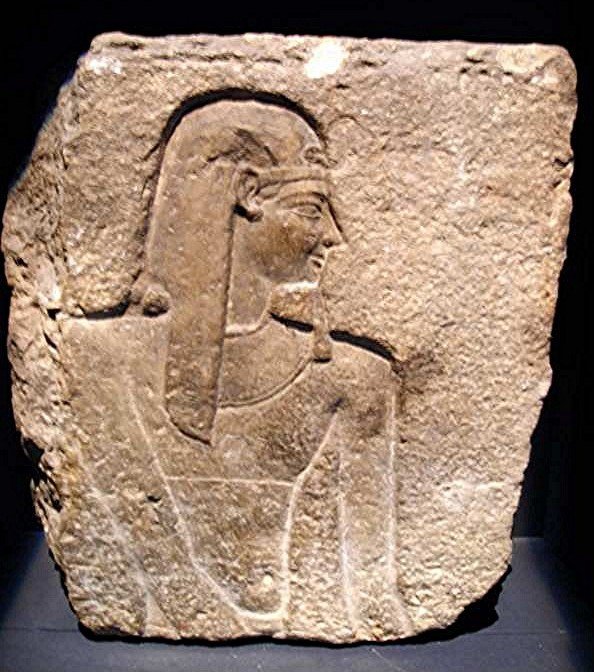
The Hathor temple's subterranean tombs contain twelve chambers used for storing vessels and divine iconography. In the second chamber, a relief depicts Pepi I offering a statuette of the God Ihy to four images of Hathor. Nearby, a crypt accessible from the Throne Room contains jewelry and offerings for the gods from the reign of Ptolemy XII.
The complex also features the 'Dendera light' reliefs and the famous Dendera zodiac. The zodiac, a relief containing images of the zodiac system still recognized today, was removed from the temple ceiling in 1820 by the French and replaced with a copy. The original relief is now held in the Louvre.
Other notable structures in the complex include the mammisi of Nectanebo II. This building functioned similarly to a Roman bathhouse, but strictly for bathing and an overnight stay to manifest healing dreams. The area is surrounded by a sizable mudbrick wall and stands near the Dendera Necropolis, which dates back to the Early Dynastic Period. Today, the complex remains one of the best-preserved temple complexes of ancient Egypt.
Sources: Wikipedia, OpenStreetMap, Wikidata, Wikimedia Commons
Written by Mutabor
Discuss this with the author and others
No comments yet. Be the first to start the conversation.