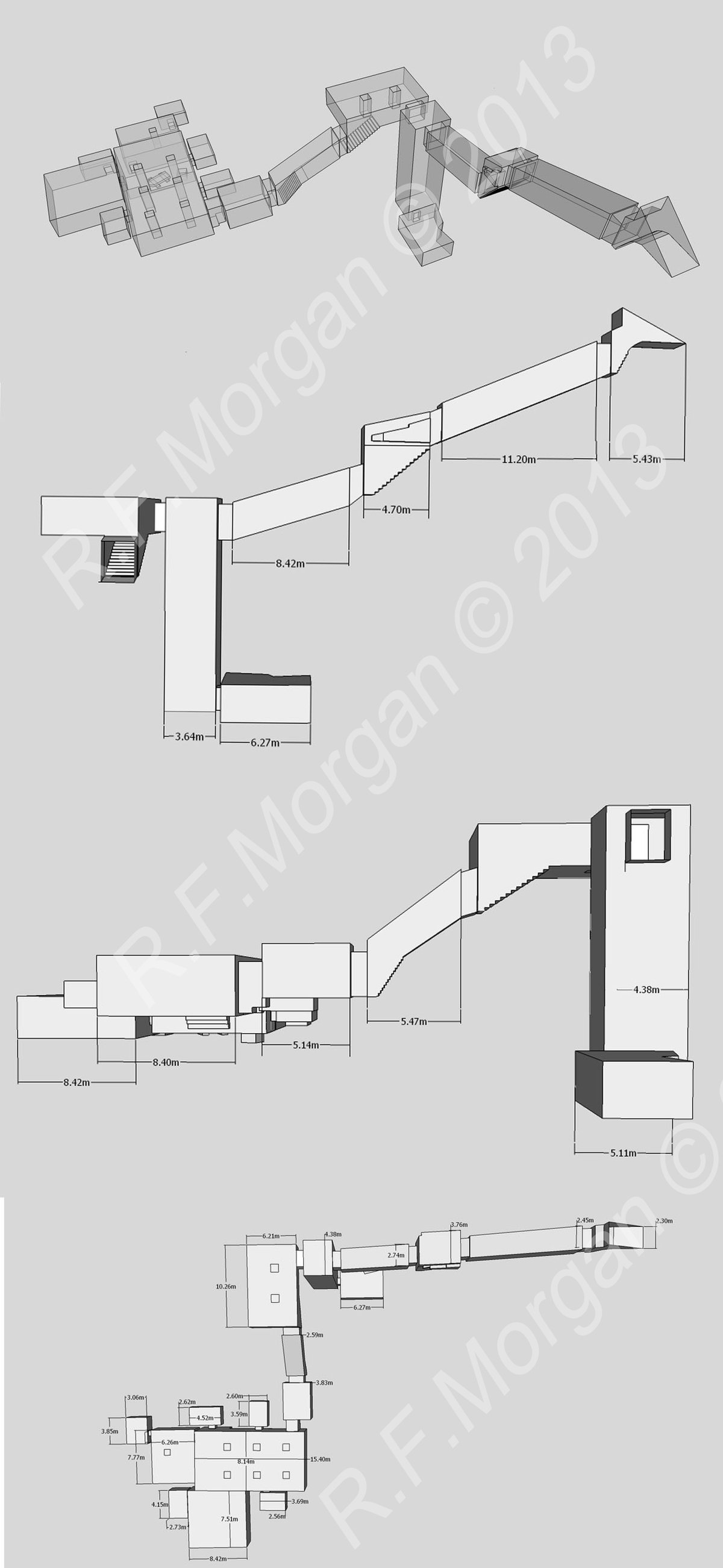

The tomb WV22, also known as KV22, was the burial place of Amenhotep III, a pharaoh of the Eighteenth Dynasty, in the western arm of the Valley of the Kings. What makes his rest unique is the two subsidiary burial chambers for the pharaoh's wives Tiye and Sitamen, the latter of whom was also his daughter. The tomb was officially discovered in August 1799 by Prosper Jollois and Édouard de Villiers du Terrage, engineers with Napoleon's expedition to Egypt, though it may have been open for some time before they arrived.
The first excavation of the tomb was carried out in the early 1900s by Theodore M. Davis, while the first documented clearance was performed by Howard Carter in 1915. While the sarcophagus trough is missing from the tomb, the lid was reconstructed from shattered fragments. The lid was once covered in gold leaf and features a vertical band of text and eight horizontal bands, with the underside decorated with a winged figure of Nut. The tomb's layout and decoration follow those of the king's predecessors, Amenhotep II and Thutmose IV, but the decoration is much finer in quality. Several images of the pharaoh's head were cut out in 1828 and can be seen today in the Louvre.
The tomb is situated in a bay on the east side of the wadi, 2 kilometres from the entrance to the Western Valley. Unlike earlier tombs, it is not cut into the solid rock at the cliff base but in the talus slope away from it. After his death in Year 38 or 39 of his reign, Amenhotep III was interred with a range of burial goods similar to those of Tutankhamun, likely inside nested wooden coffins within a large cartouche-shaped sarcophagus made of granite.
Sources: Wikipedia, OpenStreetMap, Wikidata, Wikimedia Commons
Written by Mutabor
Discuss this with the author and others
No comments yet. Be the first to start the conversation.