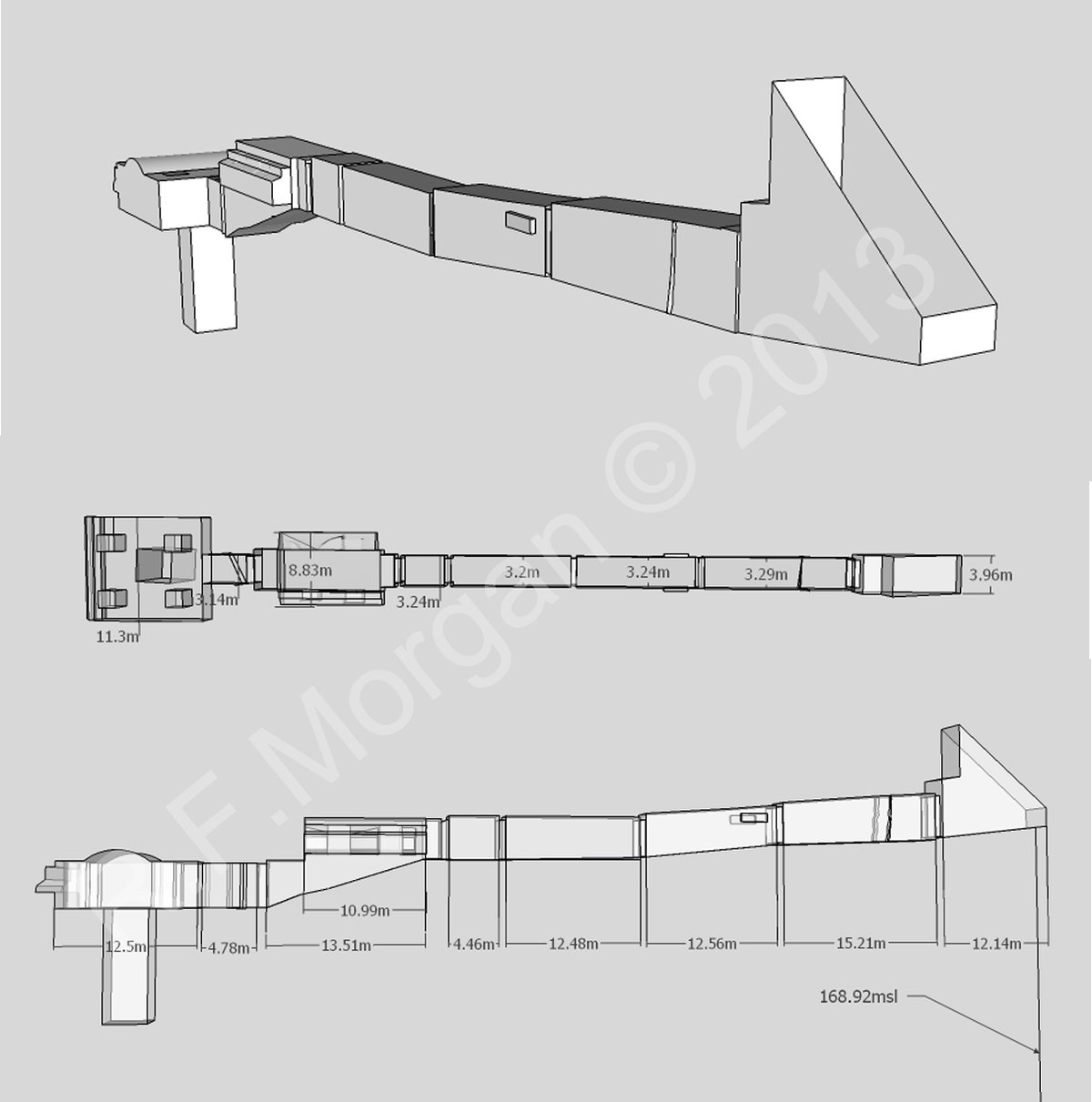

KV4 is a tomb in the Valley of the Kings (Egypt). The tomb was initiated for the burial of Ramesses XI but it is likely that its construction was abandoned and it was not used for Ramesses's interment. It also seems likely that Pinedjem I intended to usurp this tomb for his own burial, but that he too abandoned the plan. KV4 is notable for being the last royal tomb that was quarried in the Valley and because it has been interpreted as being a workshop used during the official dismantling of the royal necropolis in the early Third Intermediate Period.
Although KV4 has been open since antiquity and graffiti from various ages attest to its popularity as an early tourist attraction it received little scholarly attention until John Romer's clearance in 1978–1980. KV4 is located in one of the valley's side wadis, next to KV46. Running back over 100 metres into the mountainside, it consists of a series of three gently sloping corridors leading towards the tomb's well chamber (although no shaft is cut in its floor) and two unfinished, pillared chambers.
Decoration was only present on the lintel and jambs of the outer doorway and in the first corridor which has preliminary sketches in red ink on the plastered walls. Part of the decoration in the corridor was damaged in antiquity and was later restored by Pinedjem I who replaced the king's names with his own in these restored scenes. The corridors and well chamber hold remains of a beaten mud floor and a rough stone wall, together with shards of decorated pottery and a Byzantine copper mint.
Evidence of an intrusive 22nd Dynasty burial was found in the shaft of the burial chamber, consisting of bones, fragments of cartonnage and a partial coffin. This material showed signs of burning and it is likely that this burial was desecrated during the time of the Coptic presence in the tomb. Foundation deposits of Ramesses XI associated with the shaft might indicate that its cutting was contemporary with the original plan of the tomb. It appears that the plan for Ramesses XI was abandoned in favour of a burial elsewhere, perhaps in Lower Egypt.
Sources: Wikipedia, OpenStreetMap, Wikidata, Wikimedia Commons
Written by Mutabor
Discuss this with the author and others
No comments yet. Be the first to start the conversation.