
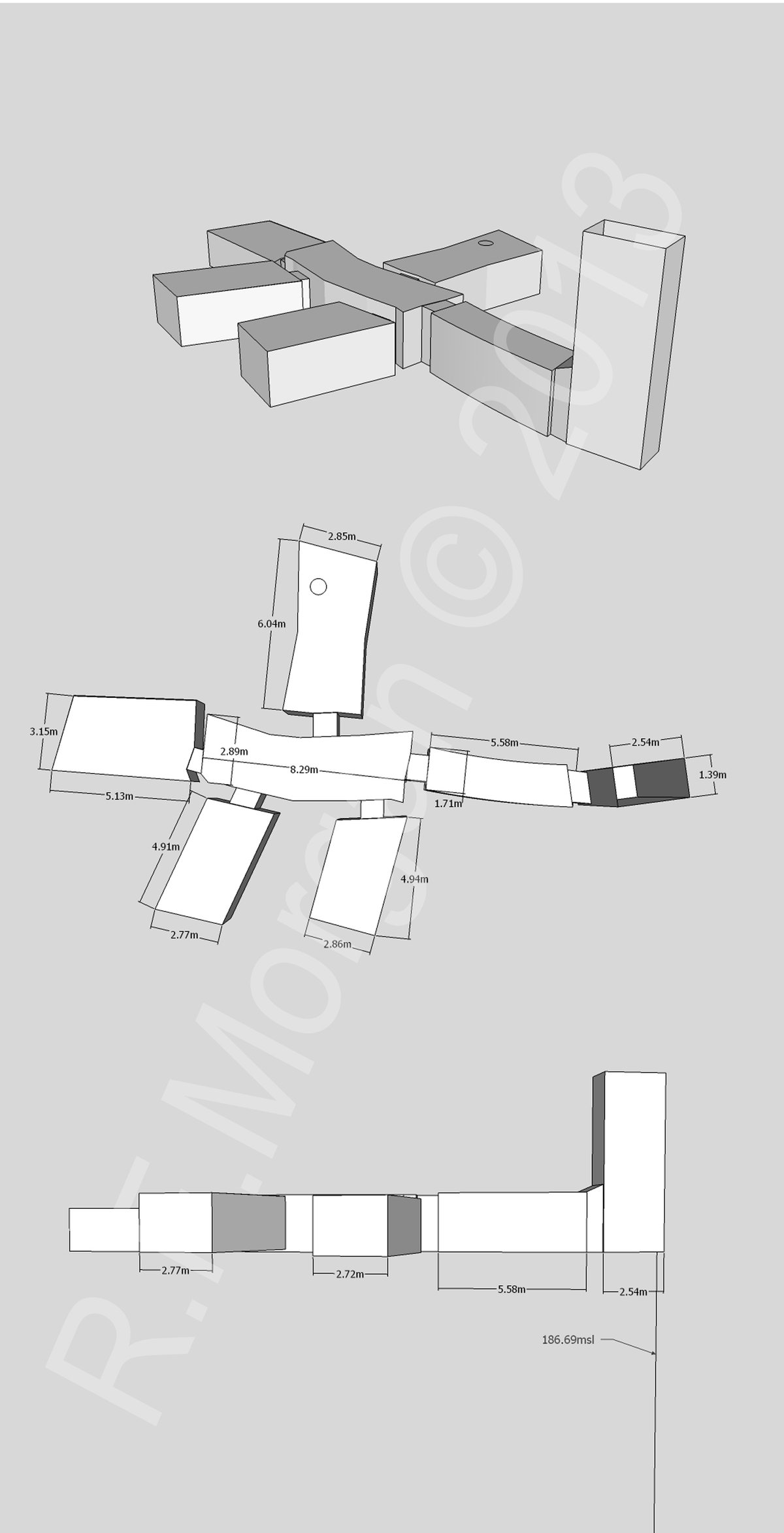
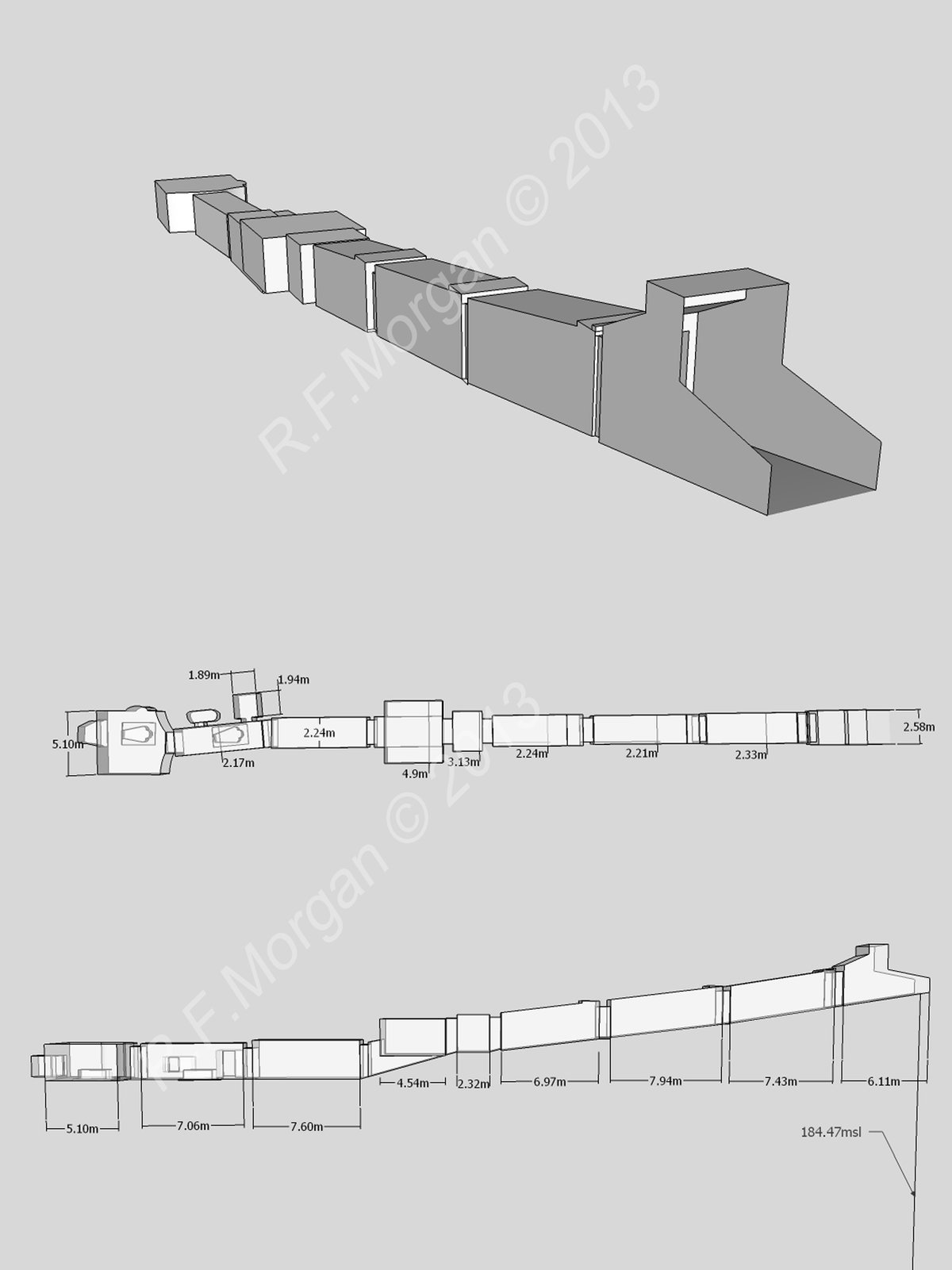
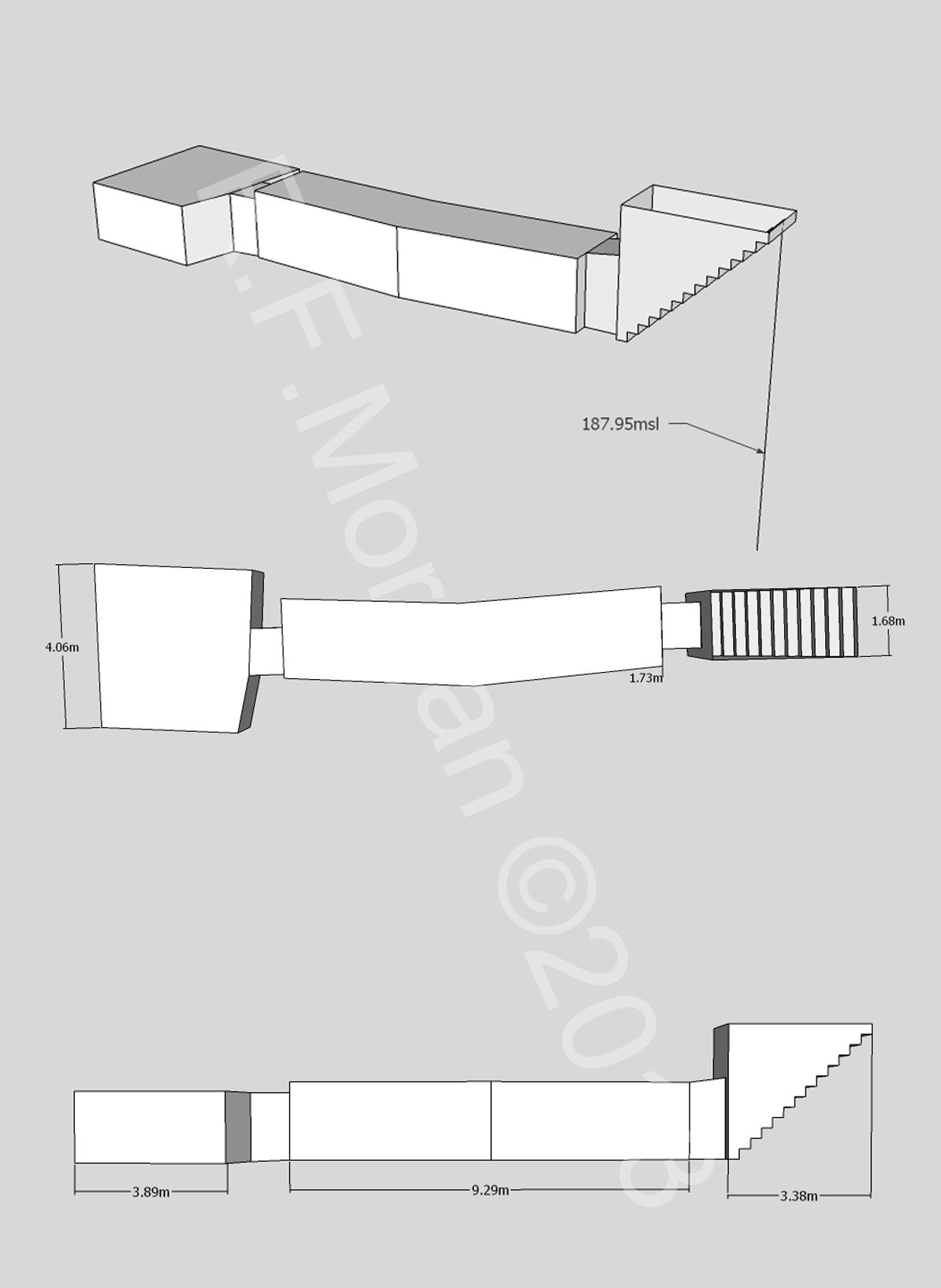
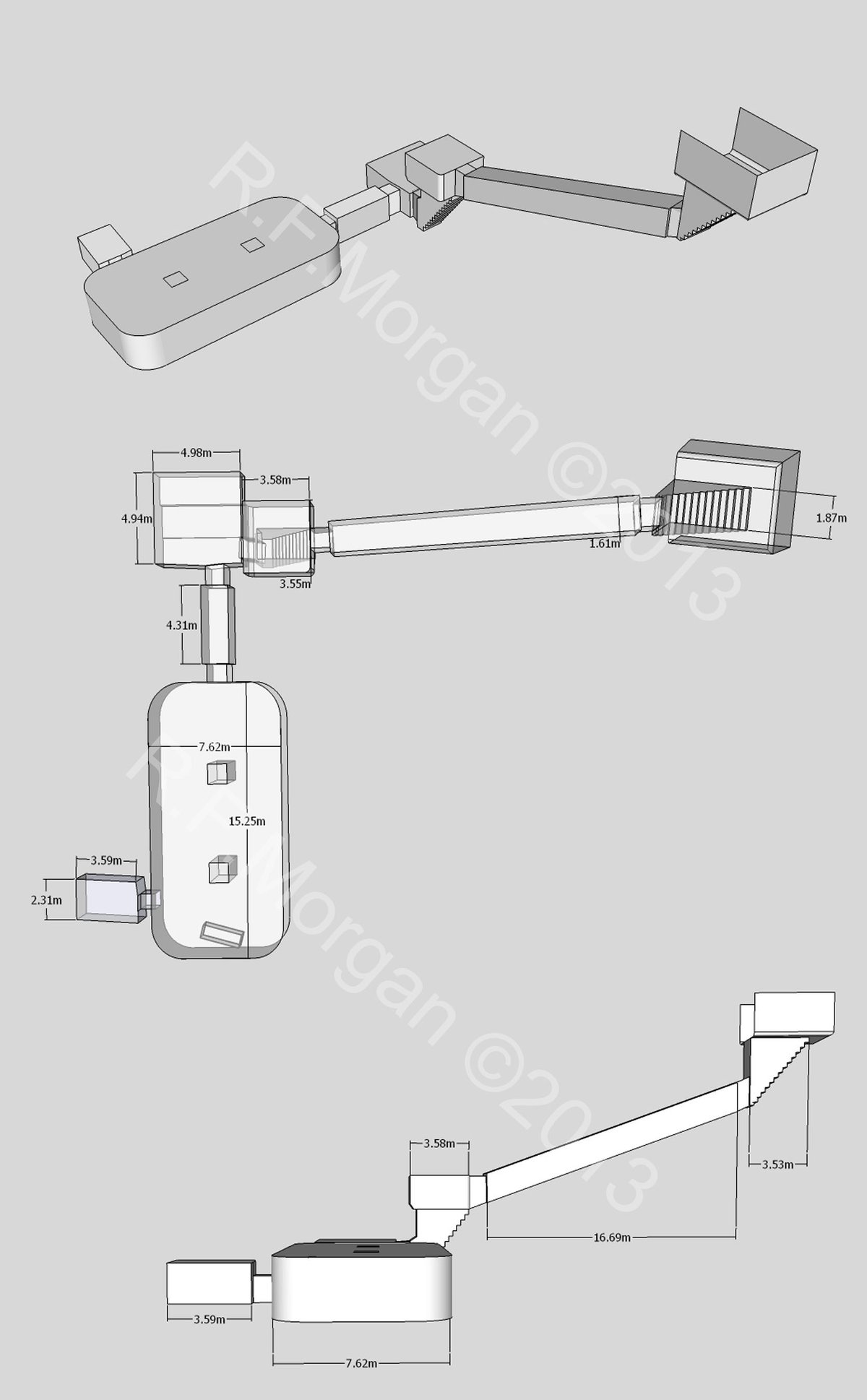
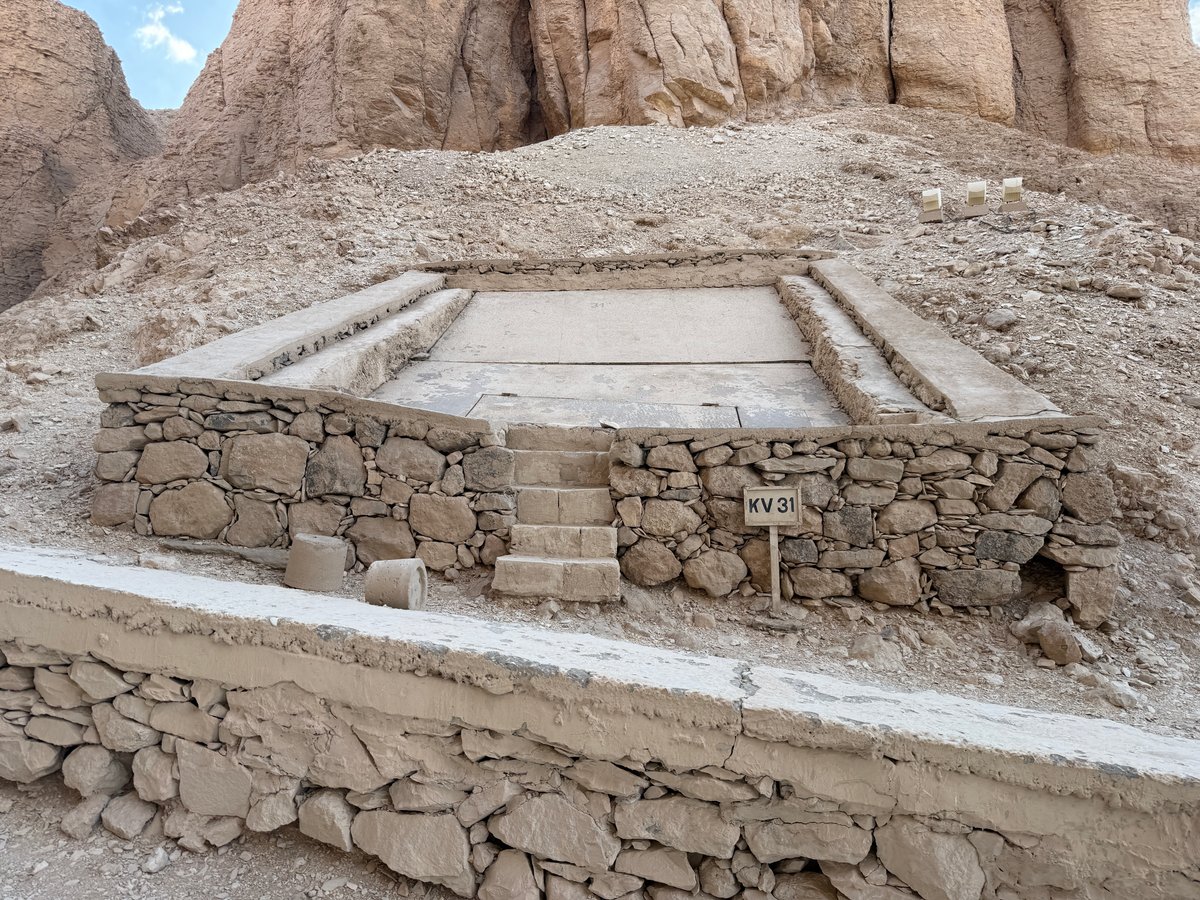
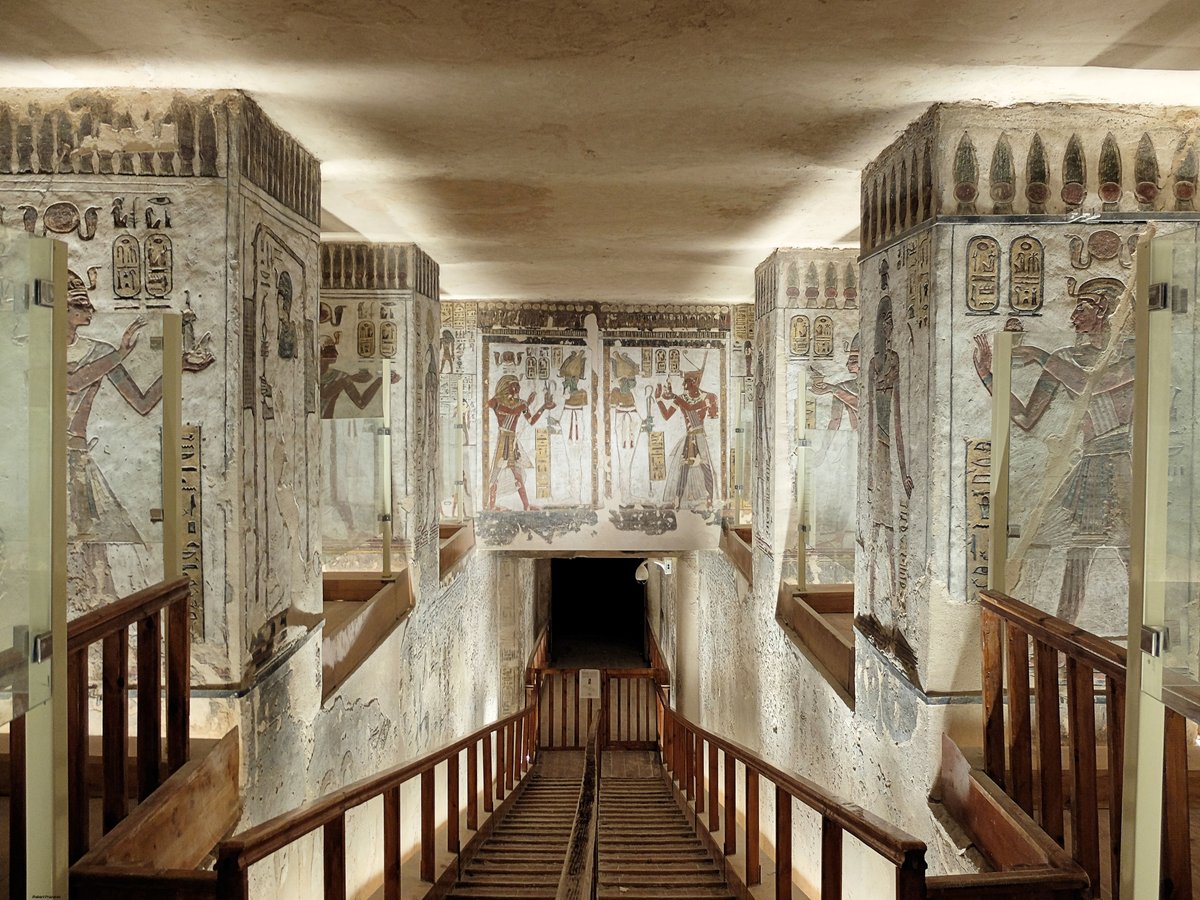
Tomb KV15 is located in the Valley of the Kings, dug into the base of a near-vertical cliff face at the head of a wadi. It runs along a northwest-to-southeast axis, starting with a short entry corridor followed by three corridor segments. These lead to a well room that lacks a well, which was never dug. From there, the tomb connects with a four-pillared hall and another stretch of corridor that was converted into a burial chamber.
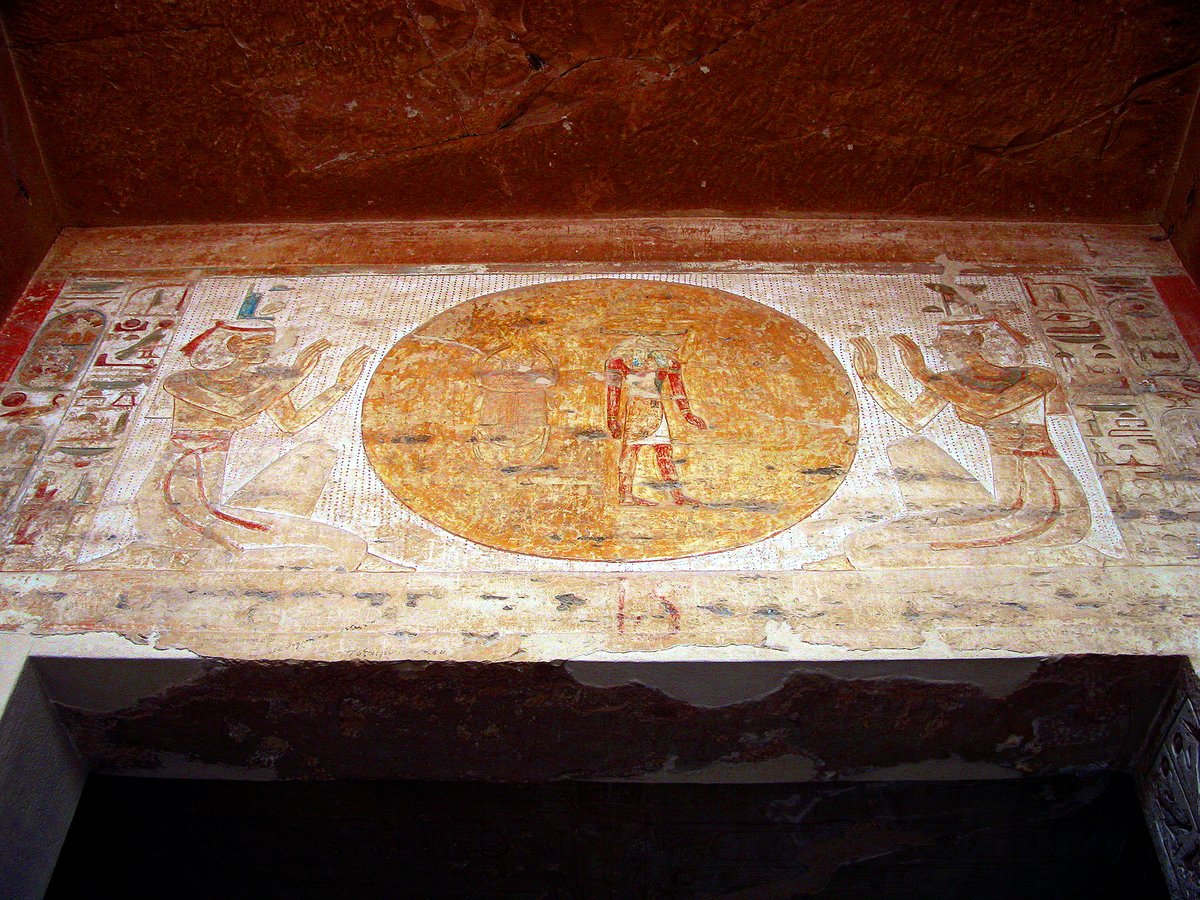
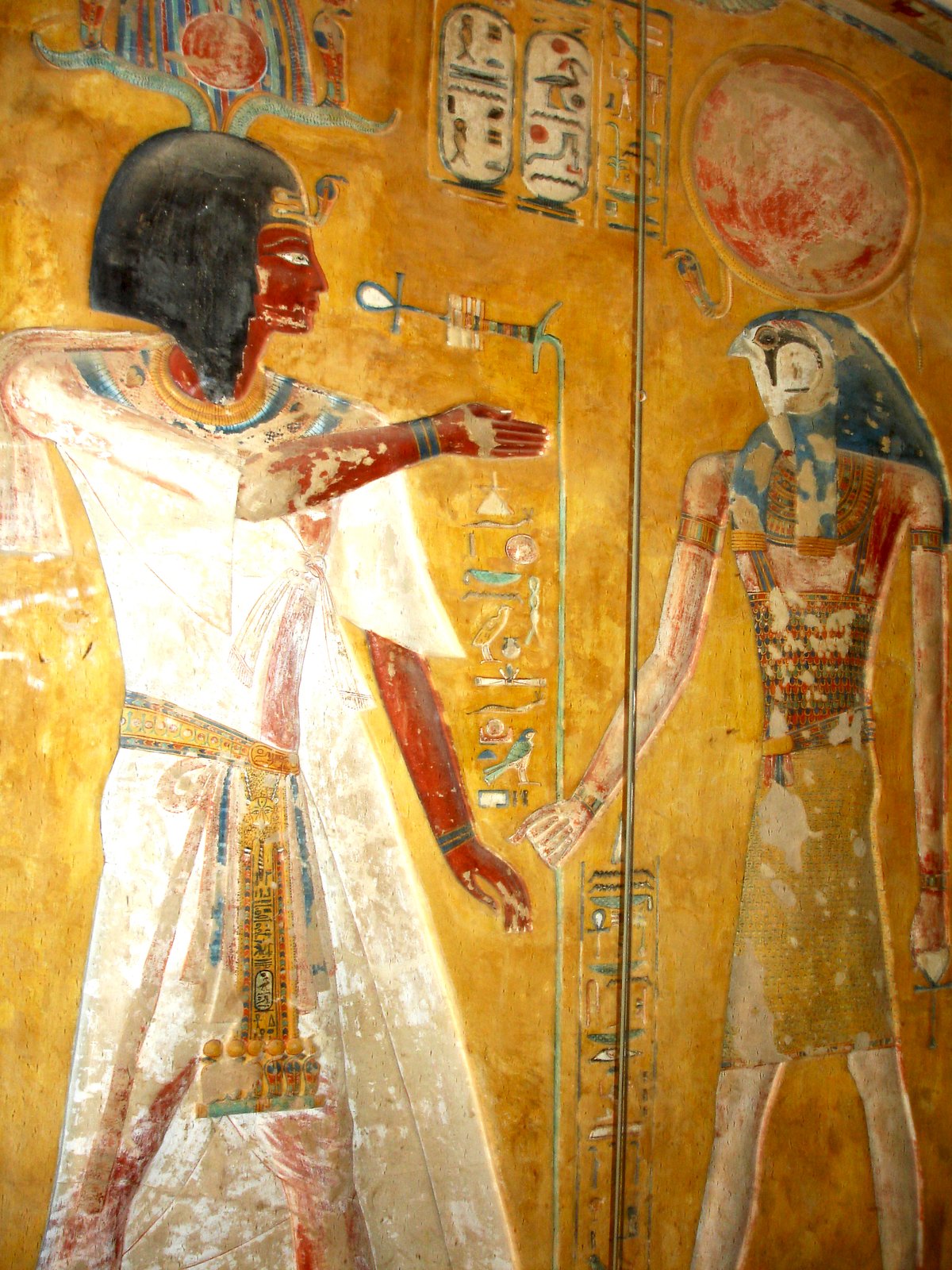
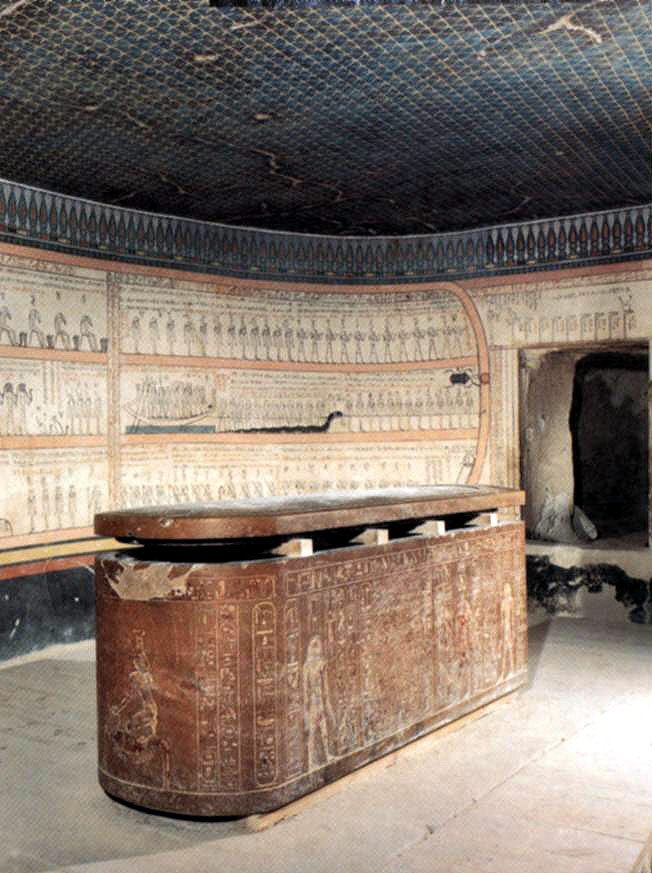
The walls and ceiling of the chamber are covered with plaster and painted with Anubis jackals and two rows of deities, representing the followers of Ra and Osiris. These are placed over a lower row of mummy-like figures. The winged goddess Nut appears along the length of the ceiling, and what may be a representation of the Ba of Ra is painted above her head. These paintings are conventional depictions drawn from the Egyptian Litany of Re, Amduat, and the Book of Gates.
Wall paintings in the well room are more unusual, showing the king in shrines in a number of different manifestations, such as on the back of a panther or on a papyrus skiff. The objects shown in these paintings are reflected in the finds made in the tomb of Tutankhamun. Because Seti II had only four years to complete his royal tomb before losing control of Thebes and Upper Egypt to the usurper Amenmesse, the tomb was left mostly unfinished, featuring several hastily drawn artist concepts for future decorations.
Seti II may have originally been buried with his wife Tausert in KV14 before being moved to KV15. His name appears to have been carved, erased, and then re-carved, possibly by Amenmesse and later restored by Tausert or his agents. His mummy was eventually moved to the mummy cache in KV35, leaving only the lid of his sarcophagus in KV15. The tomb was first investigated by Richard Pococke in 1738 and properly cleared by Howard Carter in 1903-04. Today, the tomb is open to tourists with improved flooring, handrails, and lighting.
Sources: Wikipedia, OpenStreetMap, Wikidata, Wikimedia Commons
Written by Mutabor
Discuss this with the author and others
No comments yet. Be the first to start the conversation.