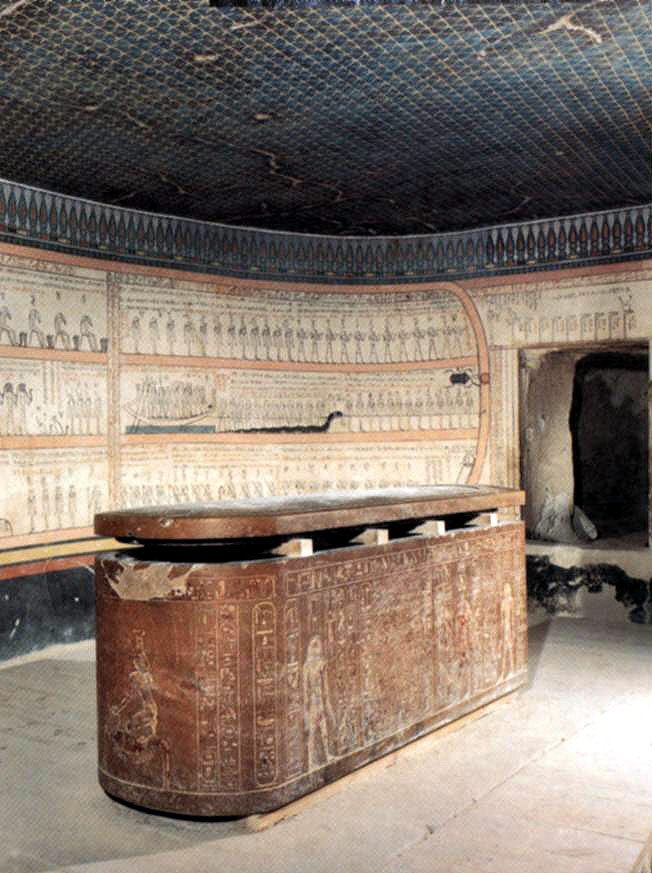

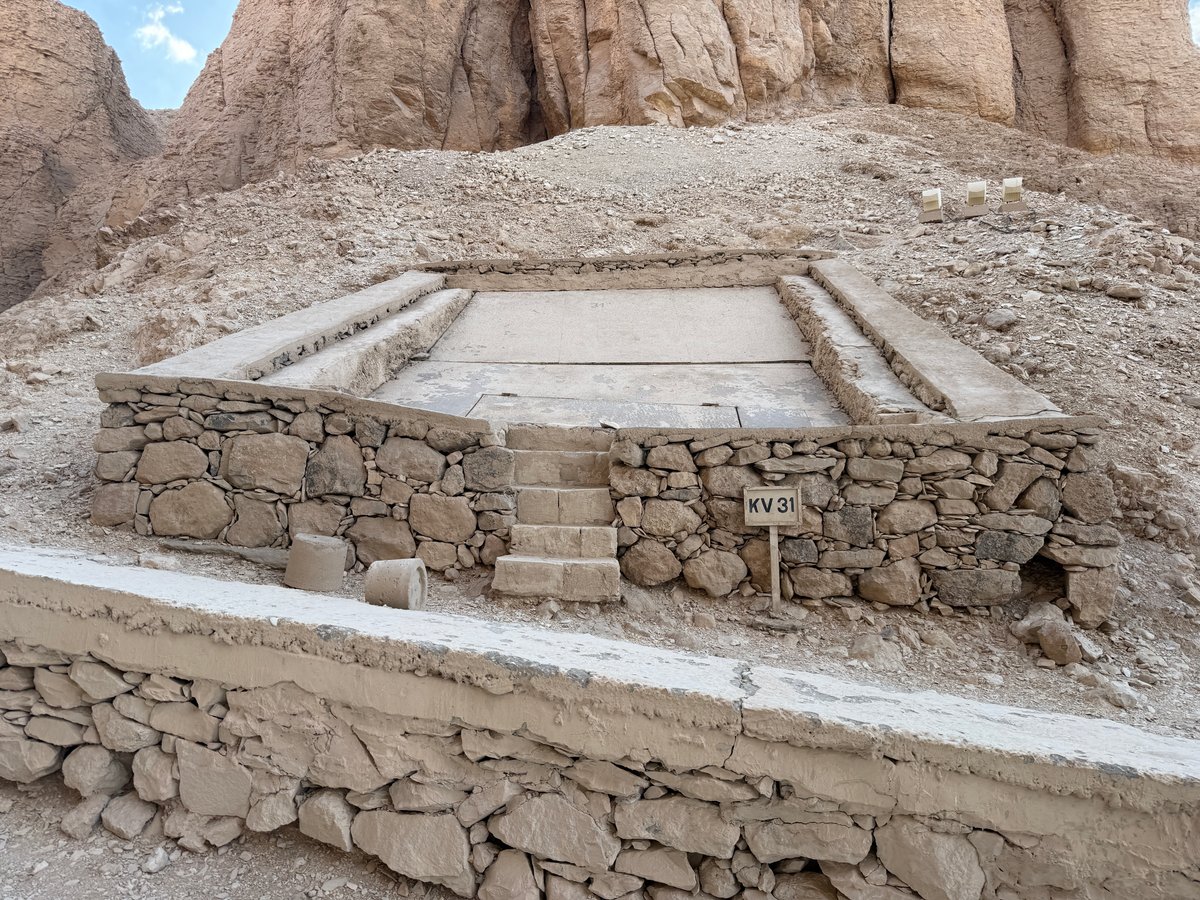
In the Valley of the Kings near the modern-day Egyptian city of Luxor, the tomb of Thutmose III (KV34) sits high in the cliff face of the furthermost wadi. The tomb was plundered in antiquity and its location lost before being rediscovered and first excavated in 1898 under Victor Loret.
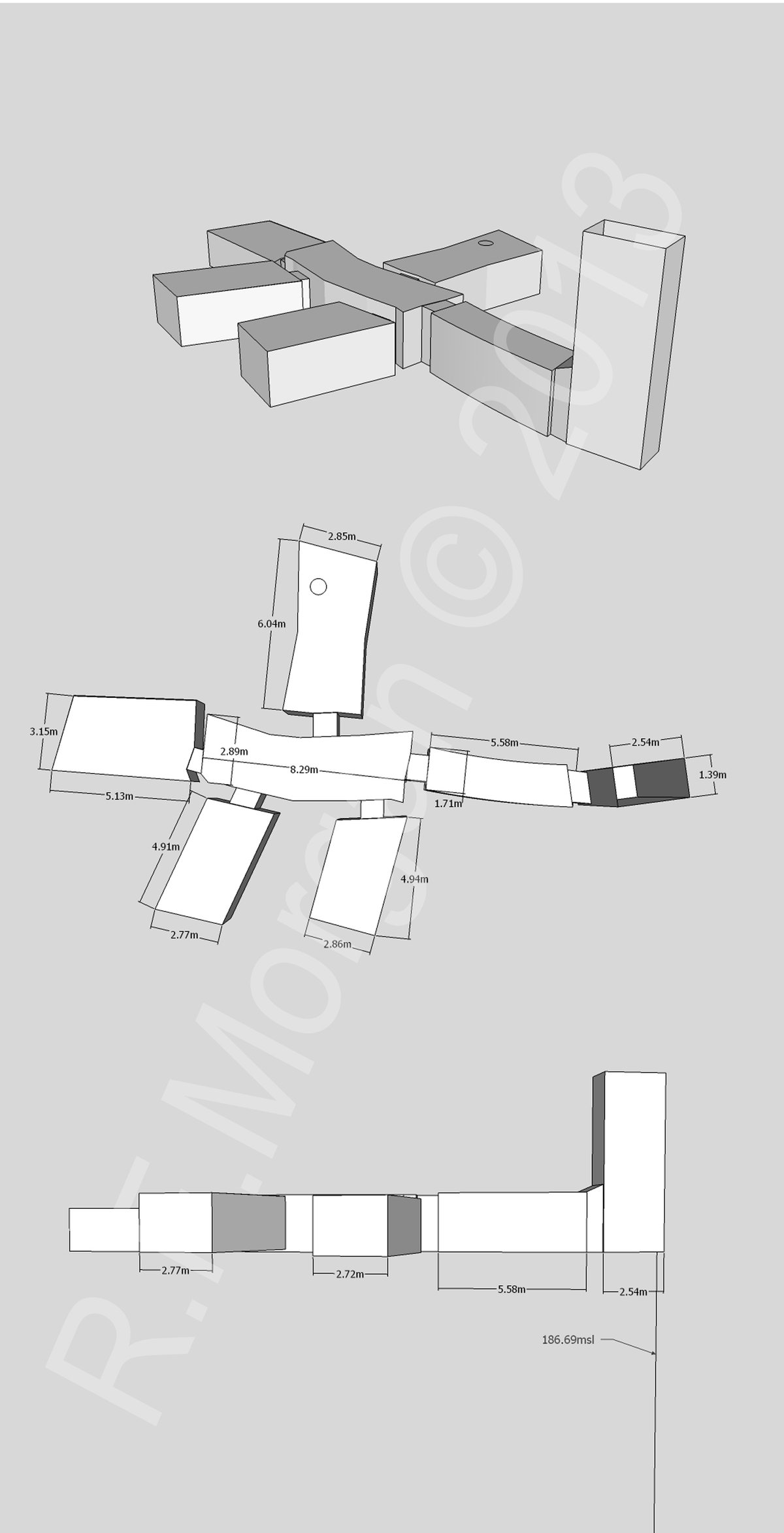
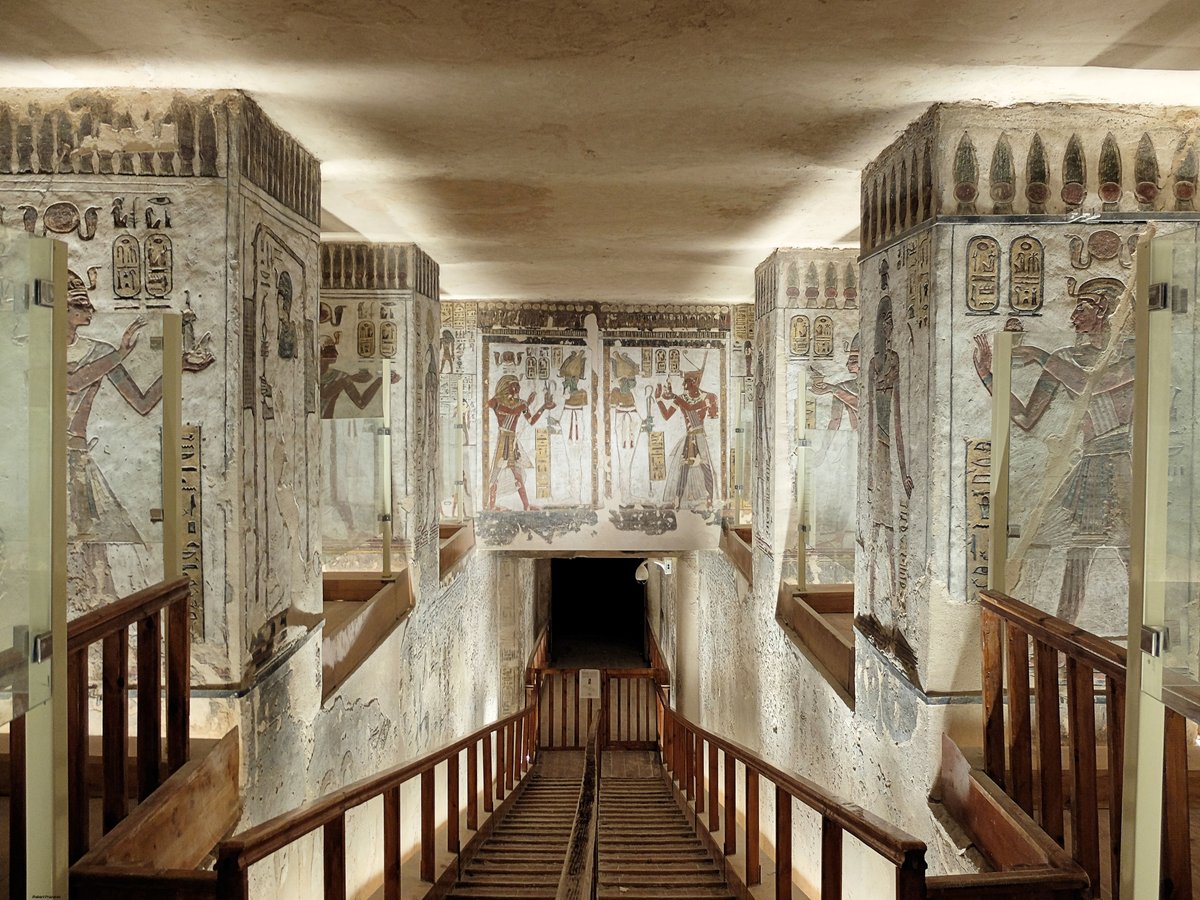
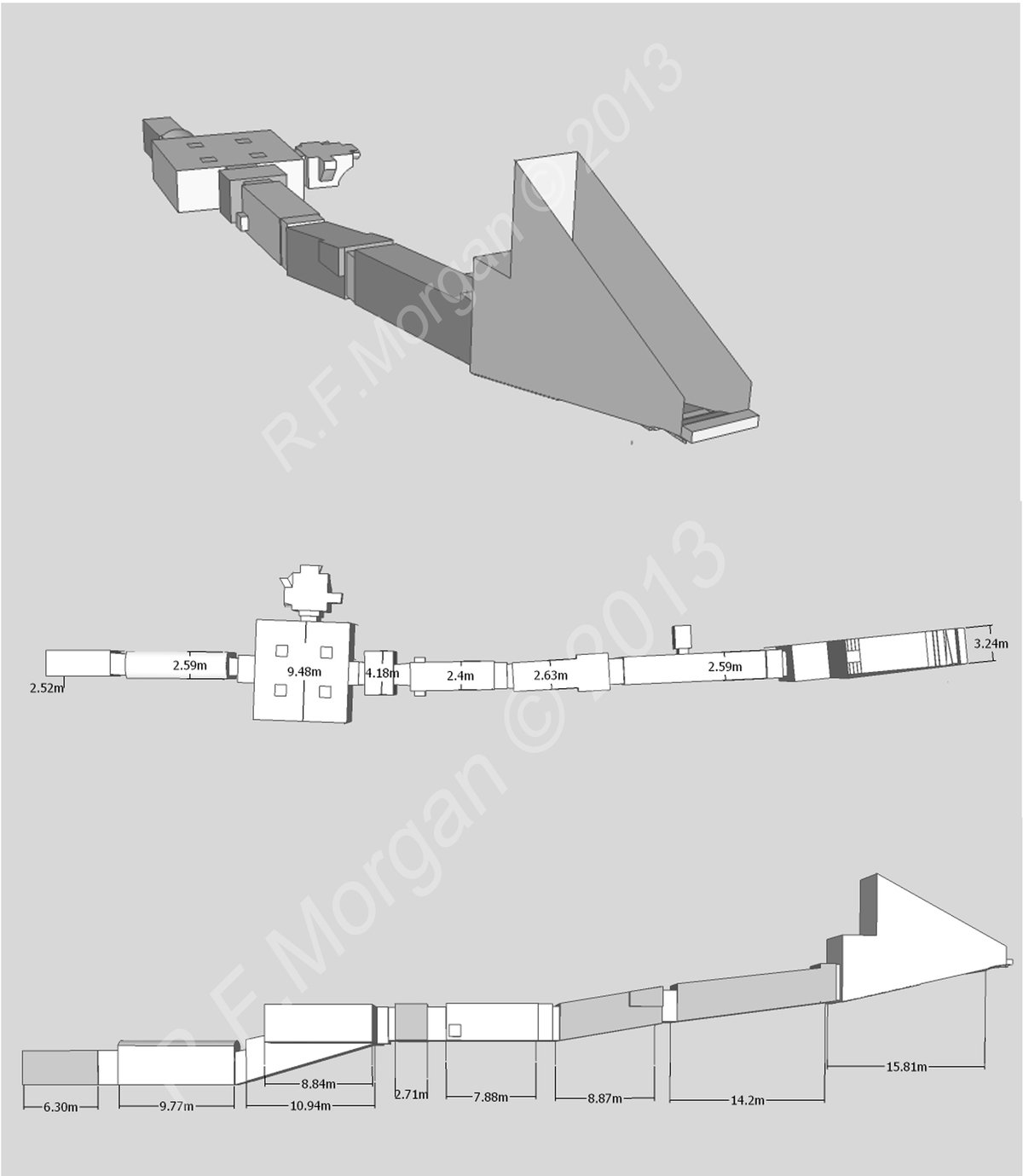
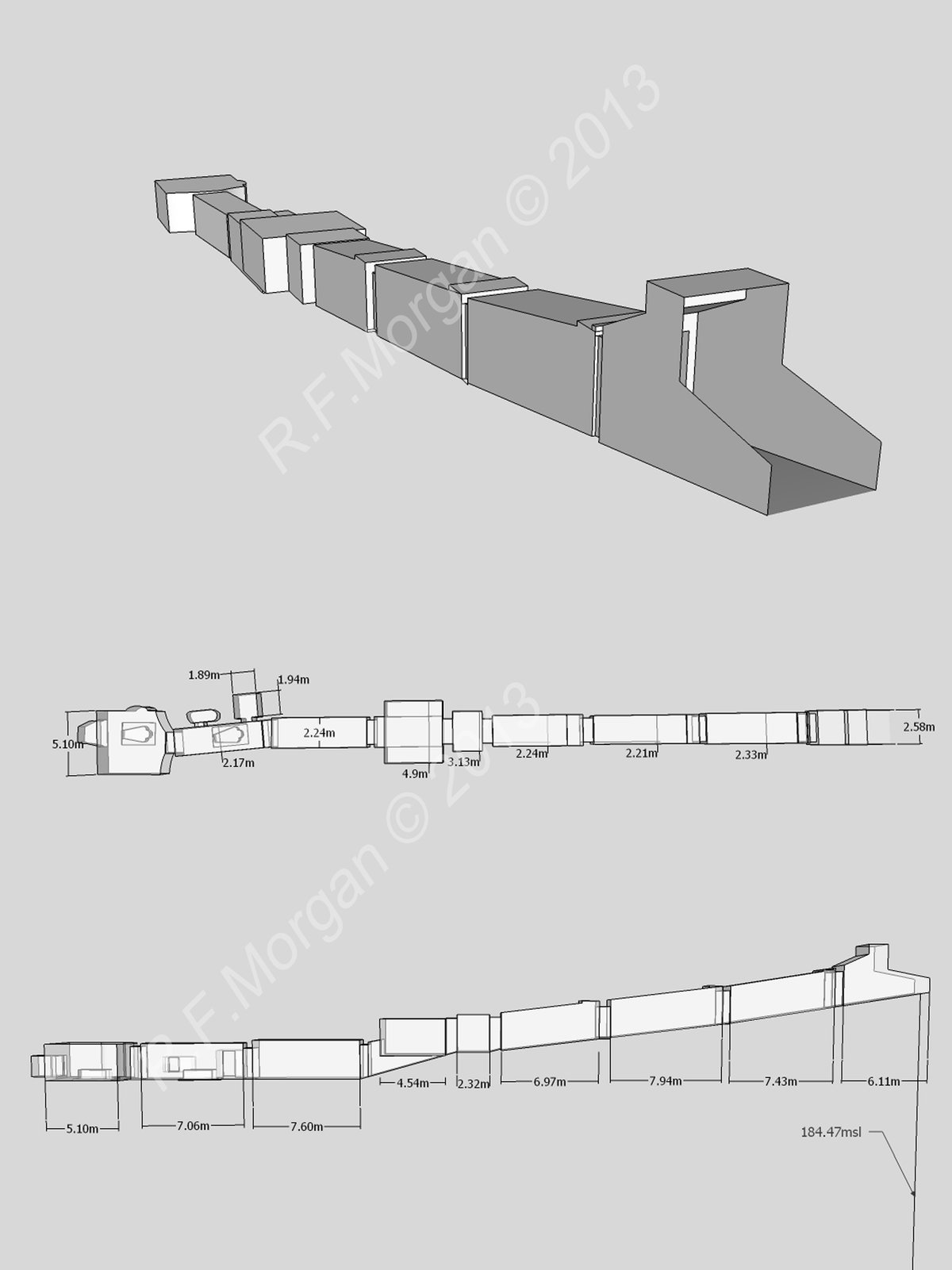
On the way up the staircase to the tomb, graffiti done by workmen building the tomb appears on the cliff wall. A steep corridor leads down in a dog-leg shape from the entrance past a deep well, which was intended to throw off tomb robbers. Passing across the well leads to a trapezoidal antechamber.
Beyond the antechamber lies the burial chamber, shaped like a cartouche and the first pharaonic tomb to have that shape. Inside the burial chamber are four smaller side chambers and a stone sarcophagus that is damaged by tomb robbers.
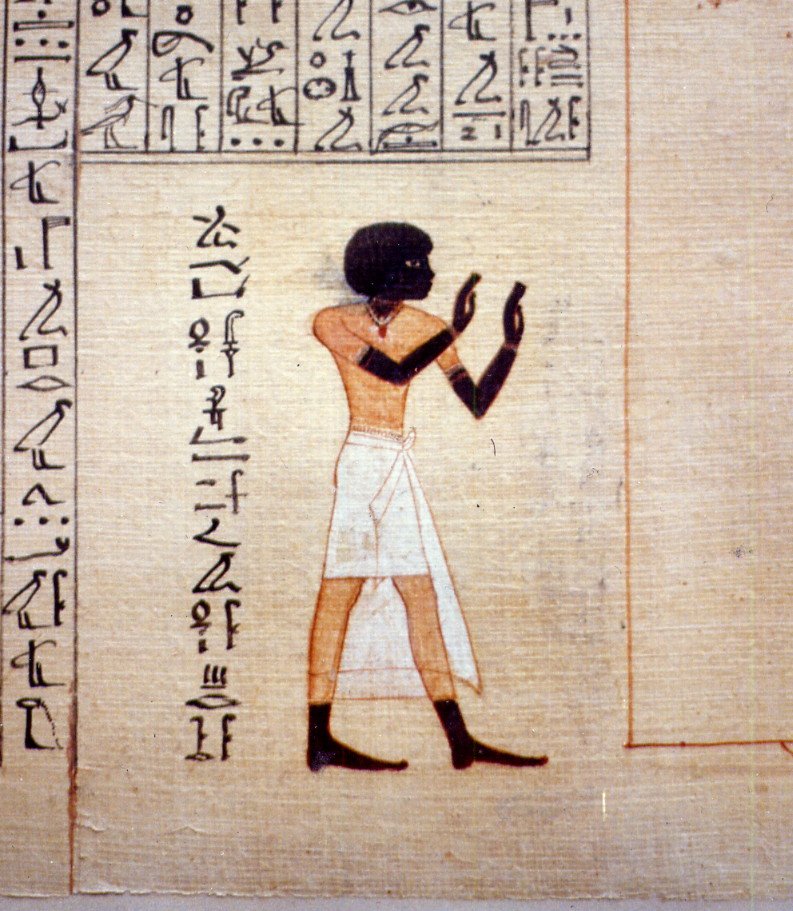
Many of the wall decorations are in an unusual style not found elsewhere in the Valley of the Kings. On a yellow-tinged background, one of the earliest known versions of the Amduat is traced, depicting ancient Egyptian deities as simple stick figures with text in the cursive hieroglyphic book hand. The Litany of Ra also appears in the burial chamber with a similar execution.
Sources: Wikipedia, OpenStreetMap, Wikidata, Wikimedia Commons
Written by Mutabor
Discuss this with the author and others
No comments yet. Be the first to start the conversation.