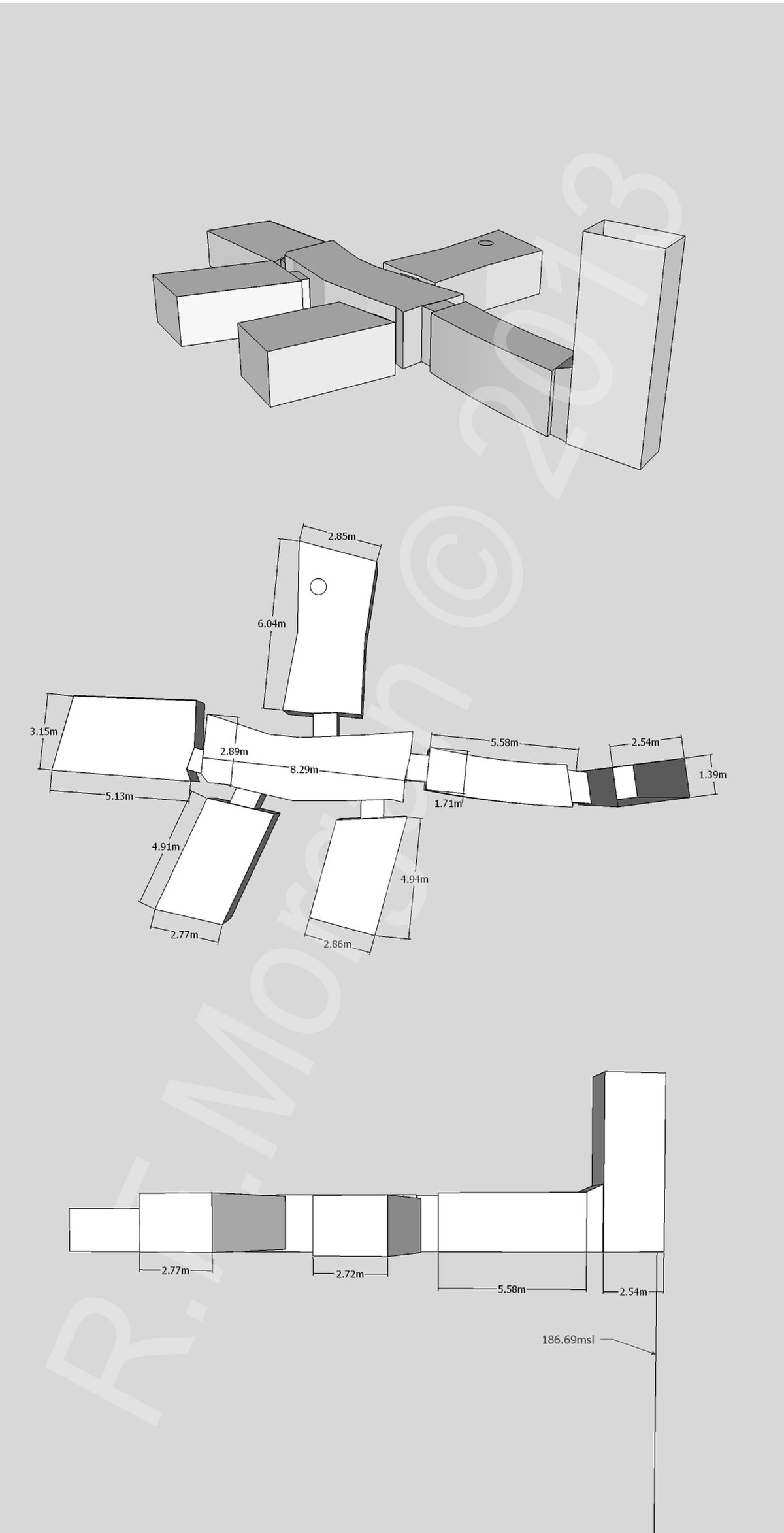

Deep within the mystical Valley of the Kings, where dreams are crystallized, hidden like a long-forgotten song, one finds the secret haven of Lord Belmore's tomb (KV30). Whispers abound of its revelation by the famous Giovanni Belzoni during the Eighteenth Dynasty, but the techniques of its creation remain shrouded in mystery, whispered only among the stars. Some believe it may have been commissioned by Lord Belmore himself, but proof is scarce, like the first drops of dew upon a petal.
Yet, its allure captivates archaeologists, beckoning them with tantalizing glimpses of its hidden treasures. The tomb, stretching some 23 metres in length, bears construction markings in the form of red ink outlines of intended door widths for side chambers, but these are not deemed symbols of royal power. In the seasons 2009–2016, excavations under the University of Basel’s Kings’ Valley Project unearthed reed matting, fragments of painted wooden coffins, ostraca, faience, a piece of coloured glass, and cartonnage within the tomb.
KV30's walls, painted with contrasting elements, weave a tale that entrances archaeologists, each discovery suggesting that its mysteries are but the tip of an iceberg. The most intriguing discovery was a red ink inscription, the meaning of which remains as elusive as the moon's hidden face. Archaeologists continue their journey to unravel the secrets that KV30 holds close to its heart. Maps of the tomb can be found in the vast catalog of Theban Mapping Project, while expert accounts like Nicholas Reeves and Richard H.
Wilkinson’s 'The Complete Valley of the Kings: Tombs and Treasures of Egypt’s Greatest Pharaohs' provide further insight into this mysterious and entrancing tomb.
Sources: Wikipedia, OpenStreetMap, Wikidata, Wikimedia Commons
Written by Mutabor
Discuss this with the author and others
No comments yet. Be the first to start the conversation.