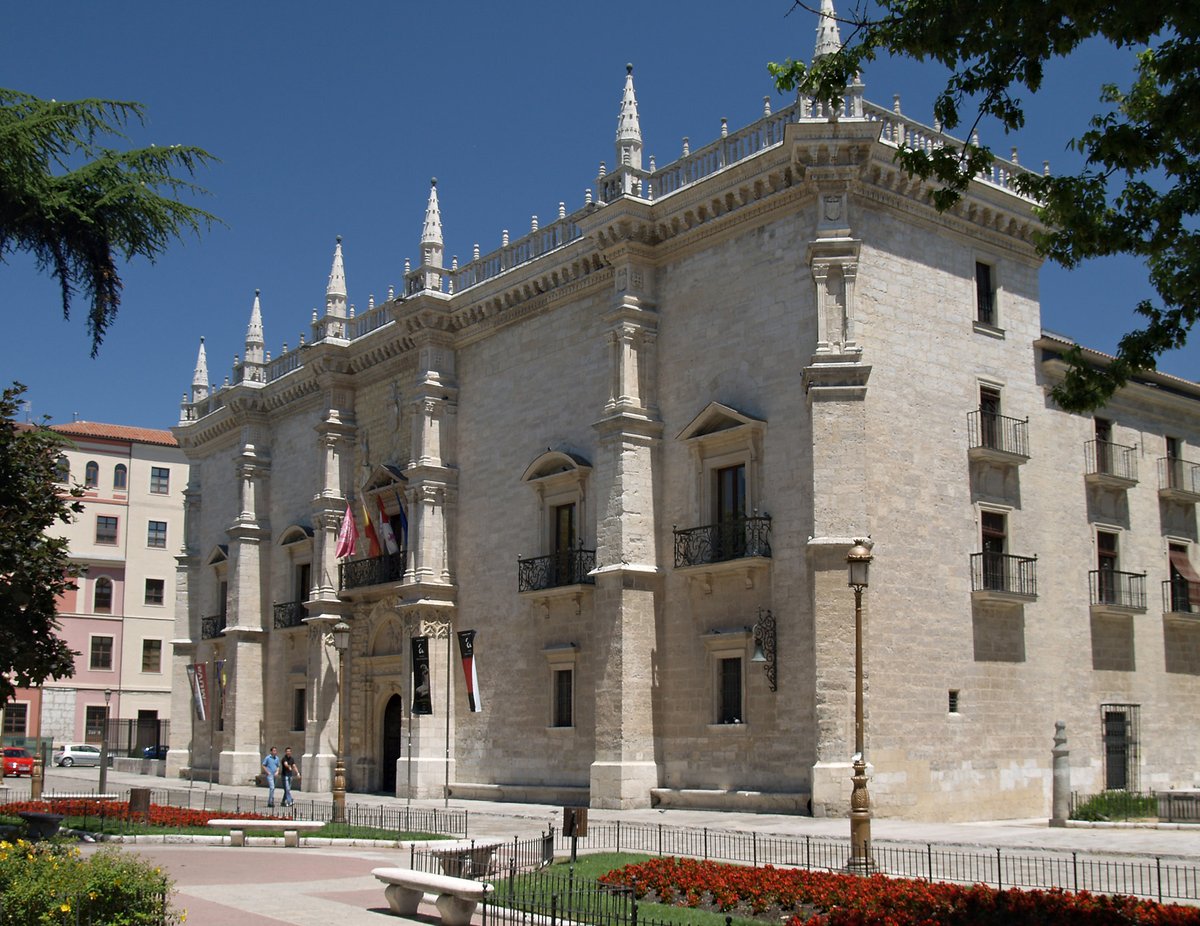

The Palacio de Santa Cruz, once a university college, now houses the offices of the Rector and his staff, and two university museums, one of African art. The library collection includes the Valcavado Beatus manuscript. Built in Valladolid, Castile and León, Spain, the Palacio de Santa Cruz was constructed between 1486 and 1491, under the supervision of Lorenzo Vázquez de Segovia. It is considered the earliest extant building of the Spanish Renaissance. Some observers believe that some of the classical details may have been added to the facade at a later date. However, the main doorway is generally accepted as original to Vázquez’s design, resembling the doorway on the palace of the Dukes of Medinaceli, designed by the architect at Collogudo to the north east of Madrid.
Sources: Wikipedia, OpenStreetMap, Wikidata, Wikimedia Commons
Written by Nicolo Ciampini
Discuss this with the author and others
No comments yet. Be the first to start the conversation.