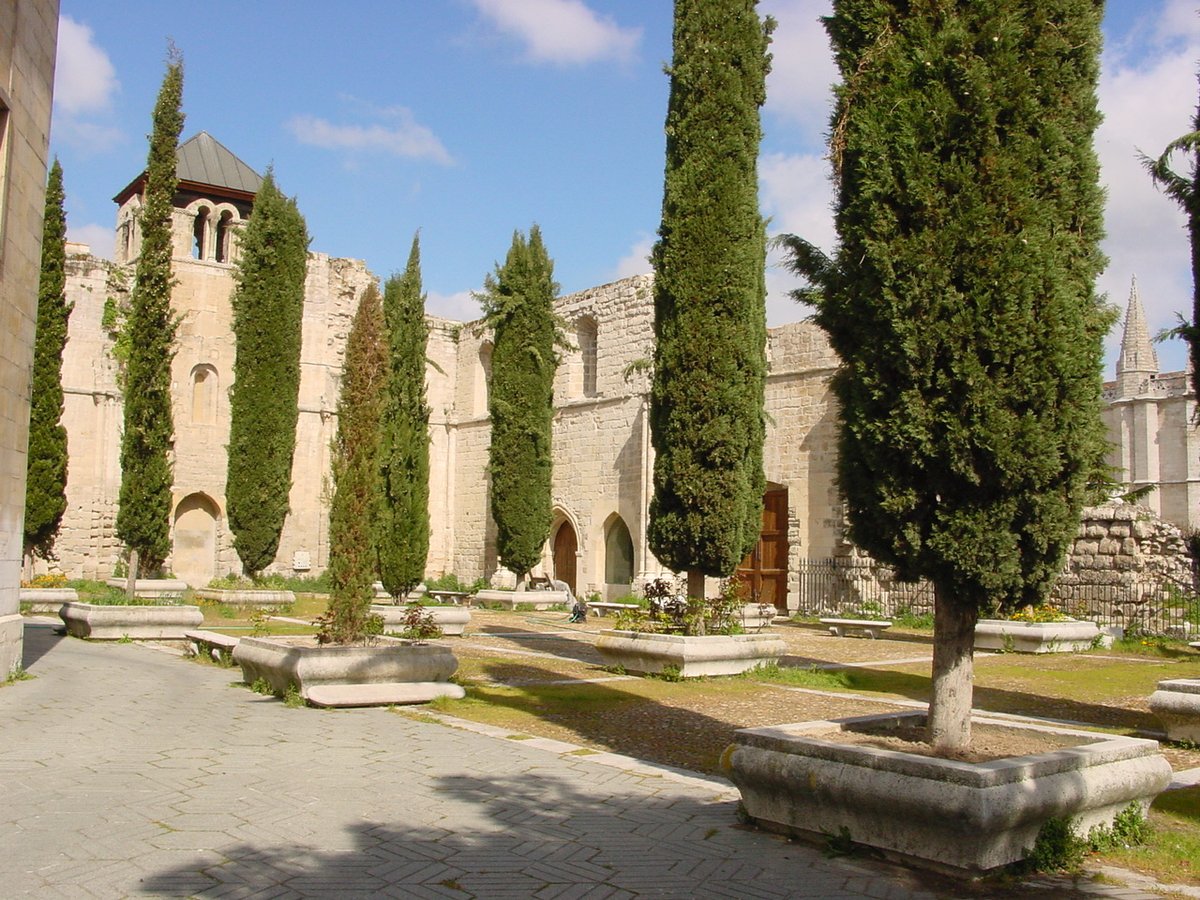

The collegiate church of Santa Maria de Cervera, originating in the 11th century, was built over several generations and underwent several transformations over time. Initiated by Pedro Ansúrez during the repopulation of Valladolid in 1074, the church counted with a first abbot, Don Salto, who was a Benedictine monk before his time at the monastery of San Zoilo de Carrioles. The construction of the church, which lasted for almost 600 years, was completed by the end of the 13th century.
The original Romanesque design of the church was replaced by a larger Gothic church in the 12th century, which had one nave, five tracts, and three entryways. Remnants of the original Romanesque church can still be observed, especially in the West entrance, which was under the tower portal. Three entryways, each with unique teeth-like decorations, have been preserved to this day. The North entryway has been extensively restored, while the South entryway, near the cloister, is particularly interesting for its decoration with saw-like teeth.
The West entryway was used until additional funerary chapels were added along its perimeter in the 14th century, after which it was no longer used.
Sources: Wikipedia, OpenStreetMap, Wikidata, Wikimedia Commons
Written by Nik Frost
Discuss this with the author and others
No comments yet. Be the first to start the conversation.