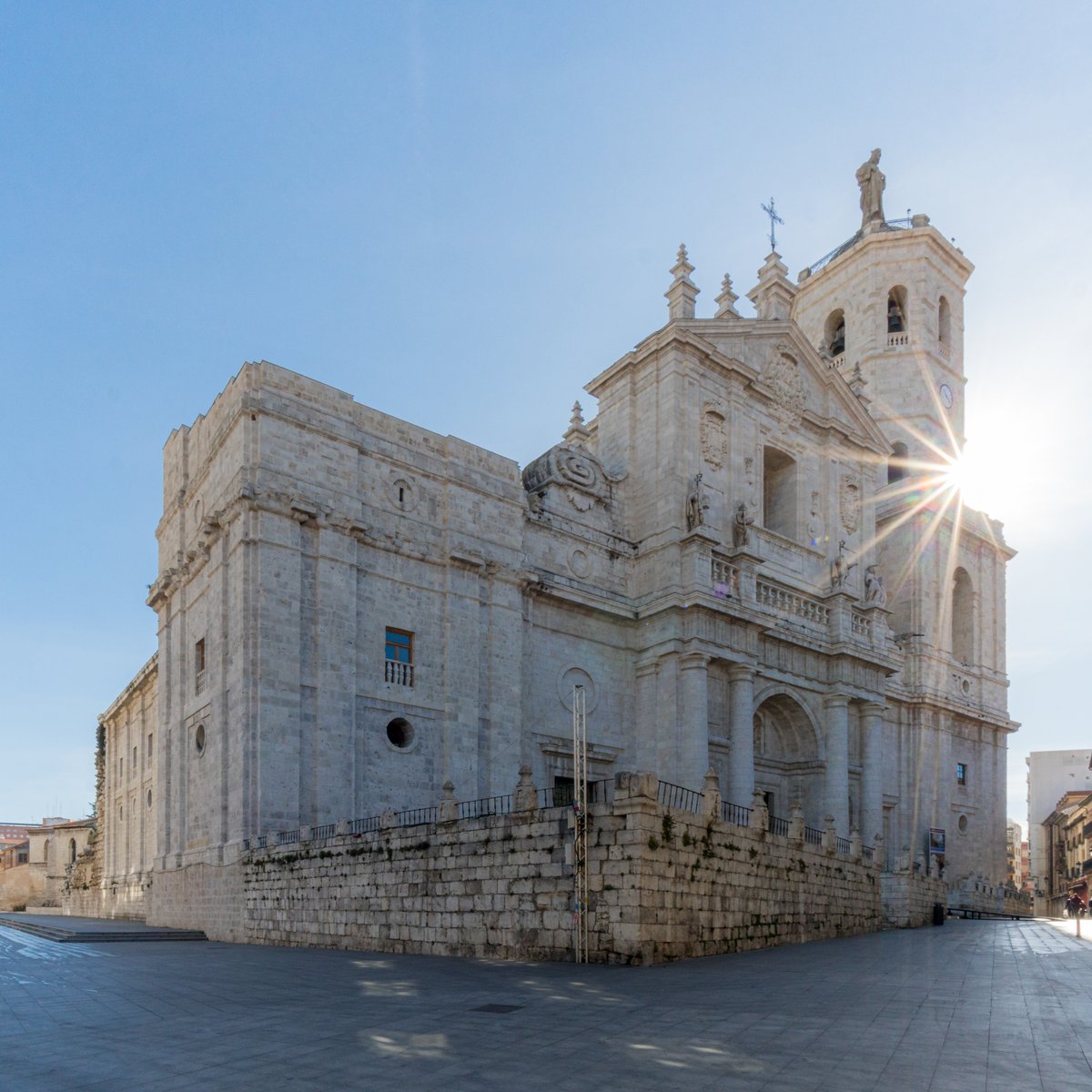

Can you imagine building a structural behemoth only to watch the funding evaporate? This is the reality of the Catedral de Nuestra Señora de la Asunción in Valladolid. It was intended to be one of the largest cathedrals in Europe, but because the court moved to Madrid in the 1560s, construction funds were severely trimmed. Due to the difficult foundations in a gap in the field and a lack of resources, only 40-45% of the intended project was completed.
Juan de Herrera's grand vision faced a messy reality in the late 16th century. The original plan was for a vast church with three aisles and two towers on the main façade, but the building stopped at the transept. Only one tower now stands, and it does not follow Herrera's plans. The lower part of the main façade takes the form of a triumphal arch in the Doric order, though an error in construction made the portal arch rather pointed.
Today, the building houses a rich musical archive of 6000 works and a 16th-century altarpiece by Juan de Juni, which was moved to its present position in 1922. A great pipe organ, built in 1904 and enlarged in 1933, sits over the main door. The interior also features four chapels containing various works by artists such as Lucas Jordan and Pedro de Ávila, preserving a complex history of religious art and architectural ambition.
Sources: Wikipedia, OpenStreetMap, Wikidata, Wikimedia Commons
Written by Nicolo Ciampini
Discuss this with the author and others
No comments yet. Be the first to start the conversation.