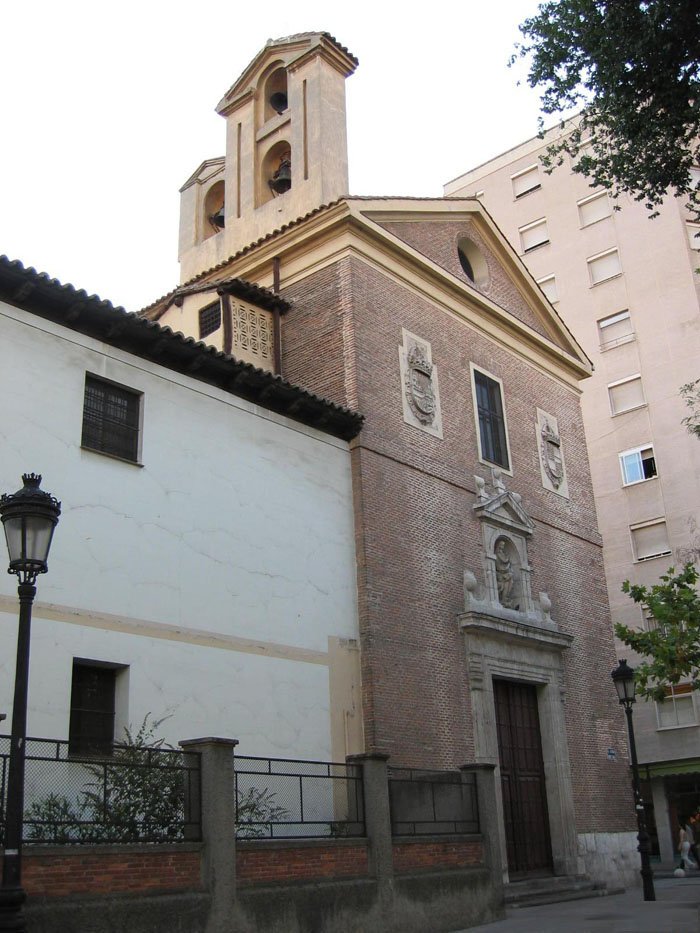

The Monasterio de las Descalzas Reales, or the Monastery of the Barefoot Royals, has a name that tells a tale. The 'Descalzas Reales' refers to the practice of the nuns in the convent to go barefoot within the cloister, a nod to the Colettine branch of the Order of St. Clare. However, this monastery is a far cry from the convent of the same name in Madrid of the same branch. The Monasterio de Las Descalzas Reales in Madrid of the same branch was established in 1558, six years after the monastery in question here was founded.
In Valladolid, the roots of the Monasterio de las Descalzas Reales reach back to 1550 when it was established in the village of Villalcázar de Sirga. The original community was dedicated to Our Lady of Pity. By 1552, with the aid of their patron, the Count of Oscorno, the community had moved to its more permanent home in Valladolid. The dedication of the monastery was changed by King Philip III of Spain to Our Lady of the Assumption. The monastery occupies a spacious site in the city, sandwiched between calle de Ramón y Cajal, calle de San Martín, and calle del Prado.
The present building, in neo-classical style, was designed by Francisco de Mora in the 17th century. Fadrique Osorio of Toledo and his wife, Inés de Pimentel, Marquess of Villafranca, bought the Palace of Alonso de Argüello for the convent in 1552.
Sources: Wikipedia, OpenStreetMap, Wikidata, Wikimedia Commons
Written by Nik Frost
Discuss this with the author and others
No comments yet. Be the first to start the conversation.