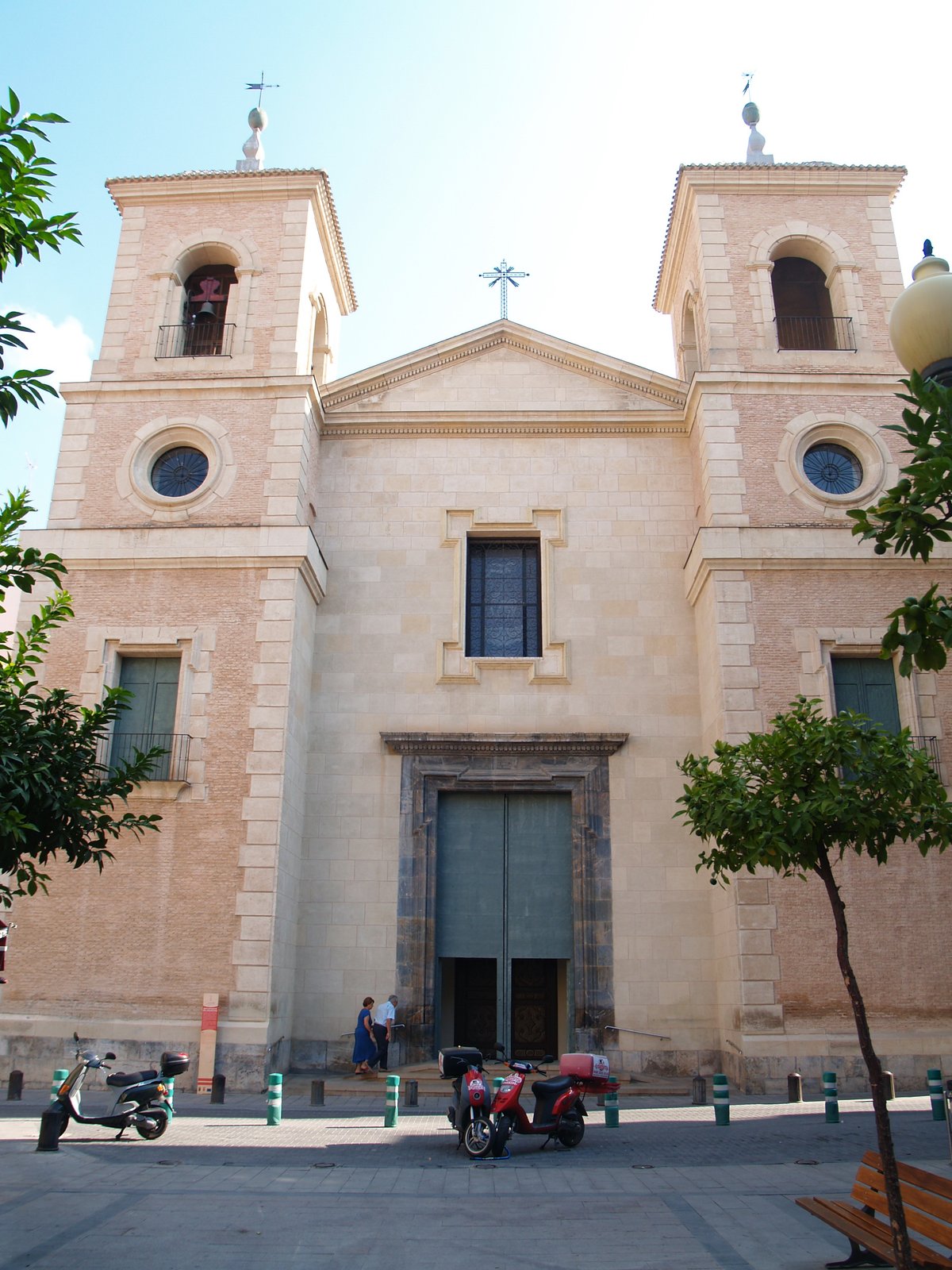

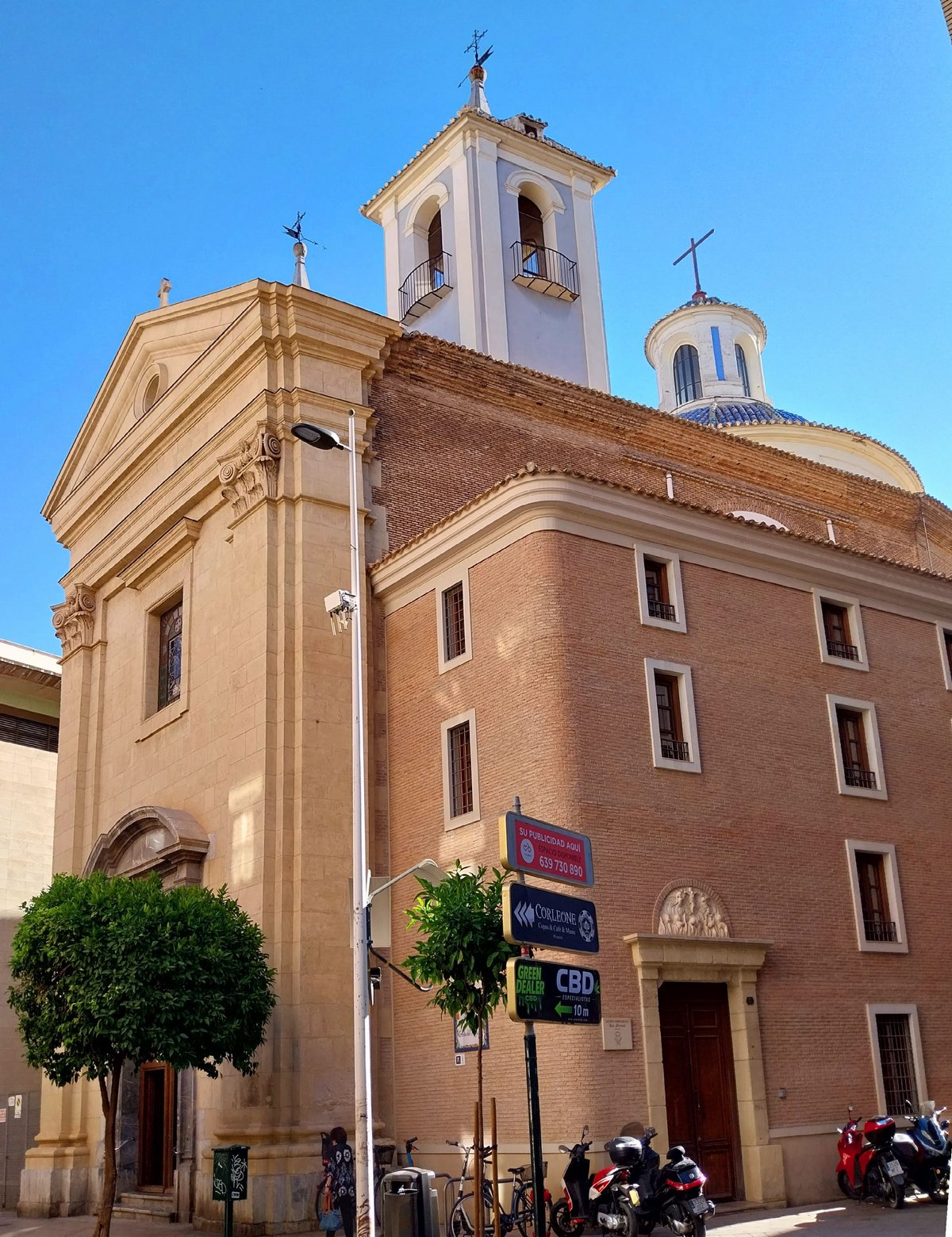
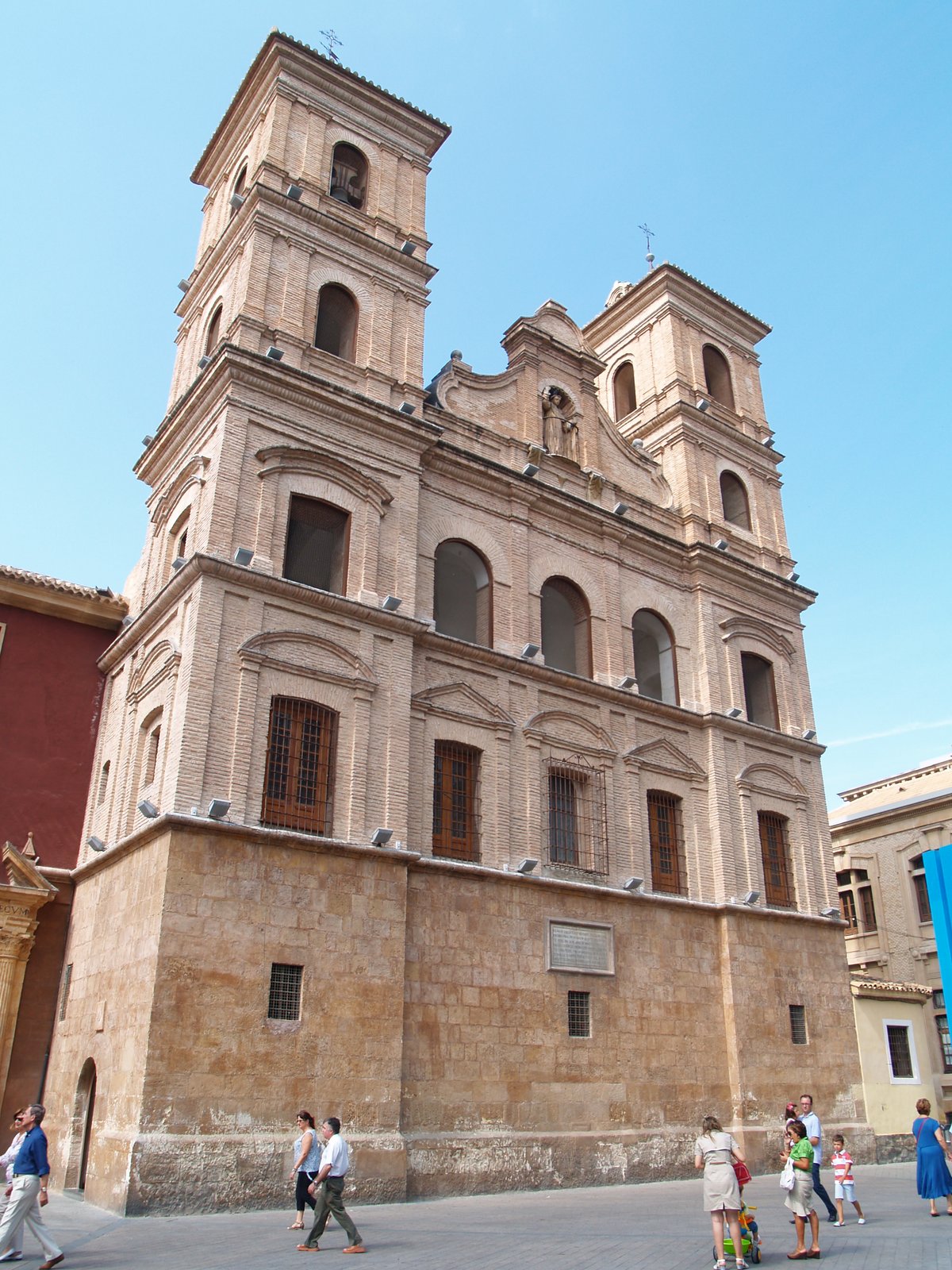
The Iglesia de San Juan Bautista in Murcia, located in the historic center, was constructed between 1750 and 1777. The current structure serves as a transition between the typical Murcian Baroque style and the first Neoclassical elements developed in the city. It is officially recognized as a Bien de Interés Cultural.
The parish has roots dating back to medieval times, originally known as San Juan del Real and later San Juan del Rabal. It served the Christian settlement that established itself in the area following the treaty of 1243. Documentally, it was ceded to the Order of Saint John in 1248 and is considered one of the first Christian temples in the city, alongside the chapel of the Alcázar.
The exterior features a facade with twin towers and a central portal with a triangular pediment. The architecture is characterized by the lack of ornament typical of the Neoclassical style, which is attributed to Ventura Rodríguez with participation from sculptor Pedro Juan Guissart. The interior layout follows a Latin cross plan with a single nave, a barrel vault, and lateral chapels.
Inside, the church houses a rich heritage of altarpieces and sculptures. A notable feature is the 1789 Neoclassical tabernacle by Lorenzo Alonso. It features eight large Corinthian columns of red marble and bronze bases supporting a black marble cornice. It houses a sculpture by Antonio Dupar, which expresses a classicist approach that differed from the traditional sculpture developed in Murcia at the time.
Sources: Wikipedia, OpenStreetMap, Wikidata, Wikimedia Commons
Written by Nicolo Ciampini
Discuss this with the author and others
No comments yet. Be the first to start the conversation.