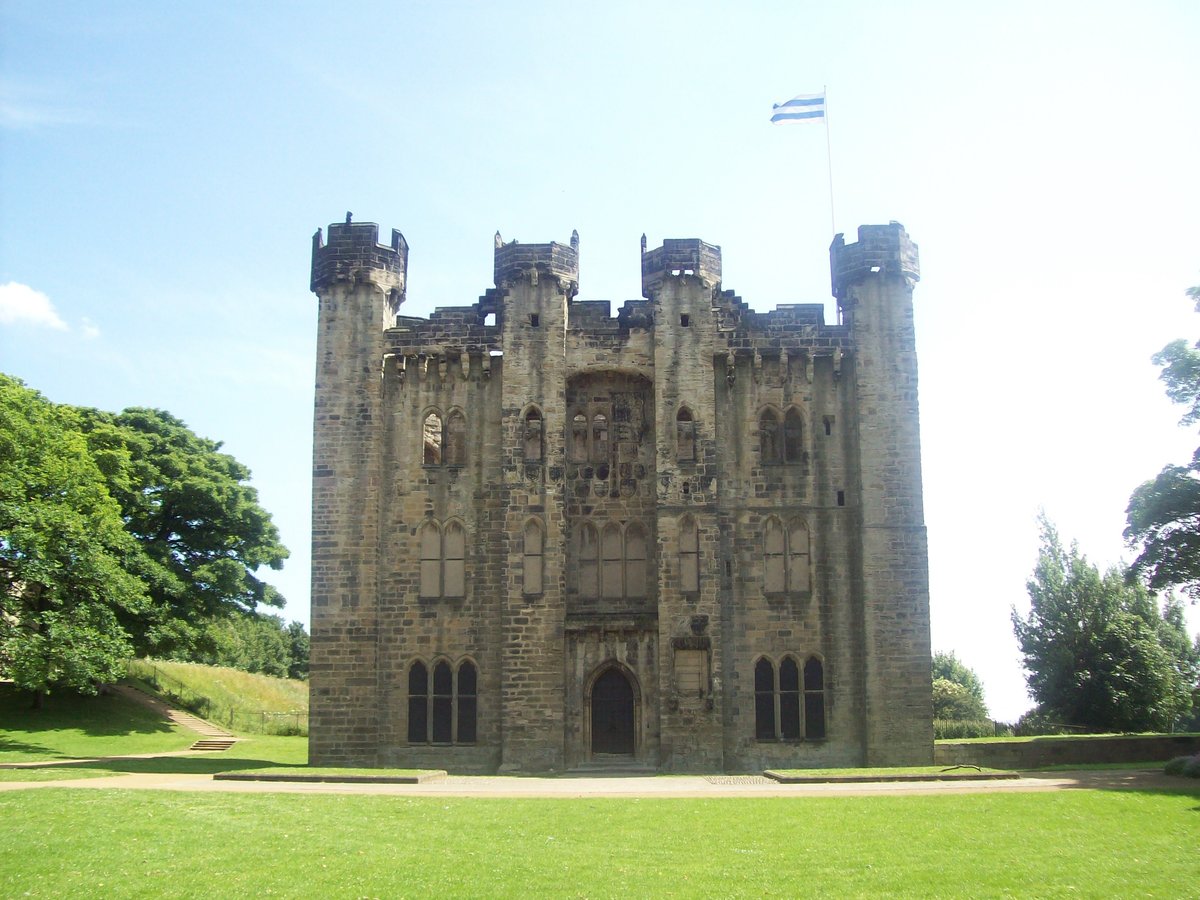
Hylton Castle, located in Sunderland, England, is a stone fortified manor house that has witnessed centuries of history. Originally built in wood by the Hilton family shortly after the Norman Conquest in 1066, it was later rebuilt in stone in the late 14th to early 15th century. One of the castle's main features is the range of heraldic devices found mainly on the west façade. These devices date from the castle's reconstruction from wood to stone and depict the coats of arms belonging to local gentry and peers of the late 14th to early 15th centuries.
These devices provide an approximate date for the castle's reconstruction from wood to stone. The Hilton family had been settled in England since the reign of King Athelstan (c.895–939). At this time, Adam de Hilton gave a pyx or crucifix to the monastery of Hartlepool, an act that hinted at the family's growing power and influence. In the 11th century, Lancelot de Hilton and his two sons, Robert and Henry, joined William the Conqueror’s forces, but Lancelot was killed at Faversham during William’s advance to London.
In gratitude, the king granted the eldest son, Henry, a large tract of land on the banks of the River Wear. This land became the site of Hylton Castle.
Sources: Wikipedia, OpenStreetMap, Wikidata, Wikimedia Commons
Written by Nicolo Ciampini
Discuss this with the author and others
No comments yet. Be the first to start the conversation.