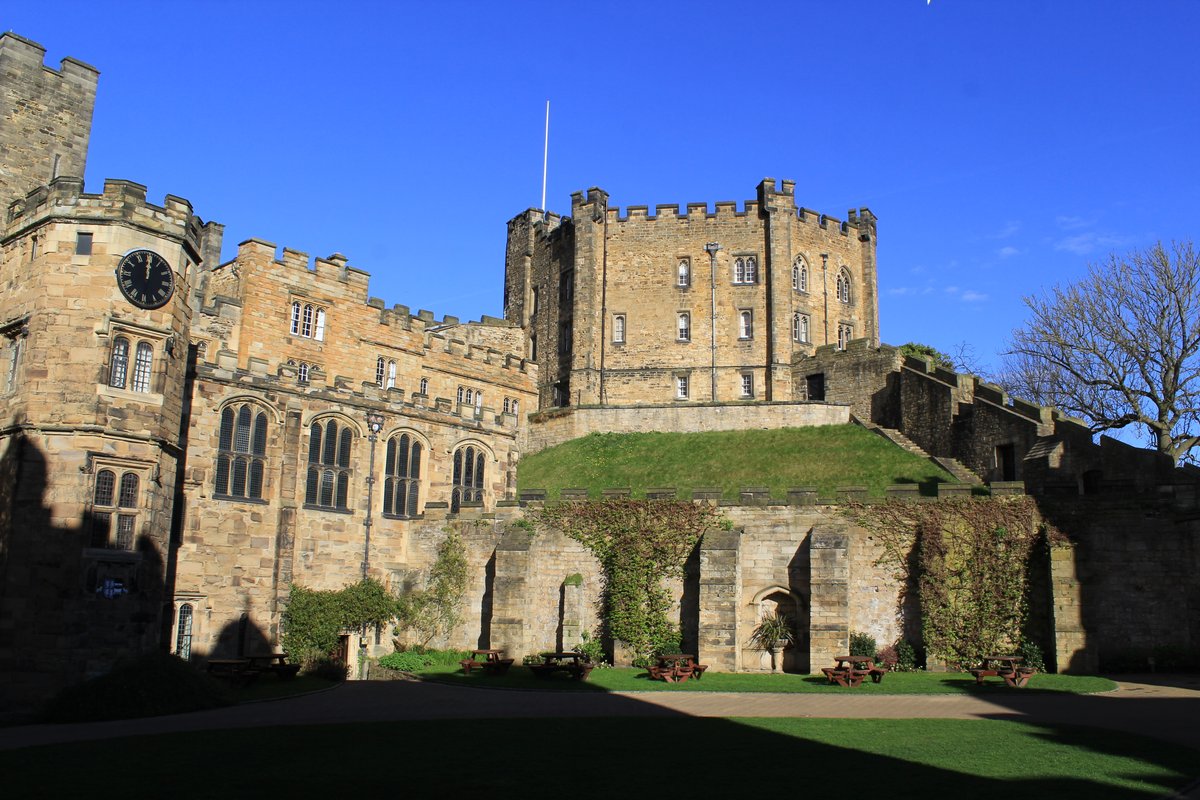

What does it mean to hold the keys to a fortress while exercising total autonomy? The Prince-Bishops of Durham lived this life as the crown's proxies. They were tasked with defending the northern frontier against Scottish incursions. This wide remit allowed them to exercise religious and secular power, including the ability to raise an army, levy taxes, and mint their own coinage.
Construction of the castle began in 1072 under the orders of William the Conqueror. He chose a motte and bailey design to establish a presence in the north. To build the new stone structures, stone was cut from the cliffs below the walls and moved up using winches. The castle served as the seat of the Bishop of Durham, who exercised royal authority on the king's behalf.
The Norman Chapel is the oldest accessible part of the castle. Built around 1080, some evidence suggests its Anglian architecture may be due to the use of forced Anglian labour. It served as a chapel before falling into disuse and becoming a corridor in 1841. During the Second World War, it was used as a command and observation post for the Royal Air Force, before being used as a bike shed for the rest of the 1940s. It was re-consecrated in the 1950s and remains in use for weekly services.
Who lives within these ancient walls today? Over 100 University College students call this place home. Visitors can explore the site through guided tours, as the castle remains a working building and currently functions as part of the University of Durham.
Sources: Wikipedia, OpenStreetMap, Wikidata, Wikimedia Commons
Written by Nicolo Ciampini
Discuss this with the author and others
No comments yet. Be the first to start the conversation.