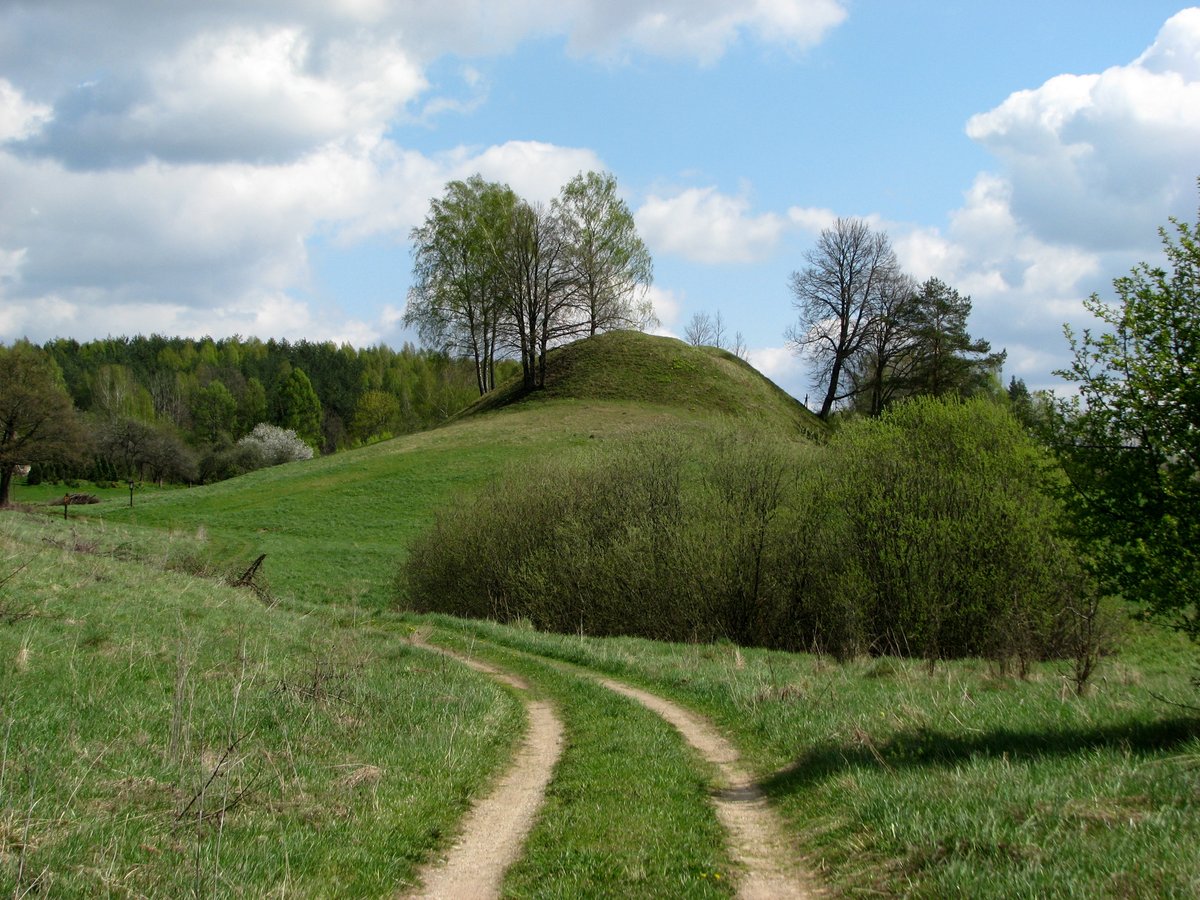

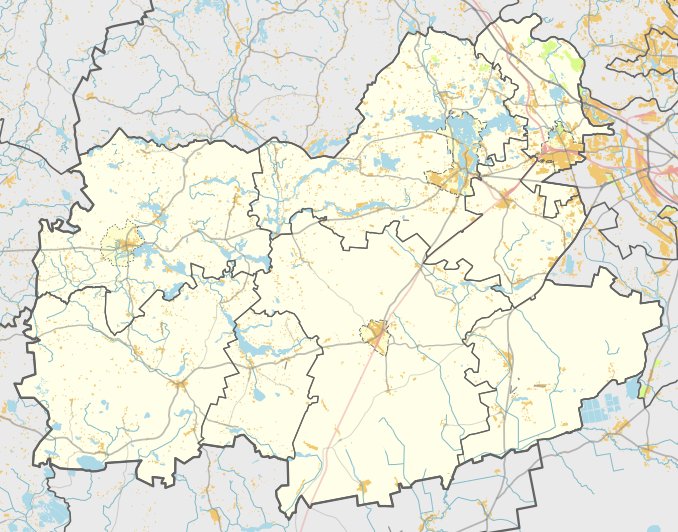
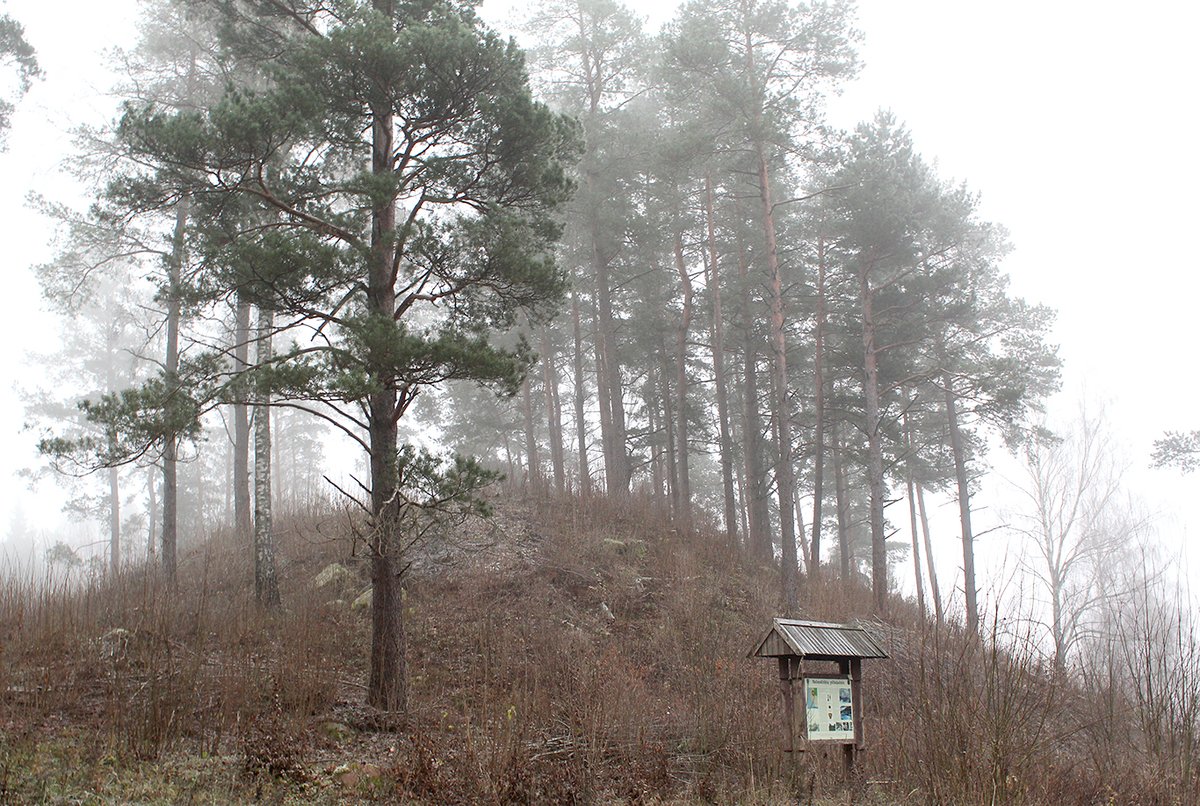
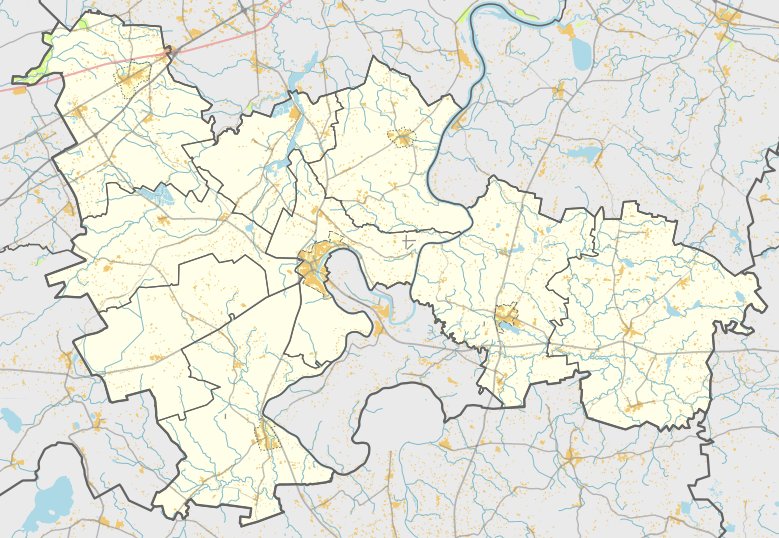
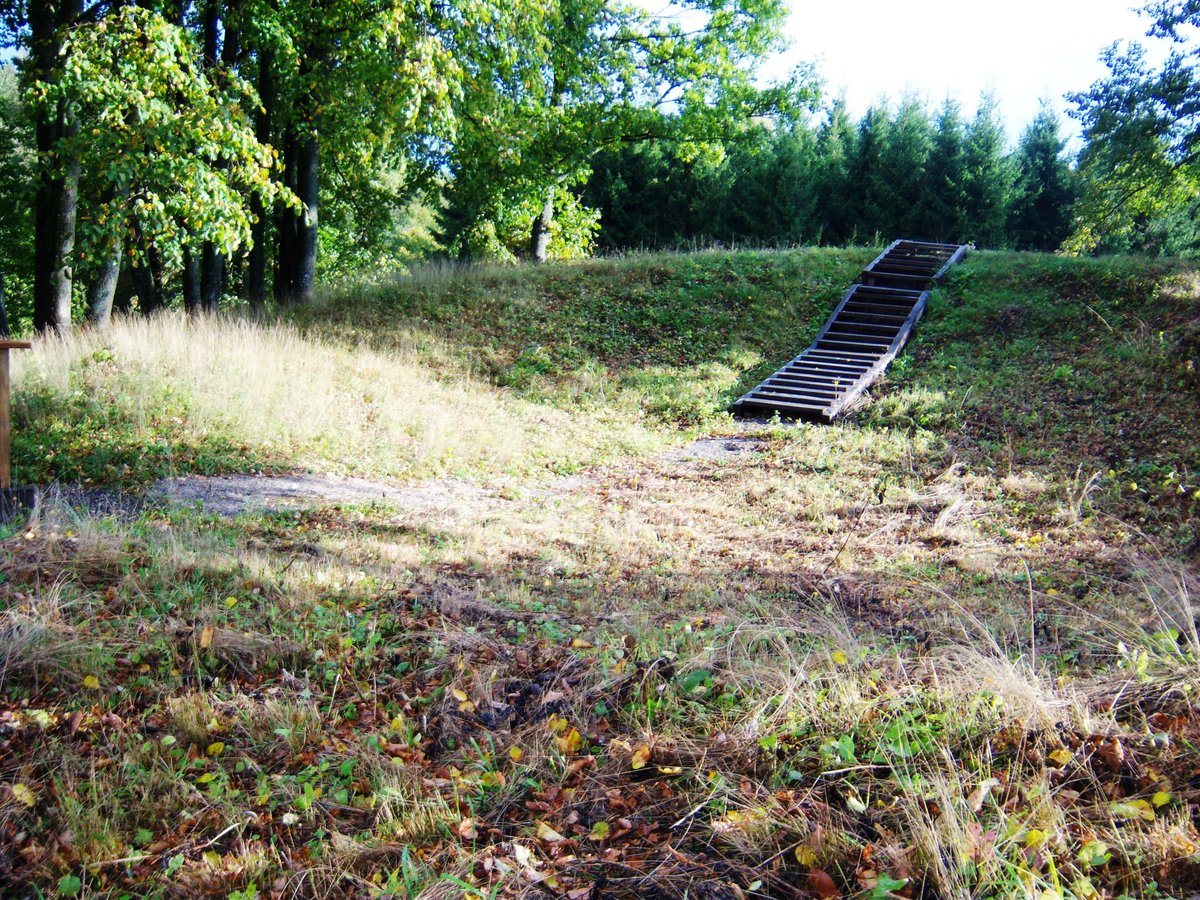
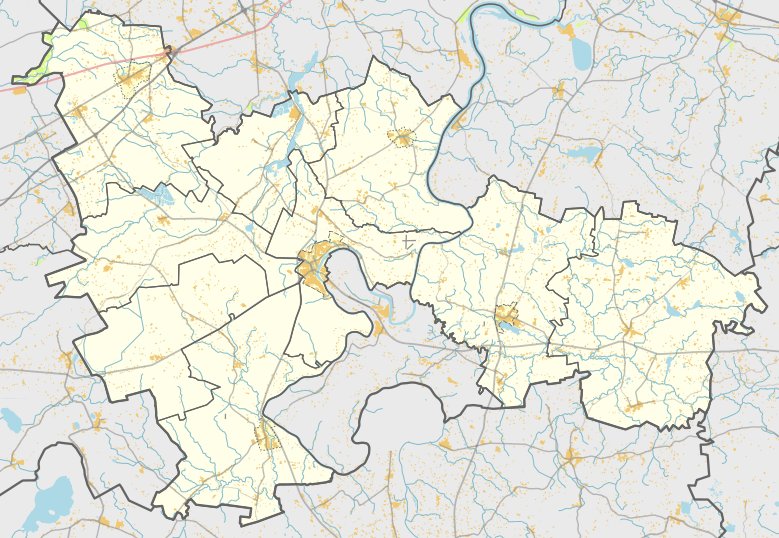
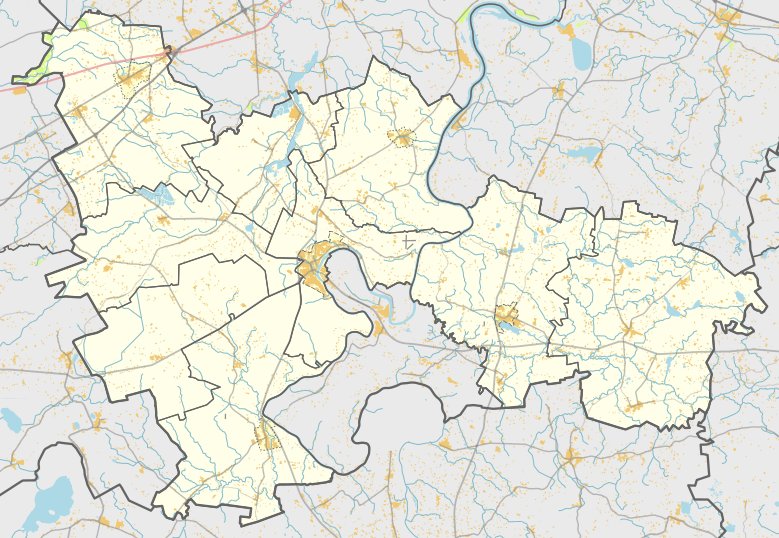
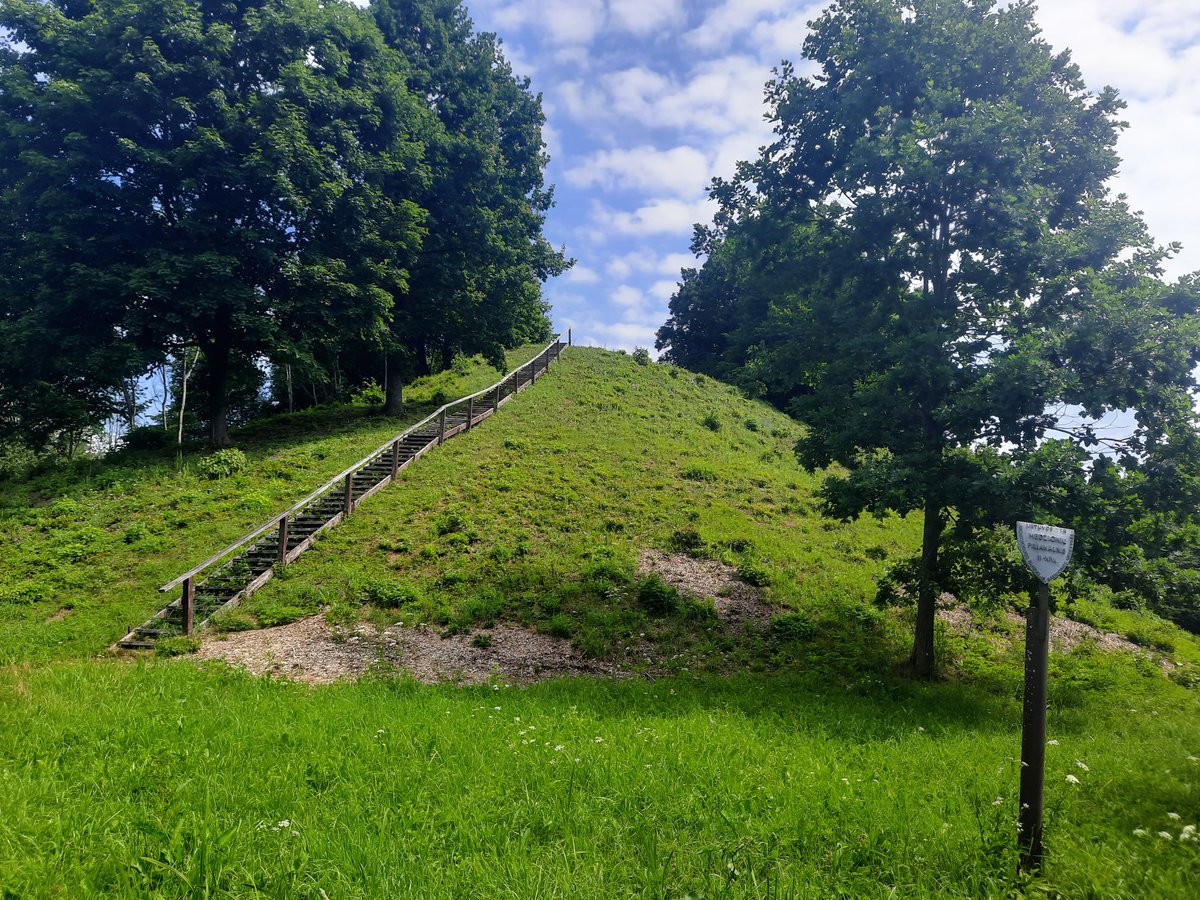
Lavariškių piliakalnis is a hillfort and mound located in the Trakų region municipality, near the village of Lavariškės. The site features a mound shaped like a cut log, with slopes measuring 7–13 meters in height. The yard is almost round, with a diameter of 8–10 meters, and is surrounded by an embankment that stands 1.5–3 meters high and is 13 meters wide.
In 1955, archaeological excavations were conducted by the Lithuanian Institute of History. The research revealed that an early yard measuring 10x12 meters was surrounded by an 1.8-meter high and 6-meter wide embankment dating to the middle of the first millennium. This was later filled to a width of 9 meters and a height of 2.5 meters. A third time, the embankment was filled at the beginning of the second millennium. Excavations also uncovered iron narrow-bladed and wide-bladed axes, adzes, and pottery with various surface finishes.
The hillfort was used from the middle of the first millennium to the 13th–14th century. Nearby, about 0.7 kilometers to the south, are burial mounds that were filled with sand and stones. These mounds contained remains of burned human burials from the second half of the first millennium. The artifacts found at the site are preserved by the National Museum of Lithuania.
Sources: Wikipedia, OpenStreetMap, Wikidata, Wikimedia Commons
Written by Nicolo Ciampini
Discuss this with the author and others
No comments yet. Be the first to start the conversation.