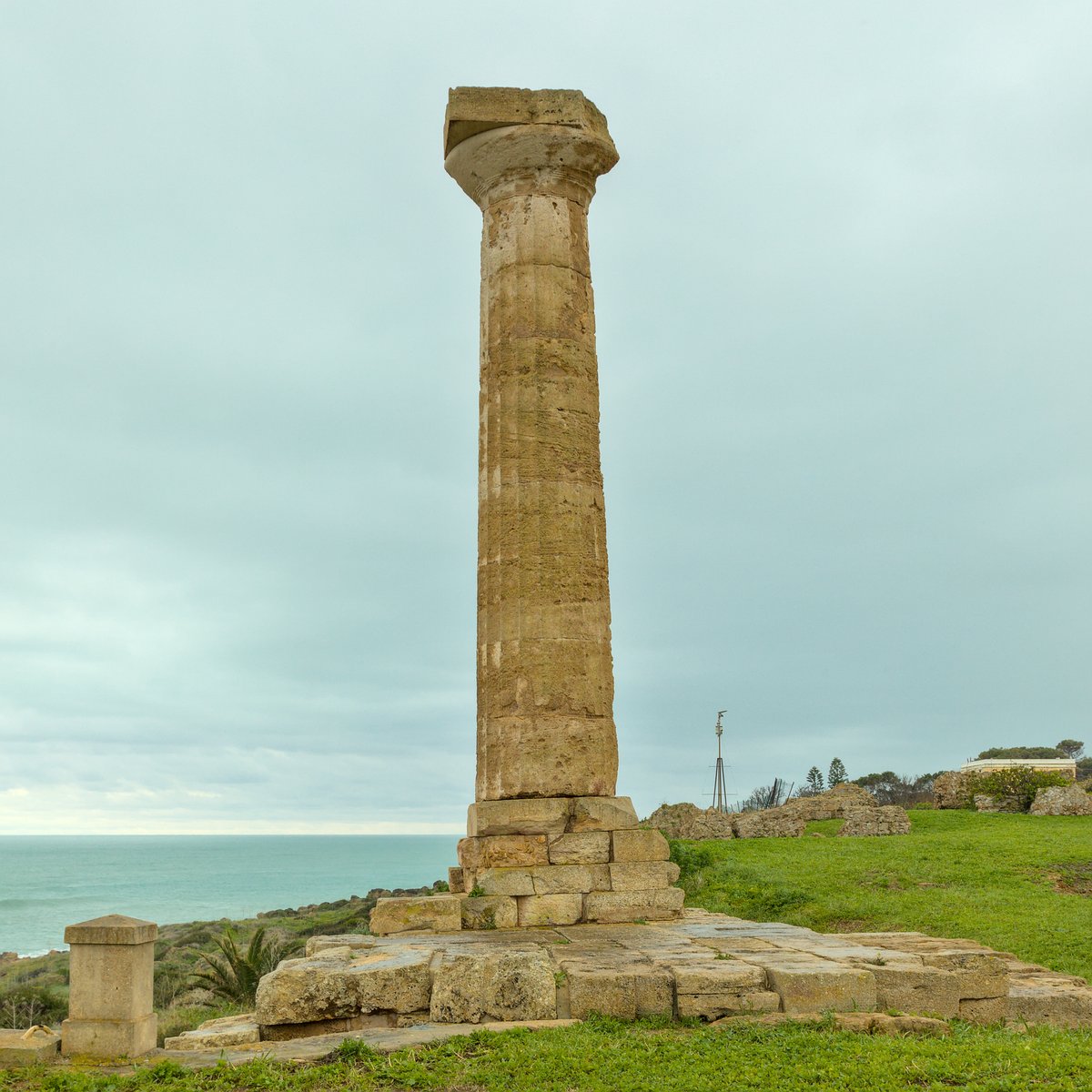

The Sanctuary of Hera Lacinia, located at Capo Colonna in Calabria, Italy, is a significant archaeological site that dates back to the 7th century BC. The site was a place of worship even before the arrival of the Greek colonists, as evidenced by the oldest ceramic finds. Building B, dated to the early 6th century BC, is particularly significant as it is where many gold, silver, and bronze votive offerings have been found, including a diadem that may have crowned the idol of Hera.
The temple itself, built around 480-470 BC, is a Doric temple with six columns in front and a total of 48 columns over 8 m tall. The sanctuary was one of the most important in Magna Graecia until the 4th century BC and featured public buildings for pilgrims and a grand sacred way connecting it with the sacred forest and the coastal landing points. Notable events at the sanctuary include the camp of Hannibal, the leader of the Second Punic War, and the looting by Cilician and Cretan pirates during the 1st century BC and by Sextus Pompey during the Roman colony's siege.
Sources: Wikipedia, OpenStreetMap, Wikidata, Wikimedia Commons
Written by Nicolo Ciampini
Discuss this with the author and others
No comments yet. Be the first to start the conversation.