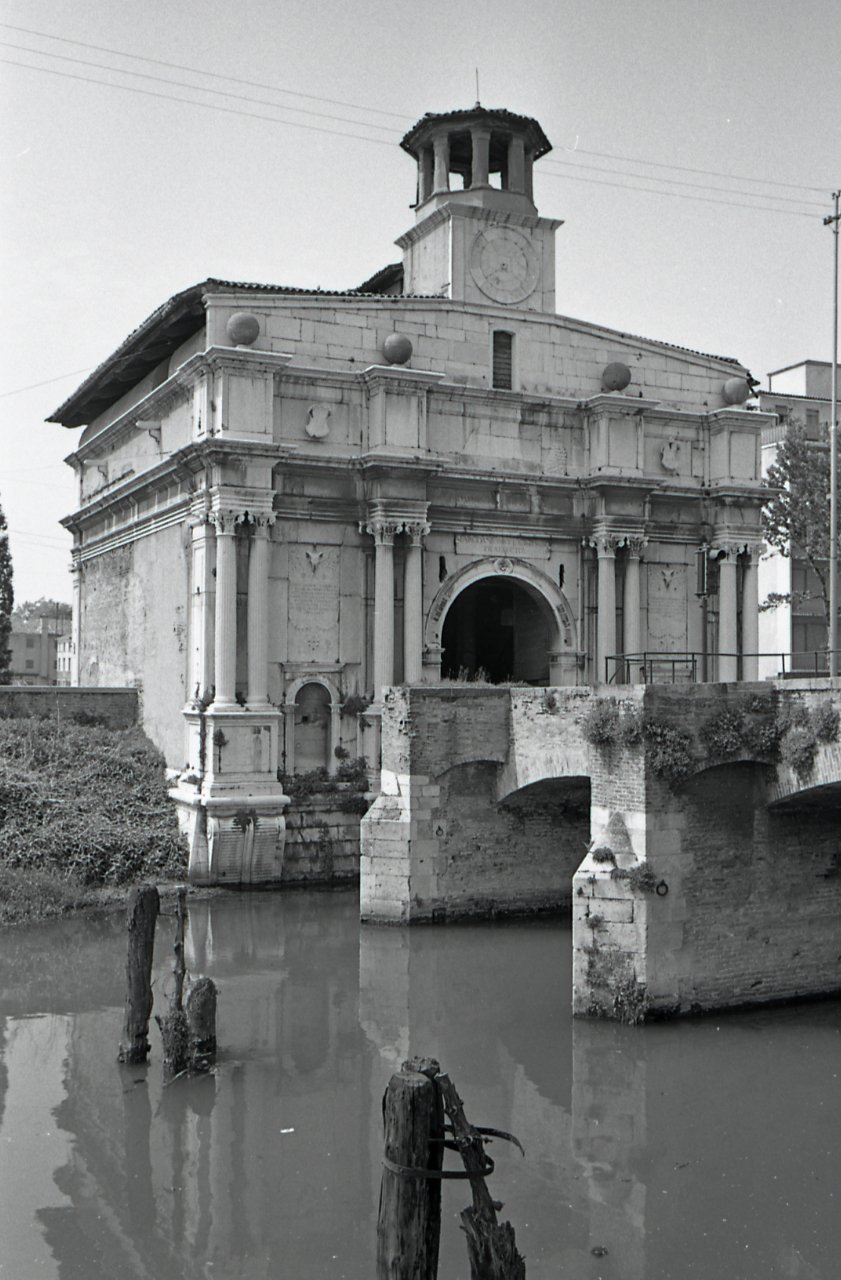

Porta Ognissanti, commonly known as Portello, is one of the remaining gates within the 16th-century walls. Built in 1519 to replace the old Portello Vecchio, the structure presents a unique appearance compared to other gates of the same period. Its exterior facade is adorned with white Istrian stone and features four pairs of columns topped by an architrave decorated with four trachyte cannonballs. While it effectively hides its nature as a tactical checkpoint, a pair of "cannoniere" (small cannons) near the water remain as functional elements of its military past.
The gate has remained substantially unchanged since it was depicted in a 1760 painting by Canaletto. This painting illustrates the gate as the terminal station of the main waterway connecting the Riviera del Brenta to Venice. Designed by the architect Guglielmo de' Grigi, the structure features a clock tower made of Nanto stone, which has been standing since 1535. Traces of frescoes can still be seen on the interior side of the gate.
Historically, the gate featured a relief of a lion, a typical symbol for such structures. After the fall of Venice in 1797, this relief was removed by soldiers and thrown into the adjacent canal. It was later salvaged, auctioned, and purchased by Assicurazioni Generali, which adopted it as a corporate symbol. Today, the relief is set into the facade of a Generali building in front of Palazzo Venezia.
Sources: Wikipedia, OpenStreetMap, Wikidata, Wikimedia Commons
Written by Nicolo Ciampini
Discuss this with the author and others
No comments yet. Be the first to start the conversation.