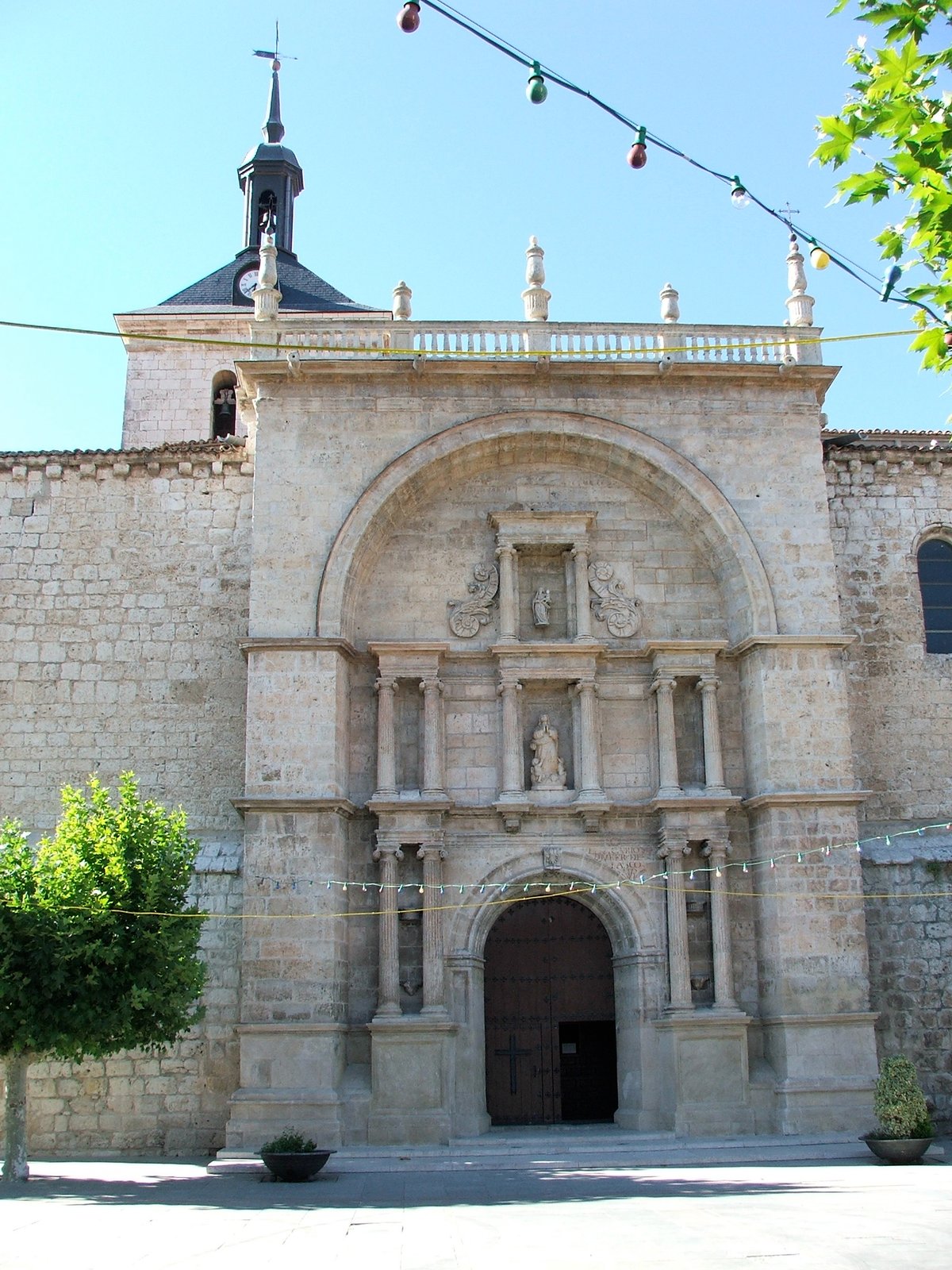

Built between 1562 and 1568, the Iglesia de Nuestra Señora de la Asunción is a testament to the Renaissance style in Spain. This church, dedicated to the Assumption of Mary, boasts three naves and octagonal pillars. Its vaults are adorned with star-crossed vaulting. Although it does not carry elements of Gothic style, it does have elements that mimic the Gothic style, like the nerviors of the vaults and the arcos apuntados. A large half-point niche, crowned by a plateresque balustrade attributed to Juan de Escalante, provides a striking entrance to the church.
Inside, the retablos, mostly from the 17th and 18th centuries, are particularly noteworthy. The main altar, dedicated to Nuestra Señora de la Asunción, is attributed to Manuel Álvarez and Juan de la Maza. It also features sculptures attributed to Gregorio Fernández, including the sculpture of the Holy Sacrament and the relief of the Annunciation. Buried in a sarcophagus of alabaster, created by Esteban Jordán, is the remains of Alonso Velázquez, a bishop who was a professor at the University of Alcalá de Henares, confesor of Saint Teresa of Avila, bishop of Osma and advisor to Philip II of Spain.
Sources: Wikipedia, OpenStreetMap, Wikidata, Wikimedia Commons
Written by Nicolo Ciampini
Discuss this with the author and others
No comments yet. Be the first to start the conversation.