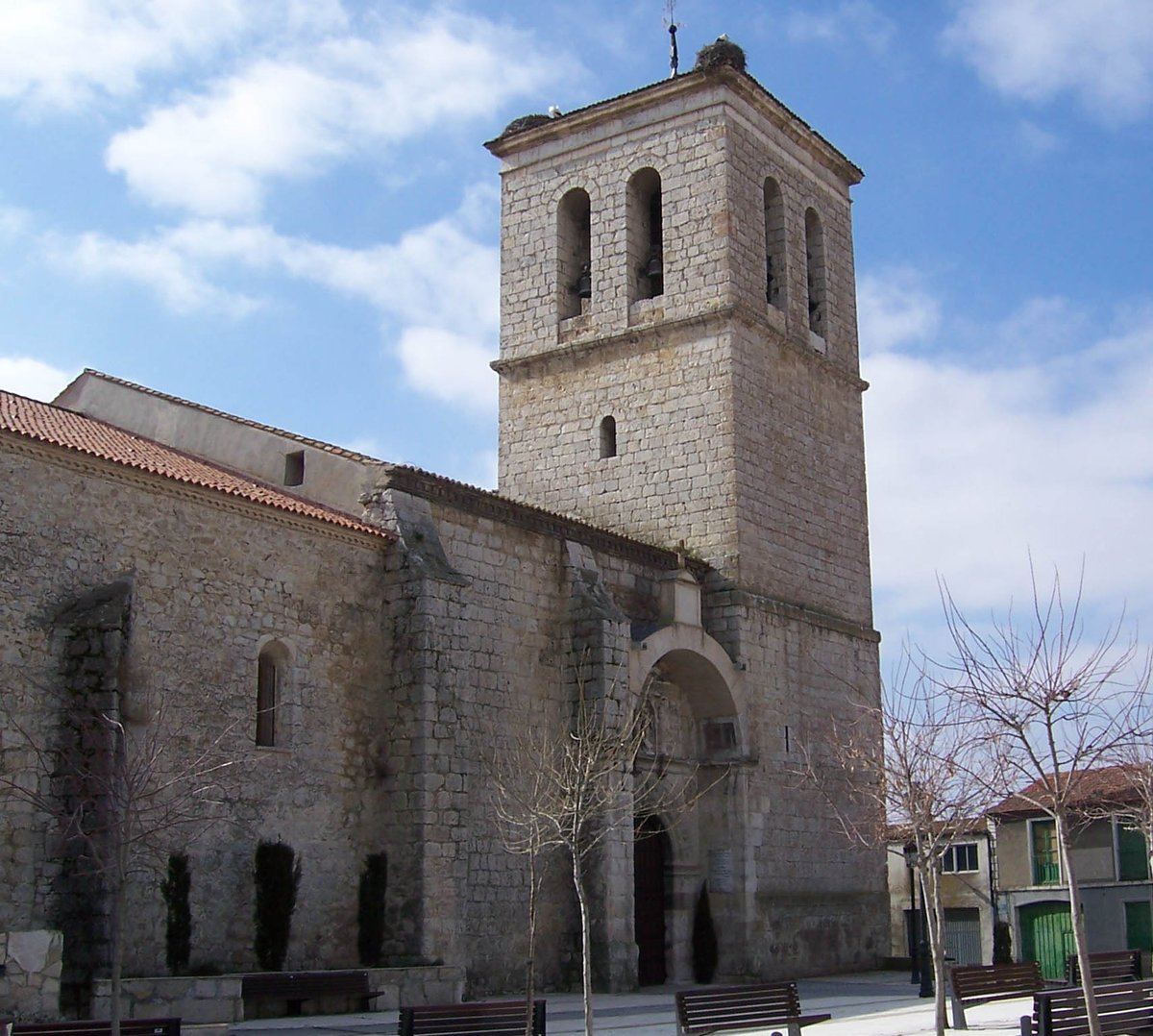

The Iglesia de San Juan Evangelista in Portillo presents clearly visible different construction stages. The oldest part dates from the beginning of the 16th century, corresponding to the apse and the first section of the naves. This early work is characterized by angular buttresses, elongated half-round windows, and irregular ashlar masonry.
The three remaining sections of the nave are taller and feature more regular ashlar masonry. These sections constitute the main body of the building and are characterized by post-Herrerian patterns, rectangular windows with molded lintels, and more elaborate buttresses ending in concave profiles.
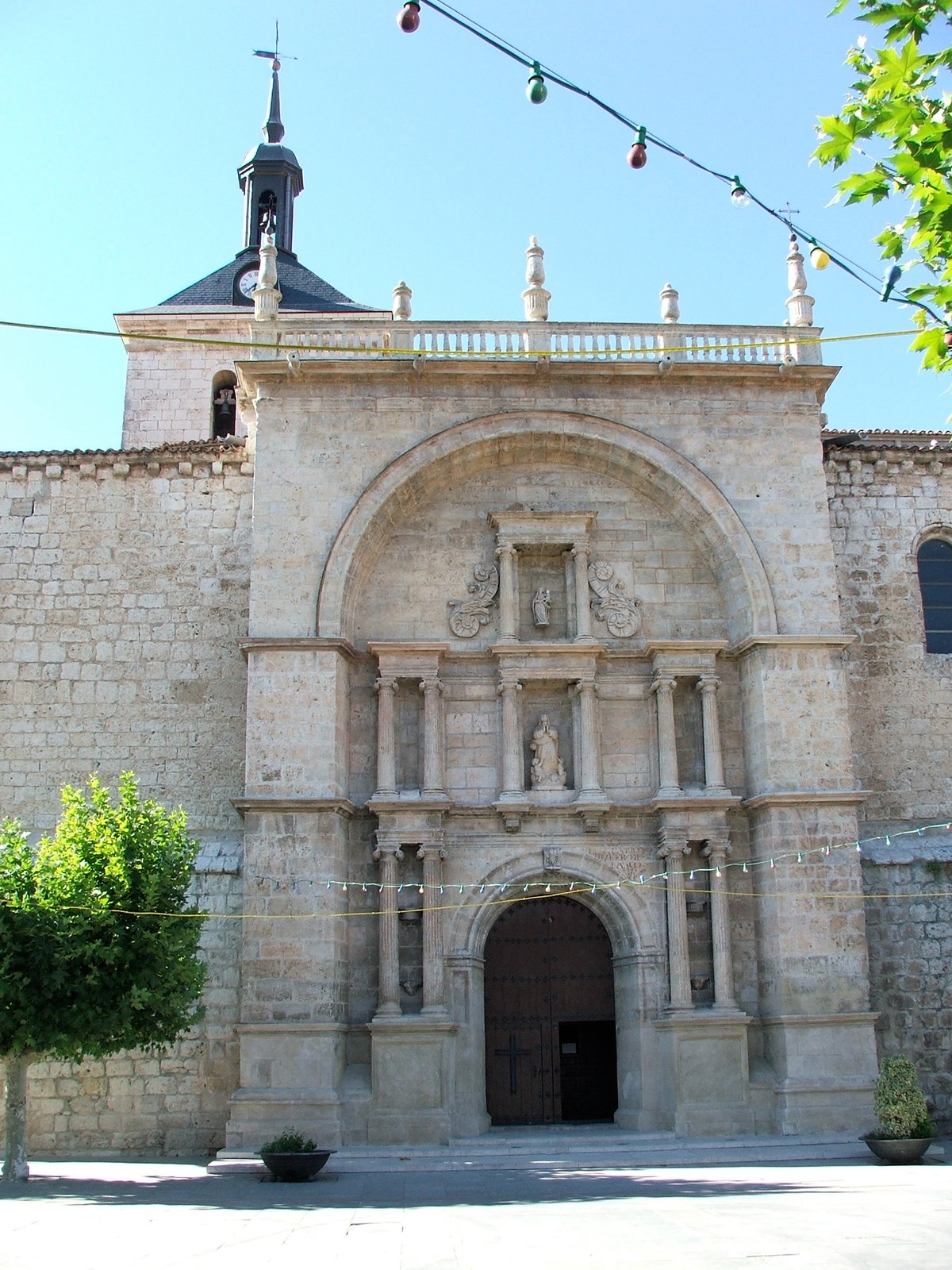
Access is provided through two portals in the third section of the nave. The main portal, dated 1570, features a lower body with molded jambs and a semi-circular arch decorated with coffered panels containing angel heads and rosettes, with a bust of Christ in the keystone. The upper body features a niche with a triangular pediment containing the image of the titular saint. Inside, the interior features three naves separated by pillars and columns, with ribbed vaults and 17th-century plasterwork.
The church is now a Bien de Interés Cultural. Visitors can observe the transition from the irregular masonry of the 16th-century apse to the refined post-Herrerian patterns of the main body and the 17th-century plasterwork in the vaults of the final three sections of the naves.
Sources: Wikipedia, OpenStreetMap, Wikidata, Wikimedia Commons
Written by Nicolo Ciampini
Discuss this with the author and others
No comments yet. Be the first to start the conversation.