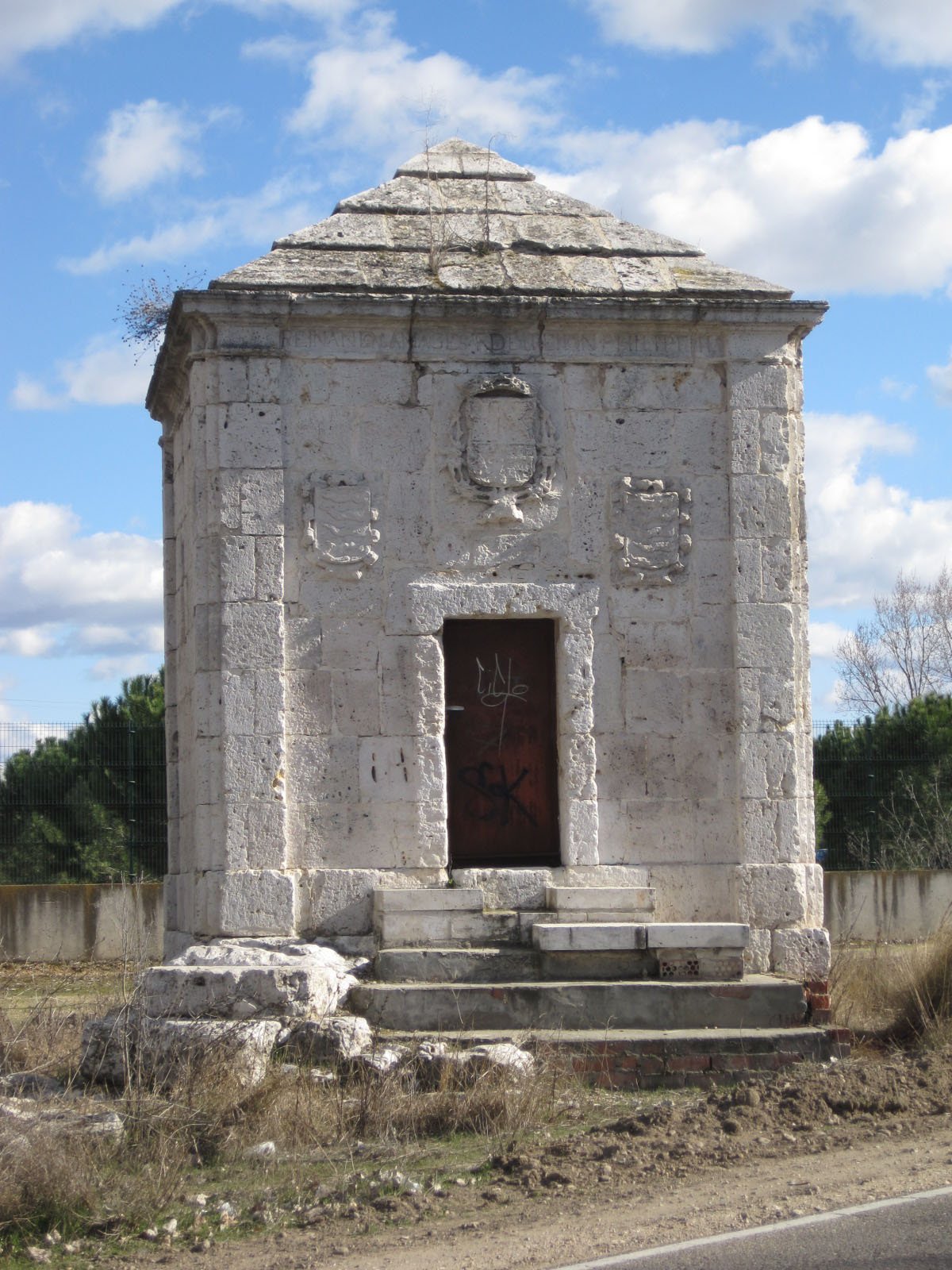

The Arcas Reales aqueduct was constructed between the late 16th and early 17th centuries to provide water to the city of Valladolid, Spain. The project, carried out with the collaboration of monarchs, the city council, monks, and local families, fructified in the so-called viajes de aguas, conductions for transporting the water from the manantiales to the urban fountains. Originally, eight water sources were planned, but only three were built: Puerta del Campo, Fuente Dorada, and Rinconada.
The remaining five sources, Angustias, Chancillería, plaza de la Universidad, Prado de la Magdalena, and San Andrés, were not built. The aqueduct, known as viaje de aguas de Argales, was made from earthenware pipes and is 5 kilometers long, with 32 arcas or cisterns to collect, regulate, filter, and store water. Twenty-seven of these arcas are outside the city, with only 14 of them still preserved. They are built from stone and have a quadrangular plan, a door, a north-facing window, and a pitched roof.
The first arch, Arca Real, was completed in 1589 by Diego de Praves. The Arcas Reales provided water to three surviving water sources: Puerta del Campo, Fuente Dorada, and Rinconada.
Sources: Wikipedia, OpenStreetMap, Wikidata, Wikimedia Commons
Written by Nicolo Ciampini
Discuss this with the author and others
No comments yet. Be the first to start the conversation.