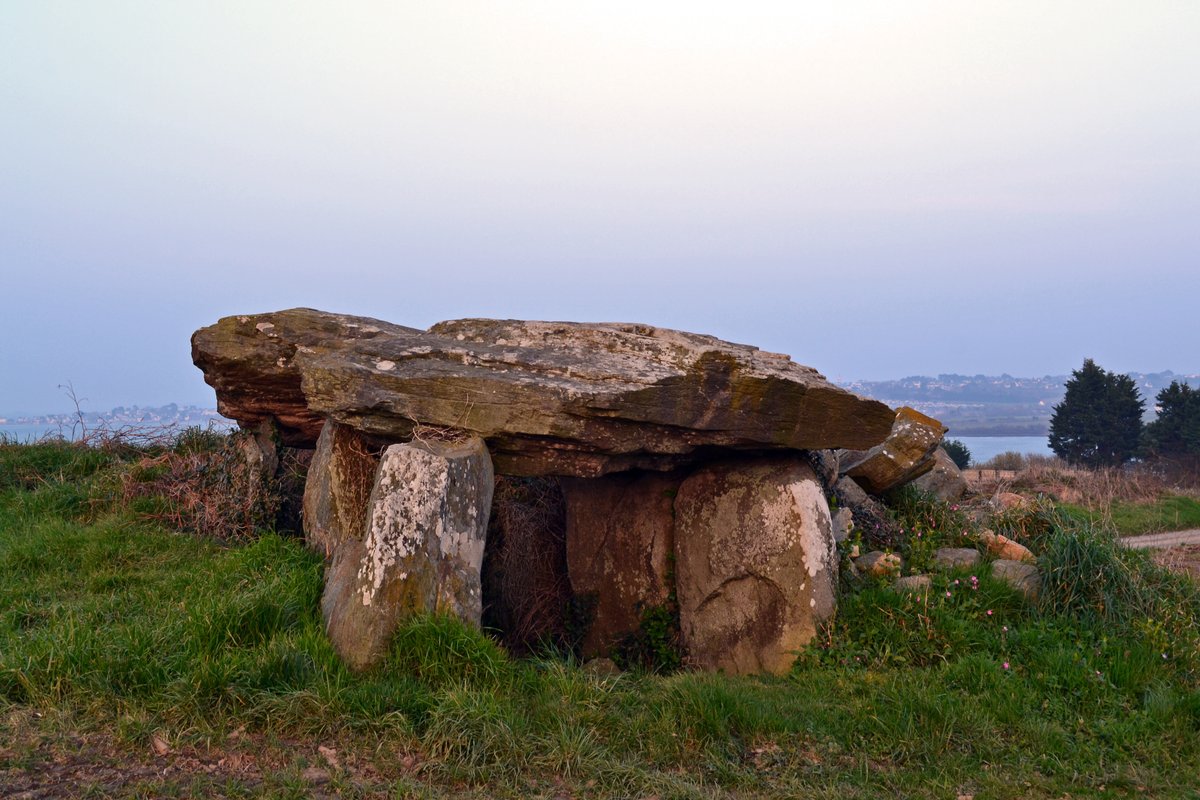

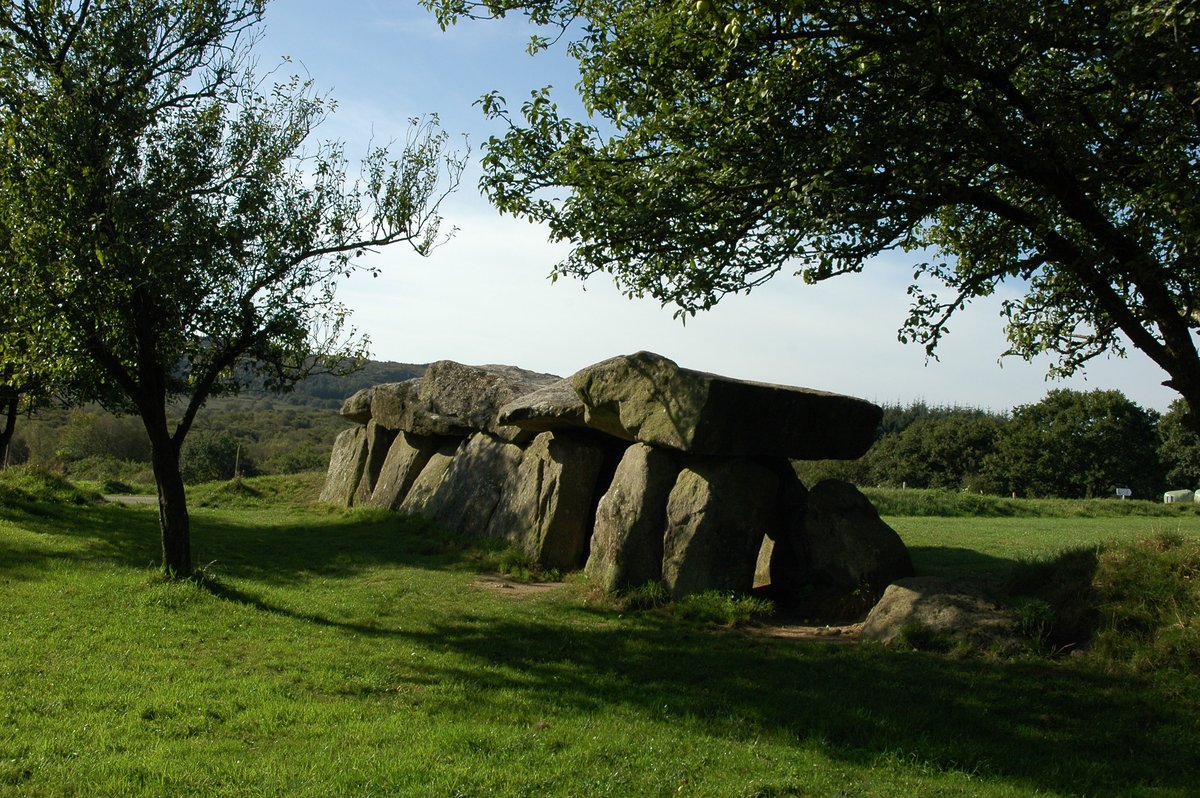
Some look at the south-east slab of the Dolmen de Boutouiller and see two large protuberances interpreted as a mother goddess. Others just see old rocks. It is a mystery to have while walking the fields between Keranguez and Kerivin.
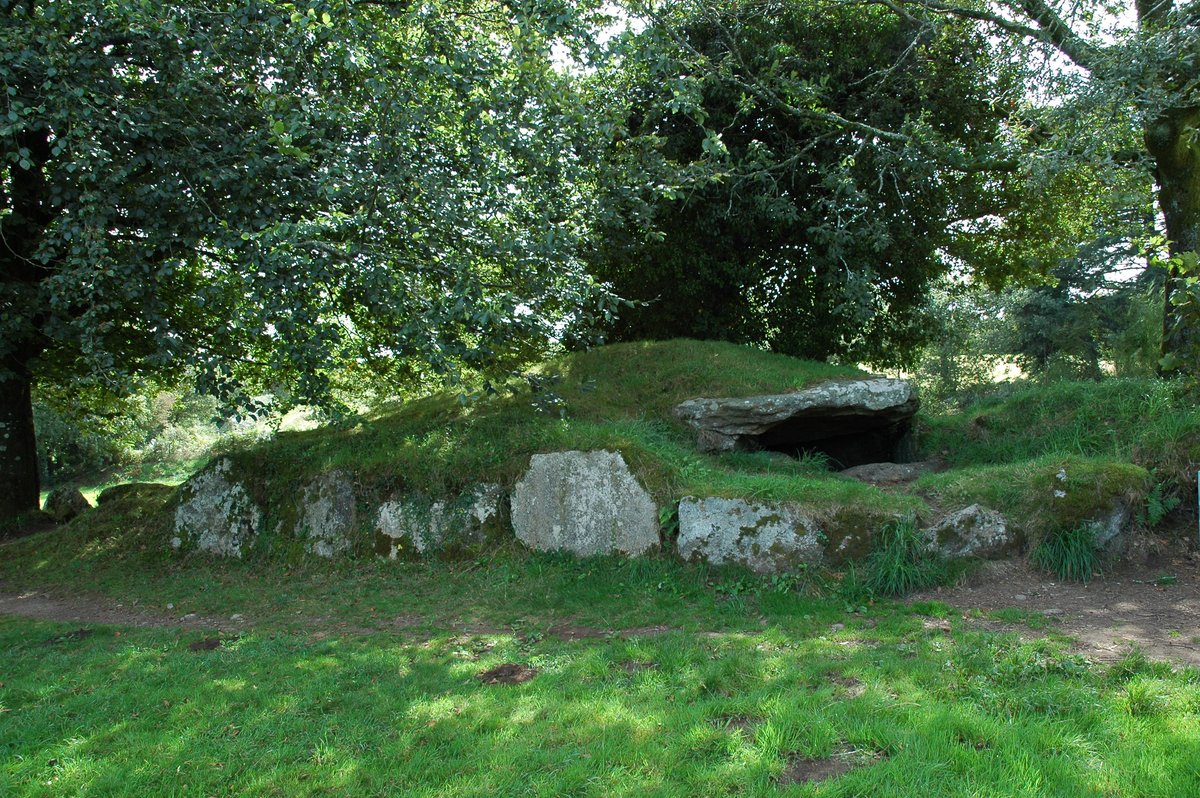
This is a dolmen à couloir, a Neolithic structure that was classified as a historic monument in 1909. The dolmen measures 8.50 m in length and 3.90 m in width. The entrance passage is 0.70 m wide. You can still see the remains of the tumulus and some of the facing stones, though no covering slab remains over the passage.
The builders used three different types of rock. They used grey and ochre granite for the orthostates and gneissic amphibolite for the two large capstones. The chamber is asymmetrical, with the height under the slab varying from 1.30 m at the south-east end to 1.80 m at the south-west end. The width of the chamber varies from 1.20 m to 2 m. The field itself used to be called Par-ar-C'héo, which translates to the field of the cave.
Today, it sits as an archaeological site in Saint-Pol-de-Léon. The site is located in the field between the places called Keranguez and Kerivin.
Sources: Wikipedia, OpenStreetMap, Wikidata, Wikimedia Commons
Written by Nicolo Ciampini
Discuss this with the author and others
No comments yet. Be the first to start the conversation.