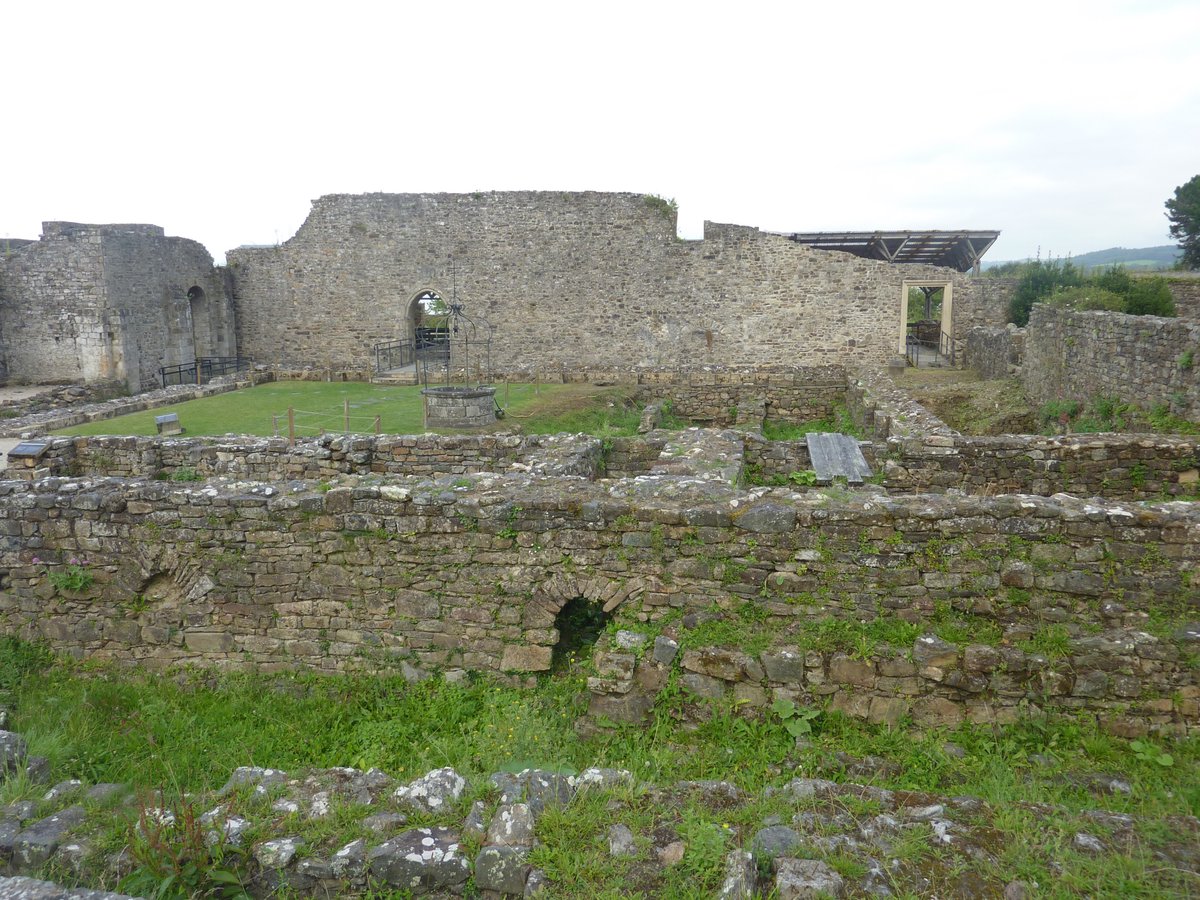

The ruins of the Abbey of Landévennec stand on the banks of the river Aulne, in a magnificent setting. The abbey was traditionally founded around 490 by Saint Winwaloe (also known as Guénolé). It became a Benedictine house in the eighth century. The abbey was attacked and burned by Vikings in 913 and was subsequently rebuilt, but only the rebuild after being burned by Vikings was in stone. It was rebuilt multiple times afterwards. The abbey was suppressed in 1793 during the French Revolution and the goods and premises were sold off.
In 1950 the site was bought by the Benedictine community of Kerbénéat, who built new premises. The community formed part of the Subiaco Congregation, since 2013 the Subiaco Cassinese Congregation. Today, the abbey museum features an exhibition that examines how excavations are carried out as well as outlining the site’s major developments through history. The museum displays artefacts discovered during archaeological excavations, tracing the eventful past of this abbey steeped in Breton history for more than 15 centuries. Scale models represent the different construction phases from the 6th to the 17th century.
Sources: Wikipedia, OpenStreetMap, Wikidata, Wikimedia Commons
Written by Nicolo Ciampini
Discuss this with the author and others
No comments yet. Be the first to start the conversation.