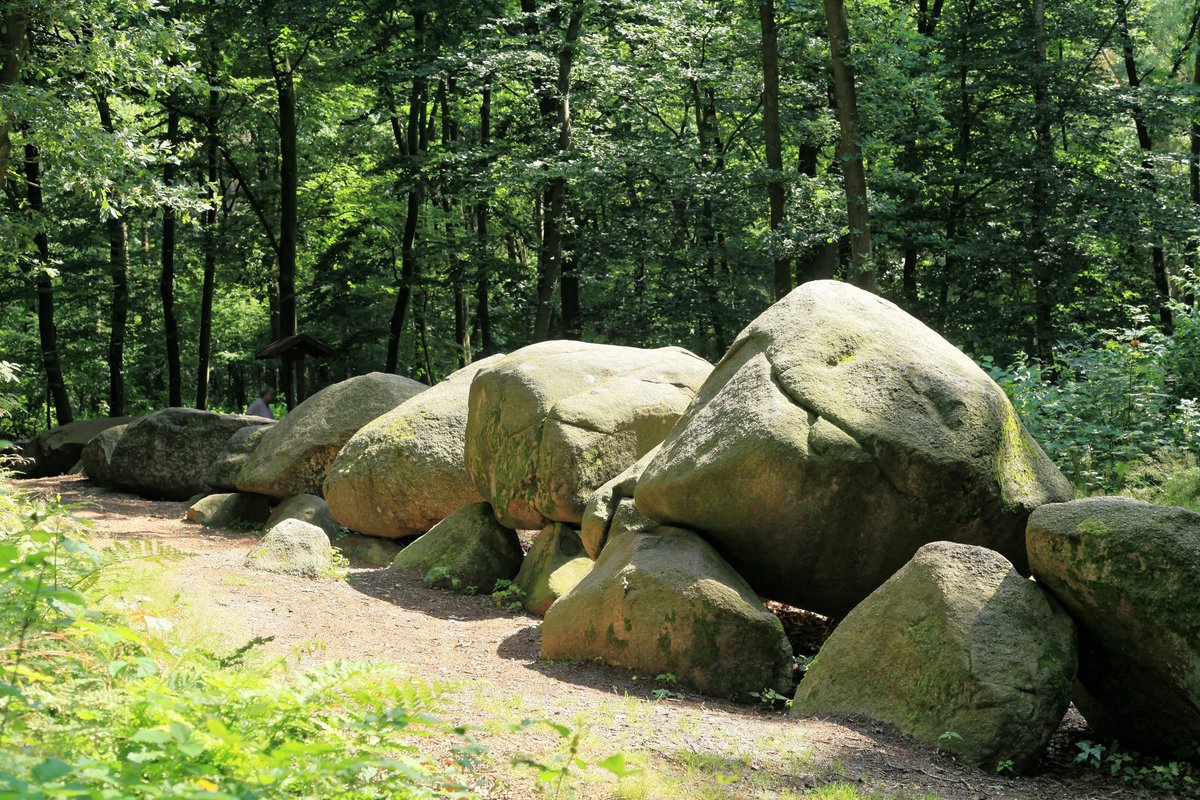
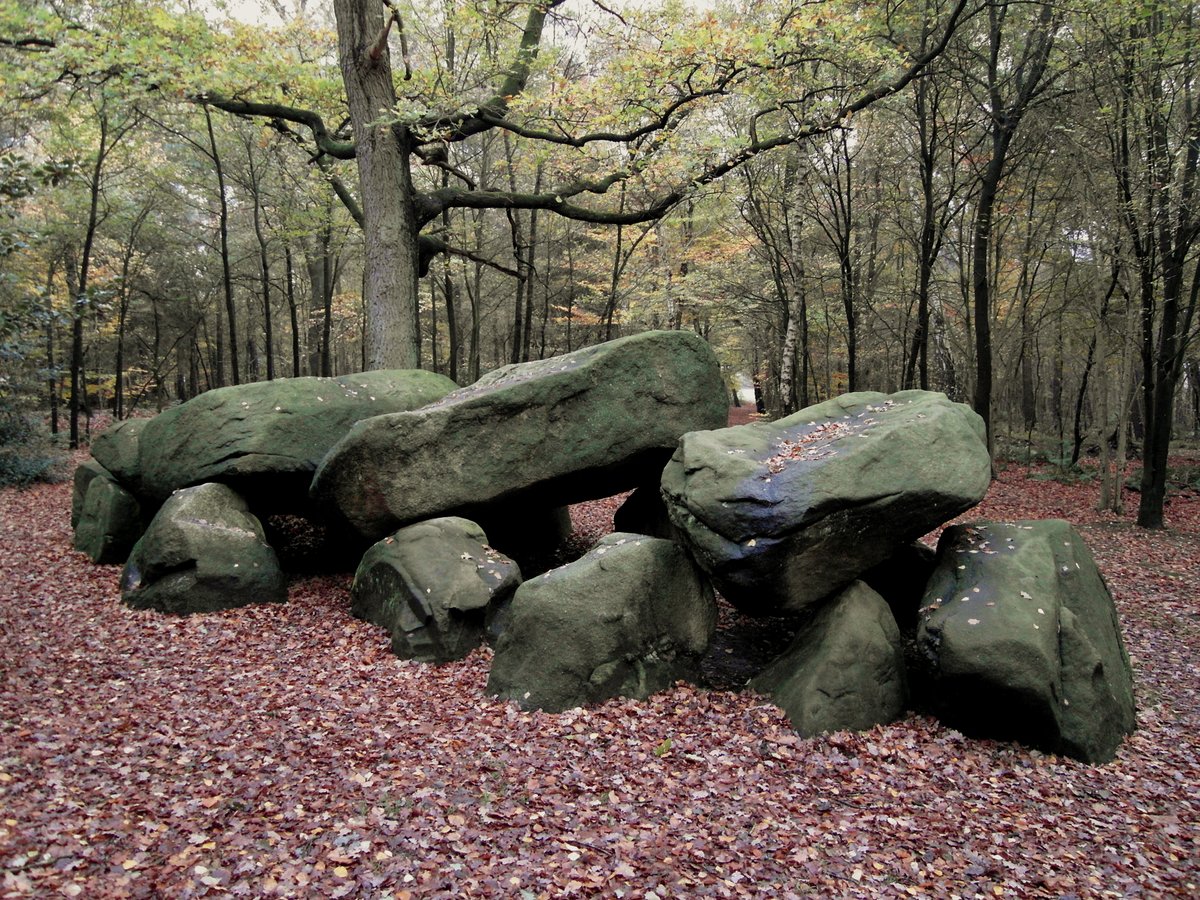
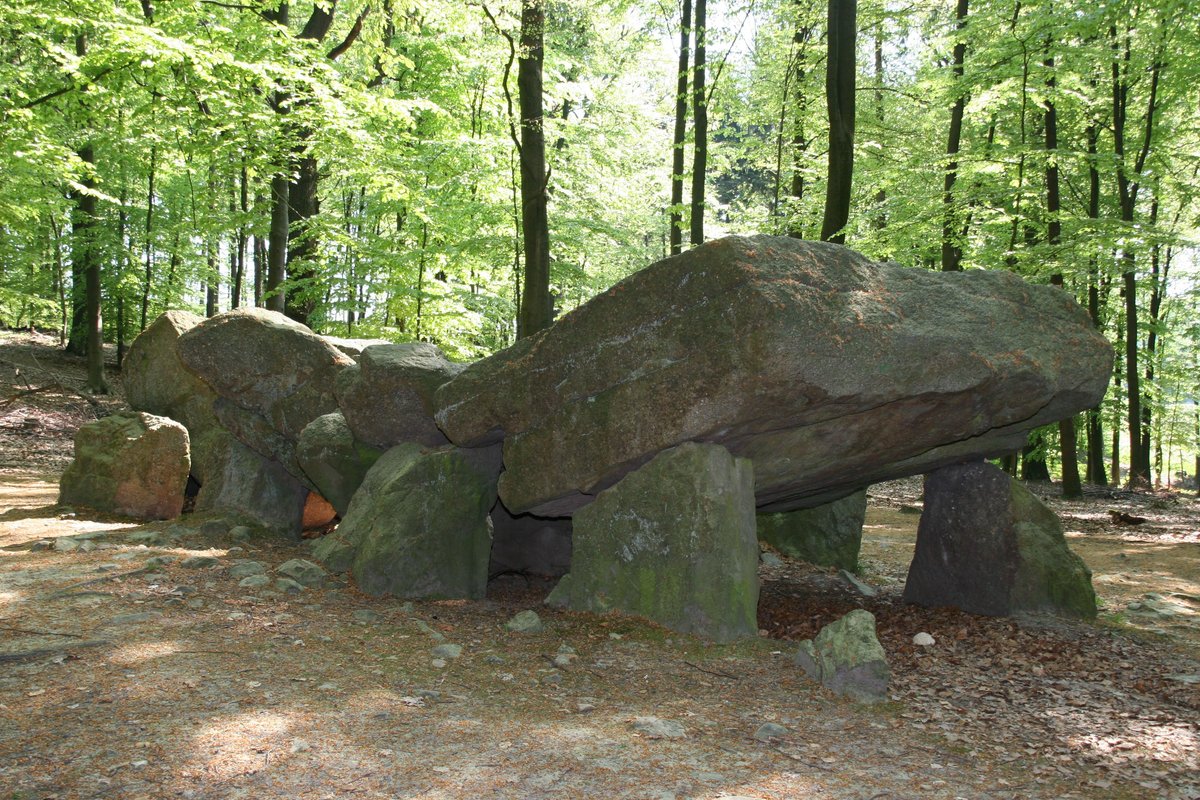
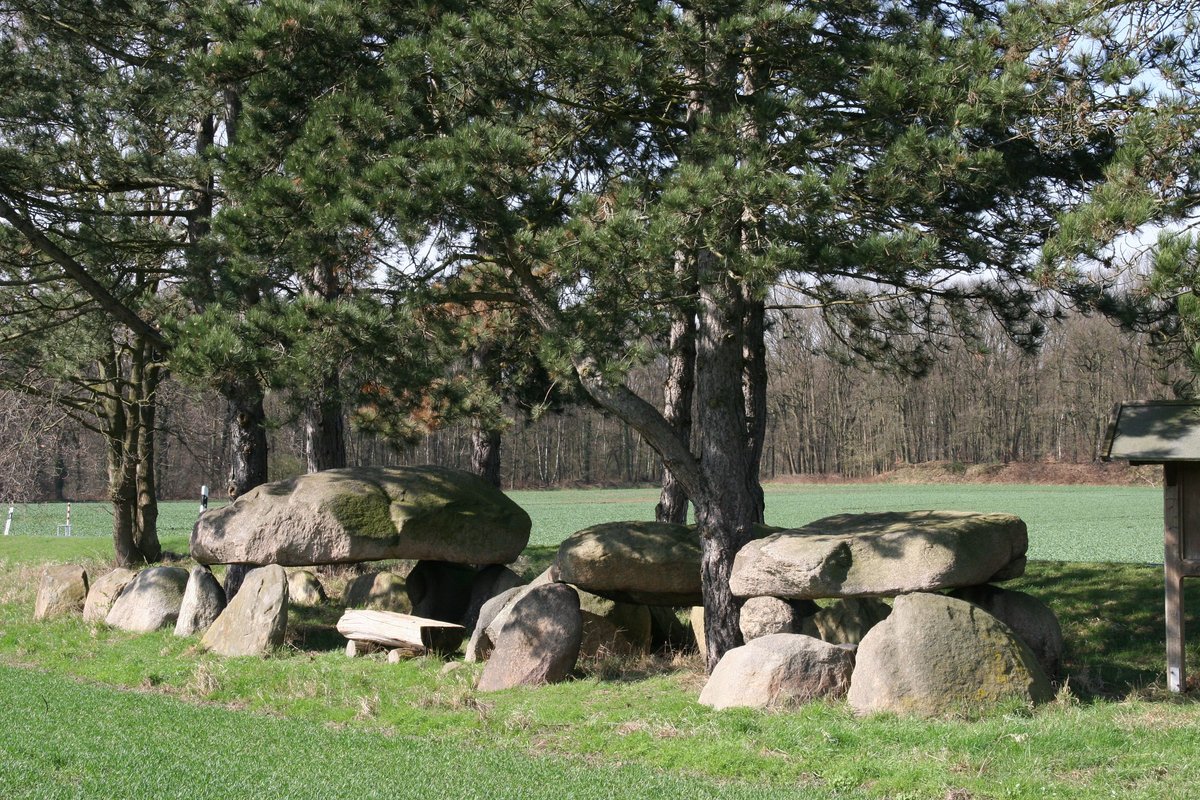
The chamber at De hoogen Steener is 28 meters long. It is two meters wide and is an Emslandic chamber, a specific architectural style of the Funnelbeaker culture, built between 3500 and 2800 BC.
The structure is a gallery grave, a type of megalithic monument that pairs a main chamber with a structurally set-off lateral gallery. This chamber is the longest of a megalithic site in Lower Saxony. It is longer than most structures in Central and Northern Europe, except for the Havelte D53 in the Netherlands, which has more stones.
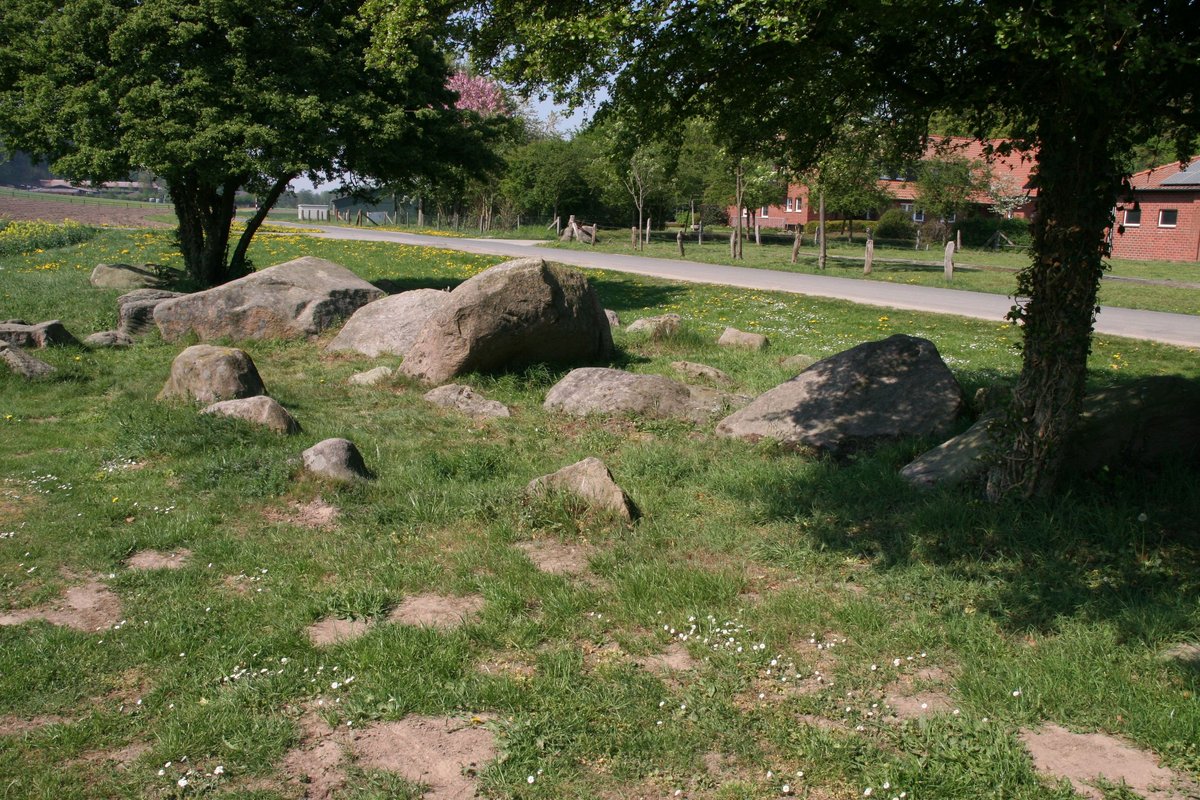
The site sits within an oval enclosure, though it has almost no preserved kerbstones. The supporting stones are partially hidden in a newly mounded hill. Of the likely 17 original capstones, 14 remain preserved.
In 1864, J. H. Müller found pieces of decorated urns under the capstones. In 1906, Hans Müller-Brauel found stone tools and quantities of decorated vessel shards while clearing the chamber.
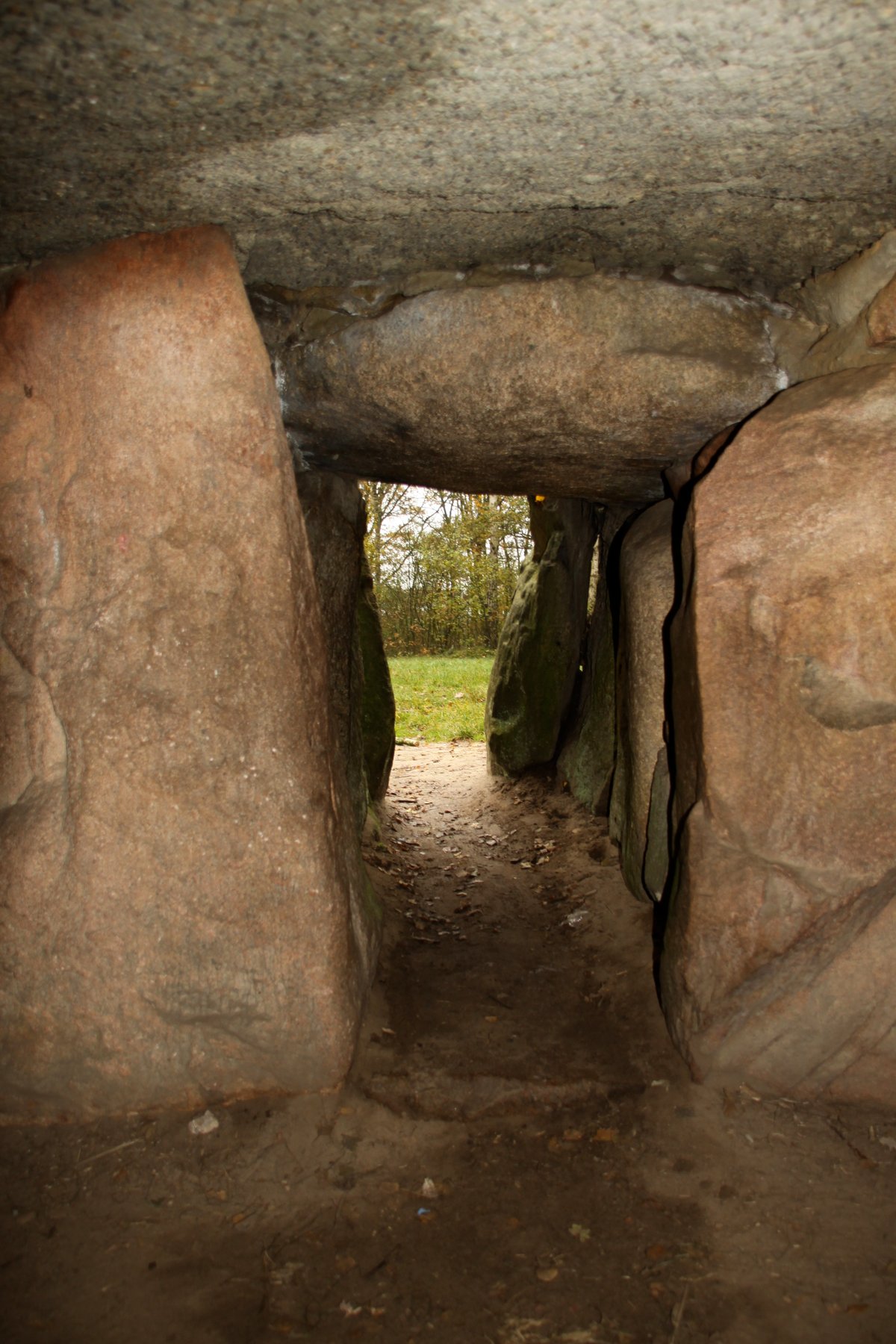
The entrance was located in the middle of the southern long side, where two preserved stones indicate the mouth of the gallery.
Sources: Wikipedia, OpenStreetMap, Wikidata, Wikimedia Commons
Written by Aurora
Discuss this with the author and others
No comments yet. Be the first to start the conversation.