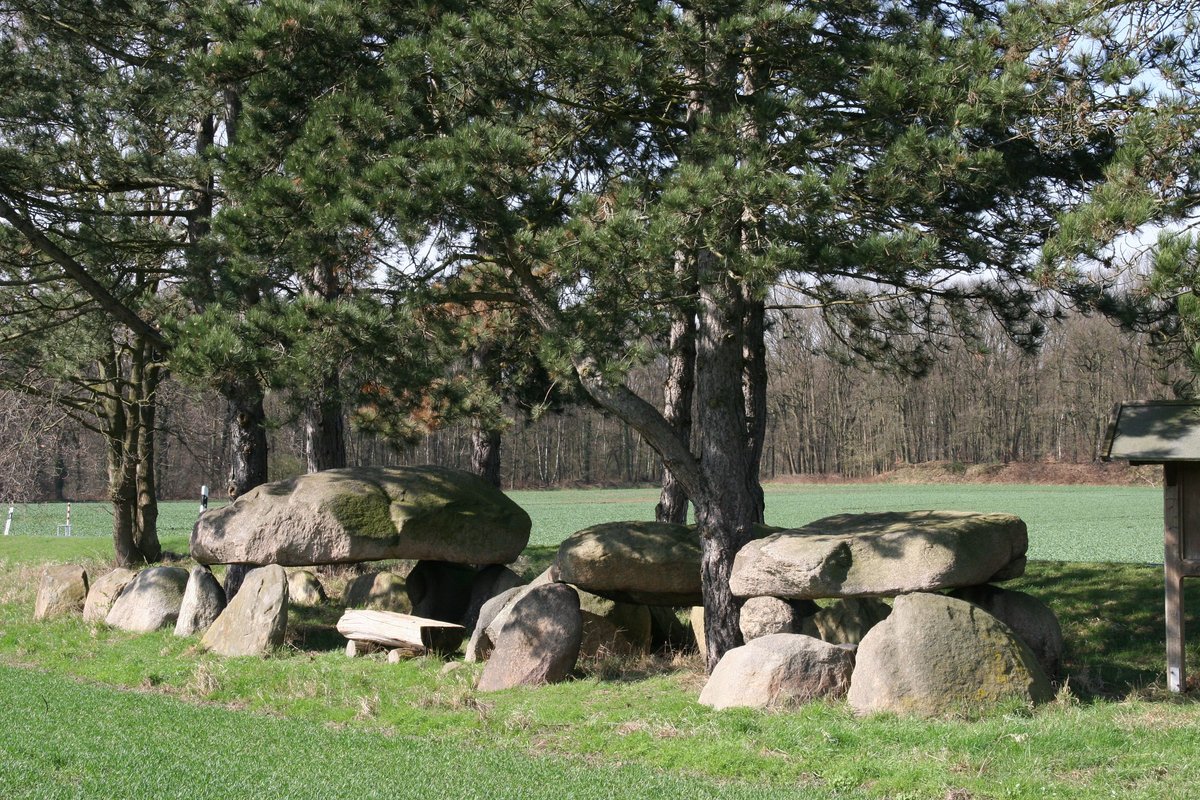
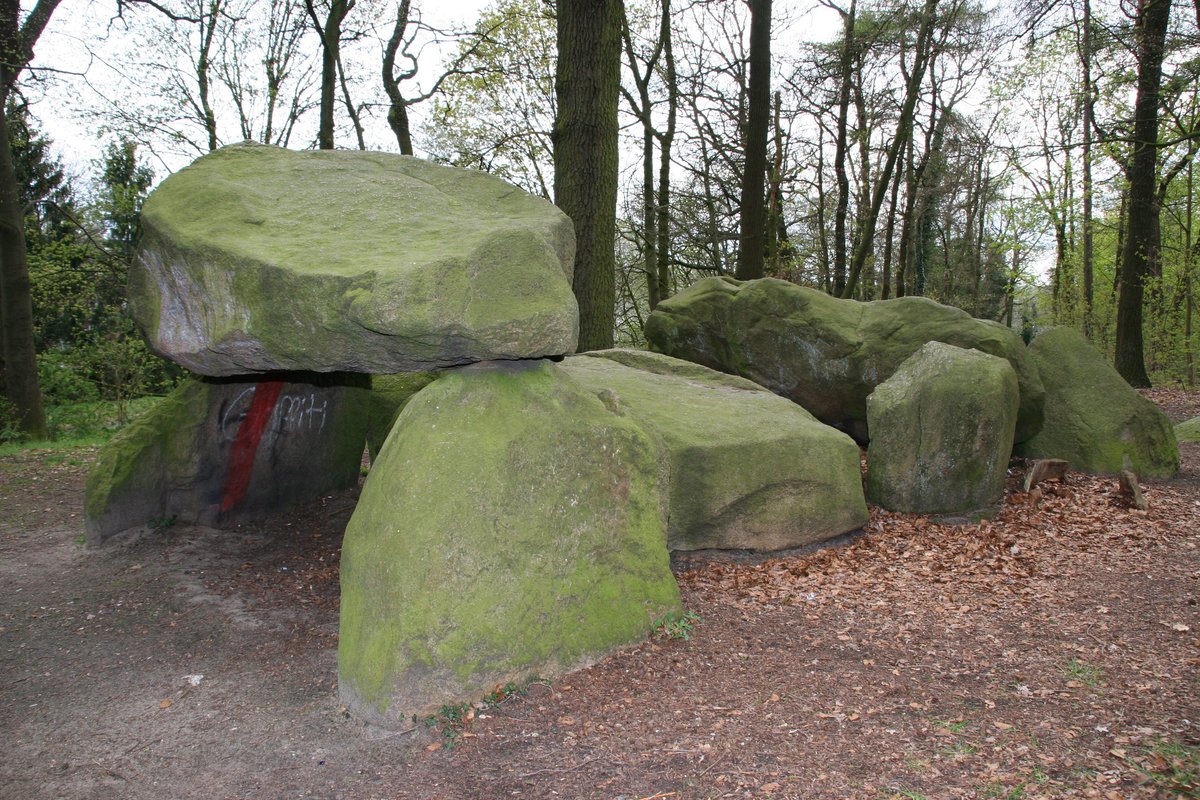
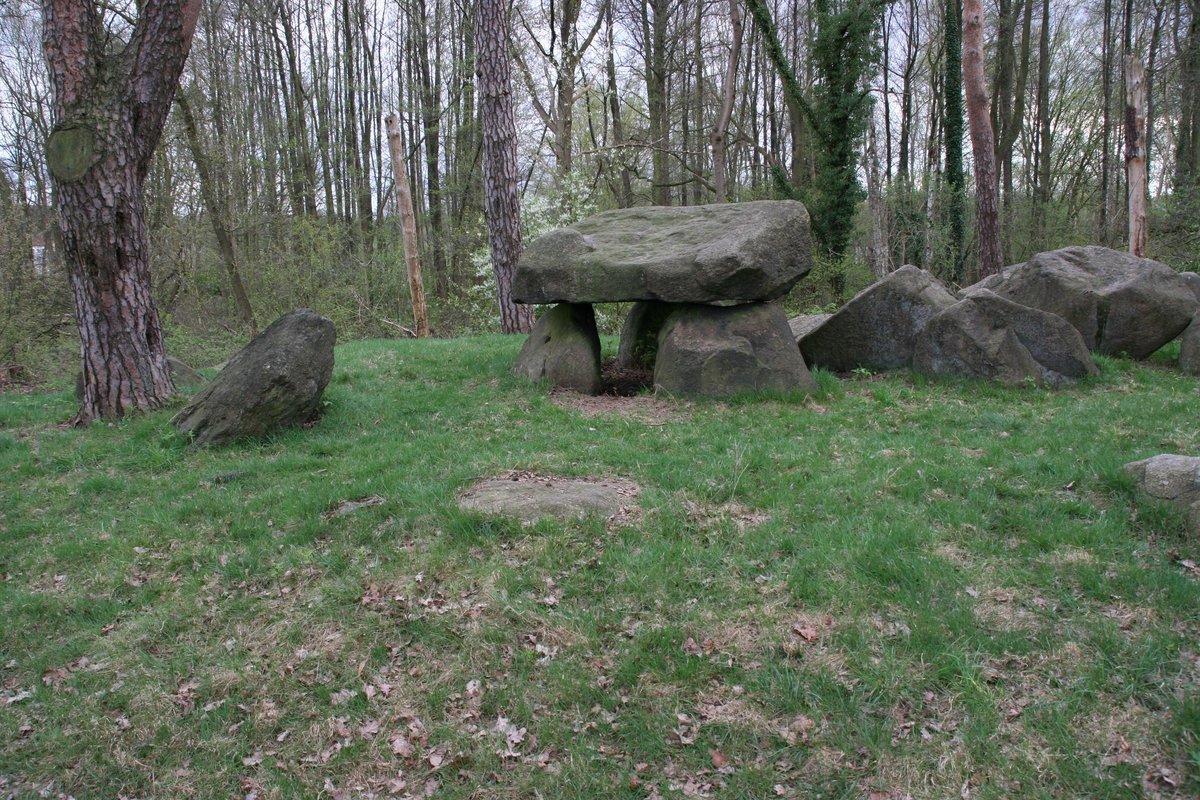
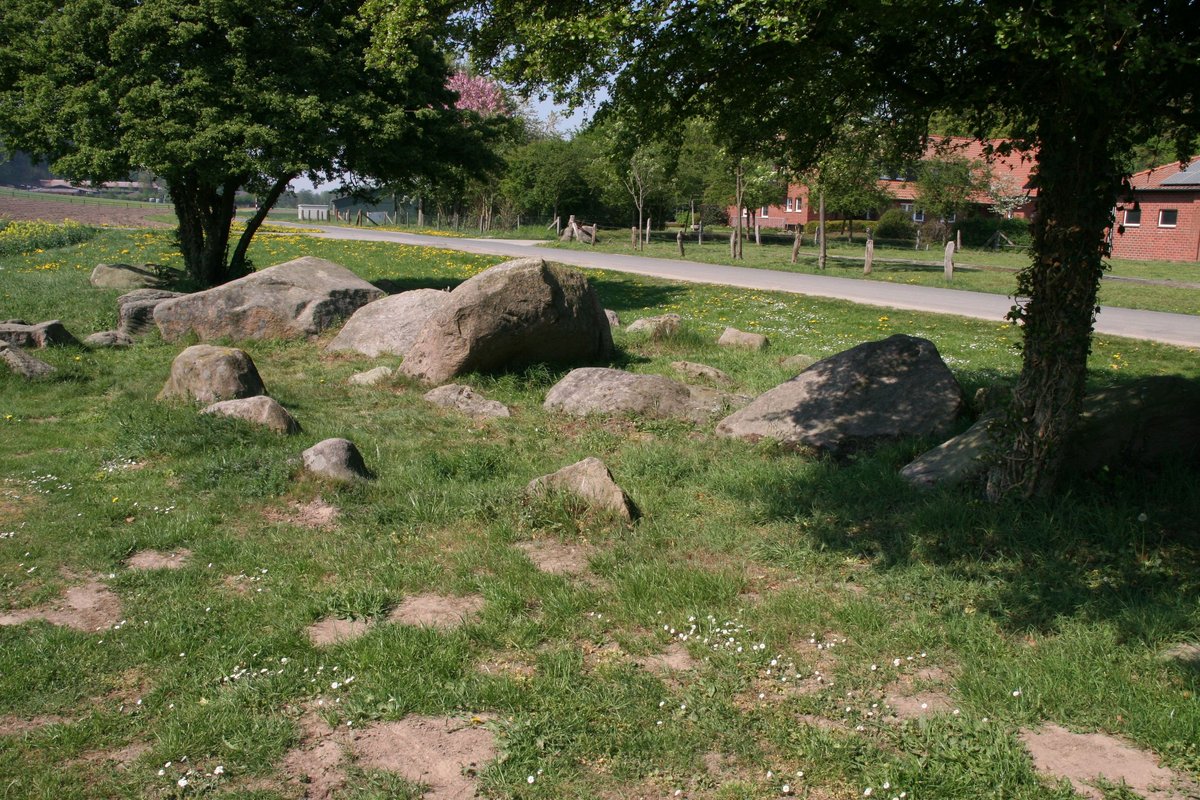
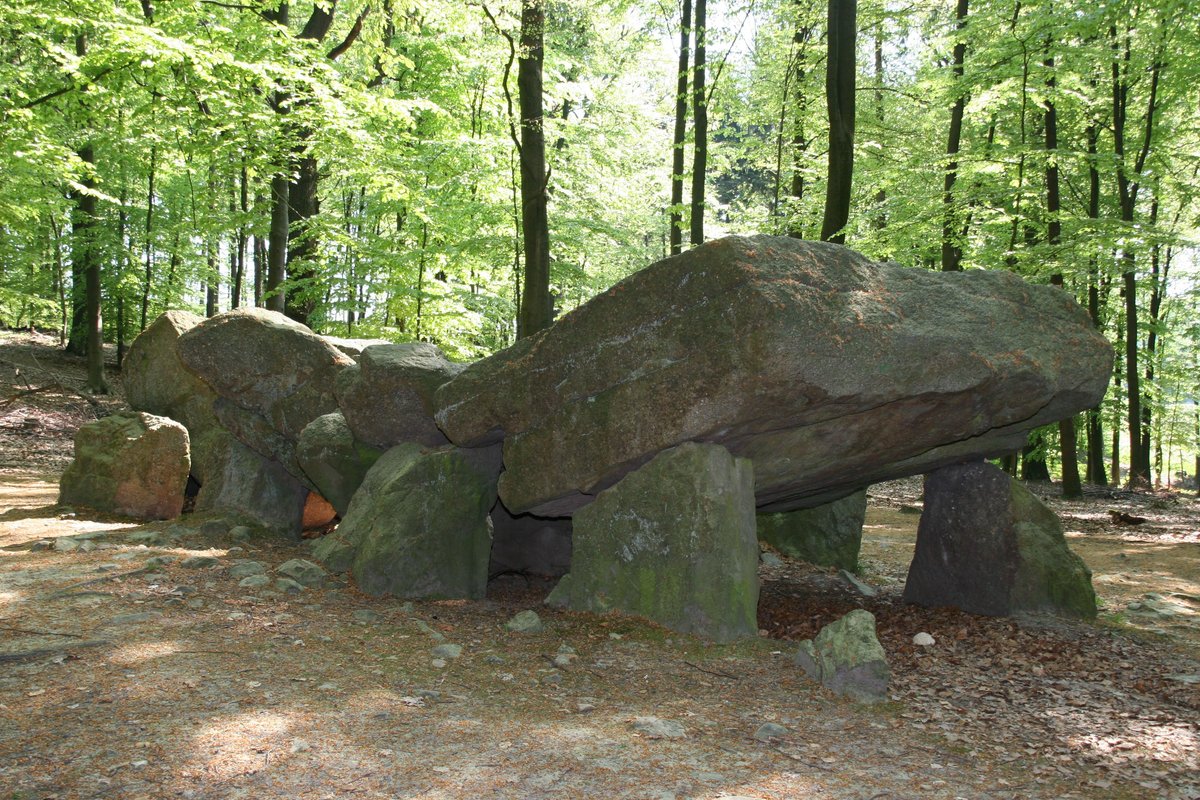
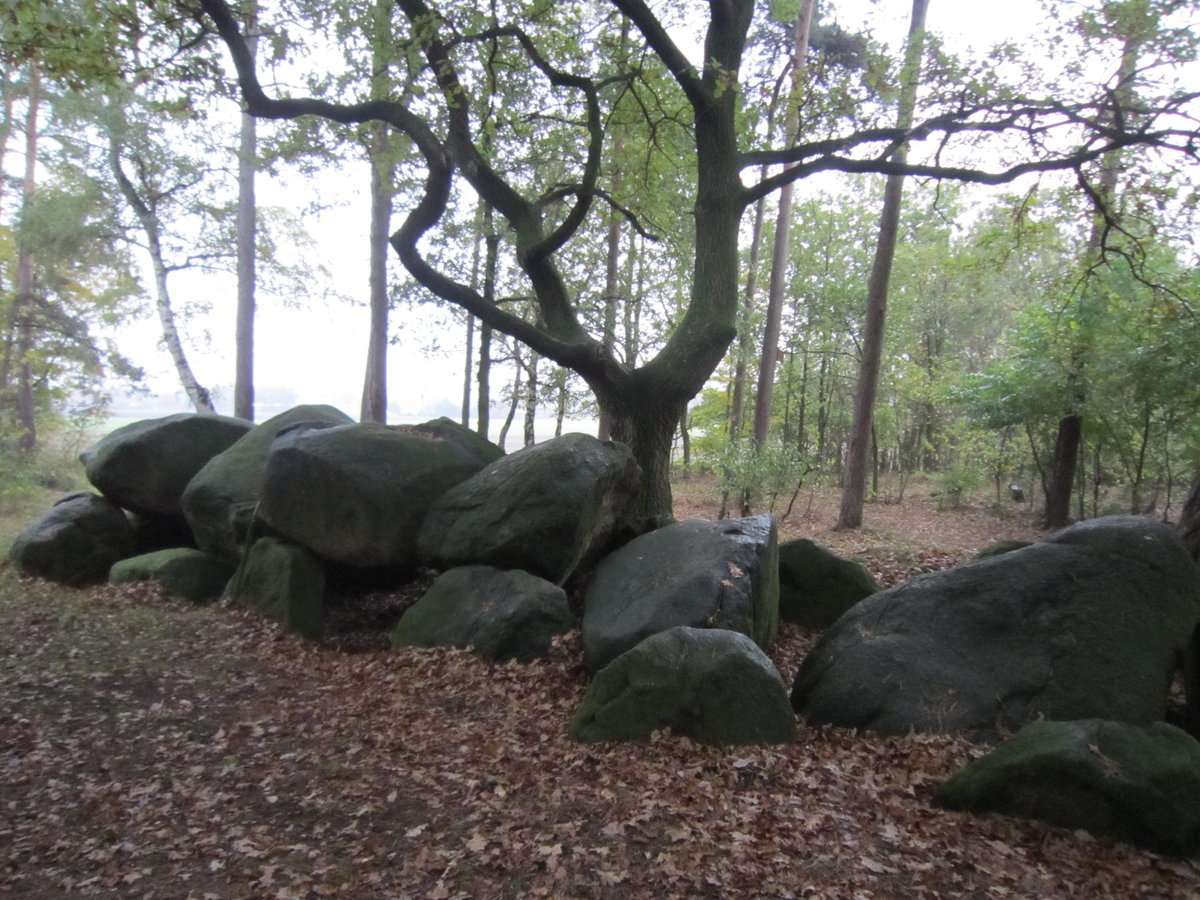
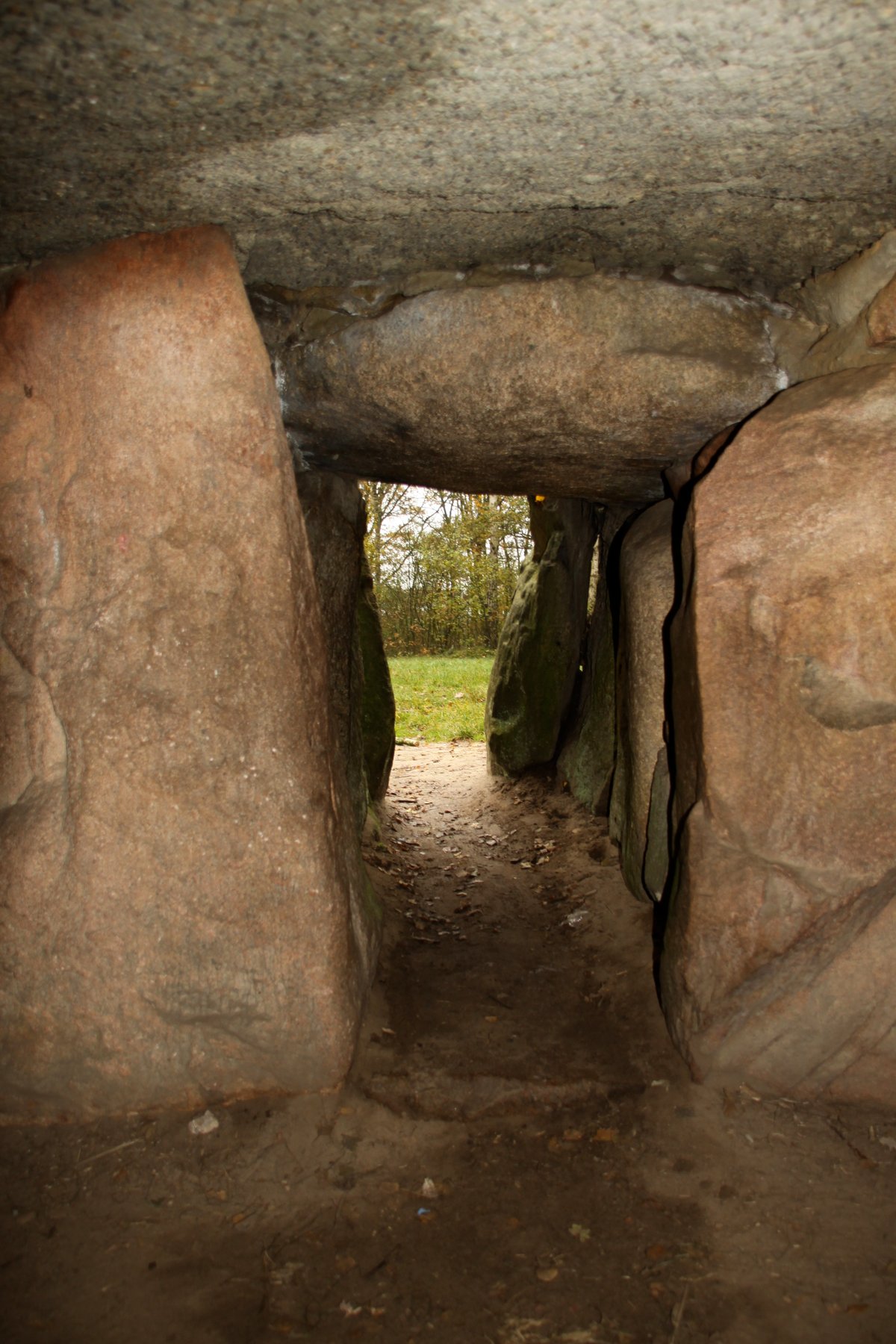
Deep within the earth of Gretesch, an Emsland chamber rests. This double-trapezoid structure reaches twenty-three meters, stretching northeast to southwest. Built between 3500 and 2800 BC, these stones hum with antiquity.
Belonging to the western Funnelbeaker group, the tomb swells from two meters to 2.6 meters wide. While southern supports vanished, northern walls stand tall. They cradle four of the eight original capstones that once shielded the interior from heaven.
Time eroded the entrance on the southern side. The western end stone disappeared, leaving the enclosure's mystery unsolved. Near the Belmer stream, precise geometry persists against the modern horizon.
Between 1776 and 1844, Georg Graf zu Münster unearthed echoes of ritual. He recovered six flint arrowheads, a rubble club, and amber disk. A perforated bronze sheet also emerged, a metallic relic from the past.
Sources: Wikipedia, OpenStreetMap, Wikidata, Wikimedia Commons
Written by Aurora
Discuss this with the author and others
No comments yet. Be the first to start the conversation.