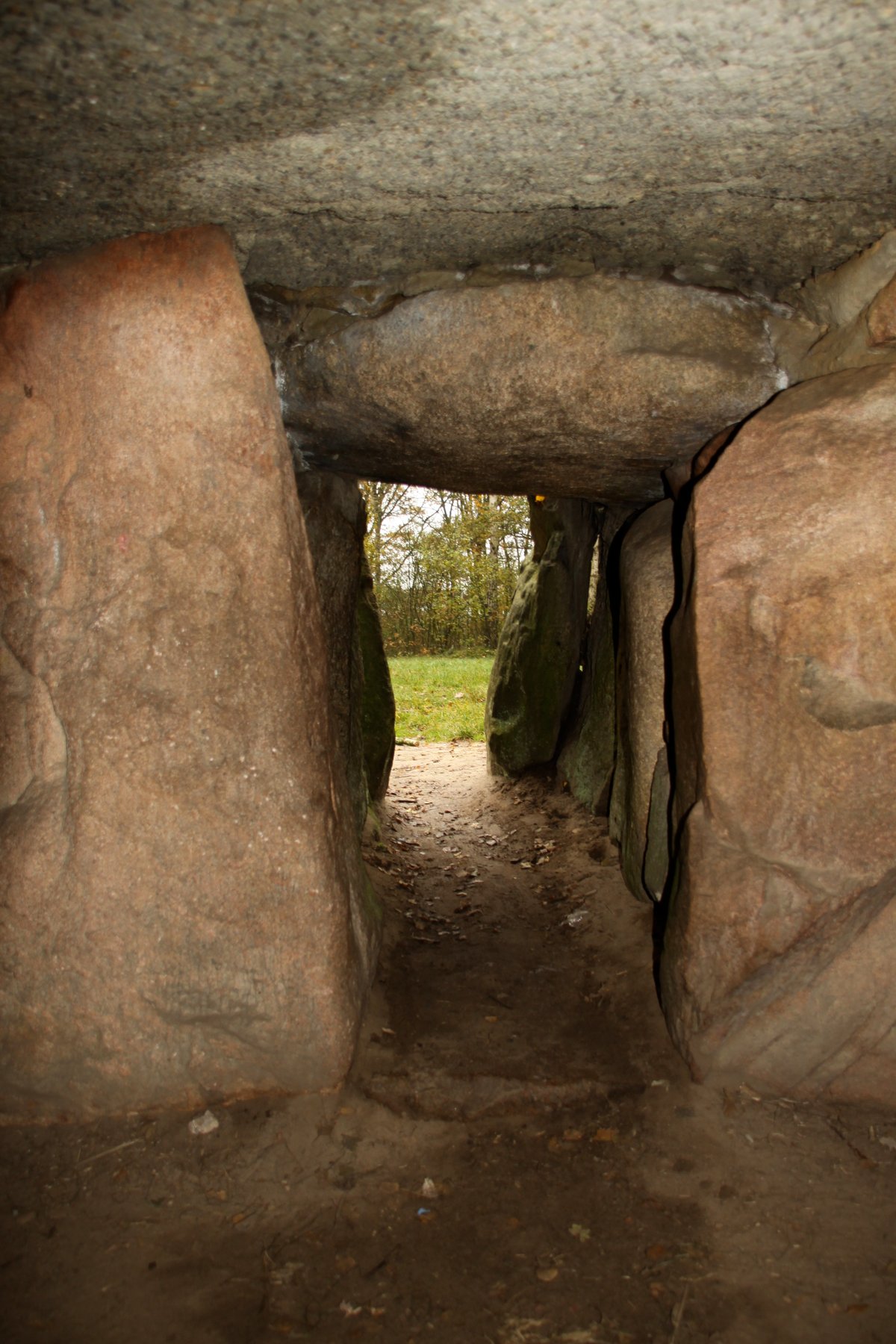
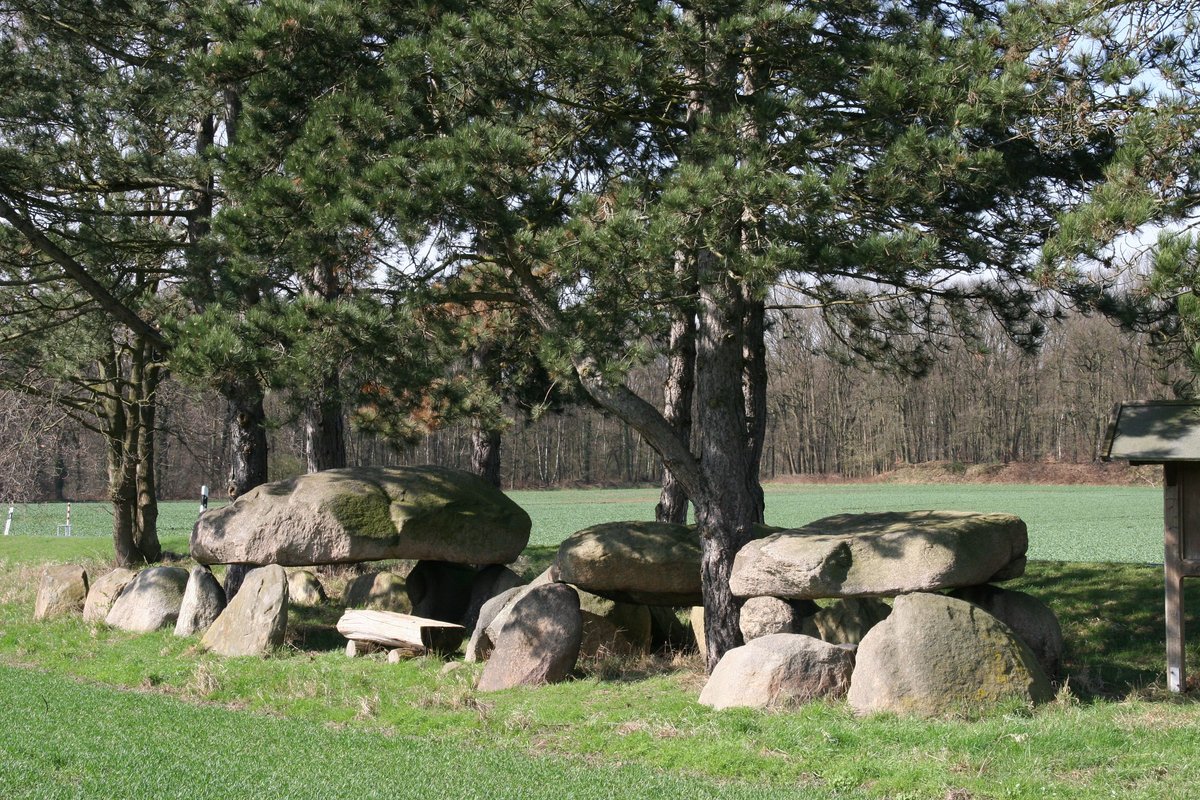
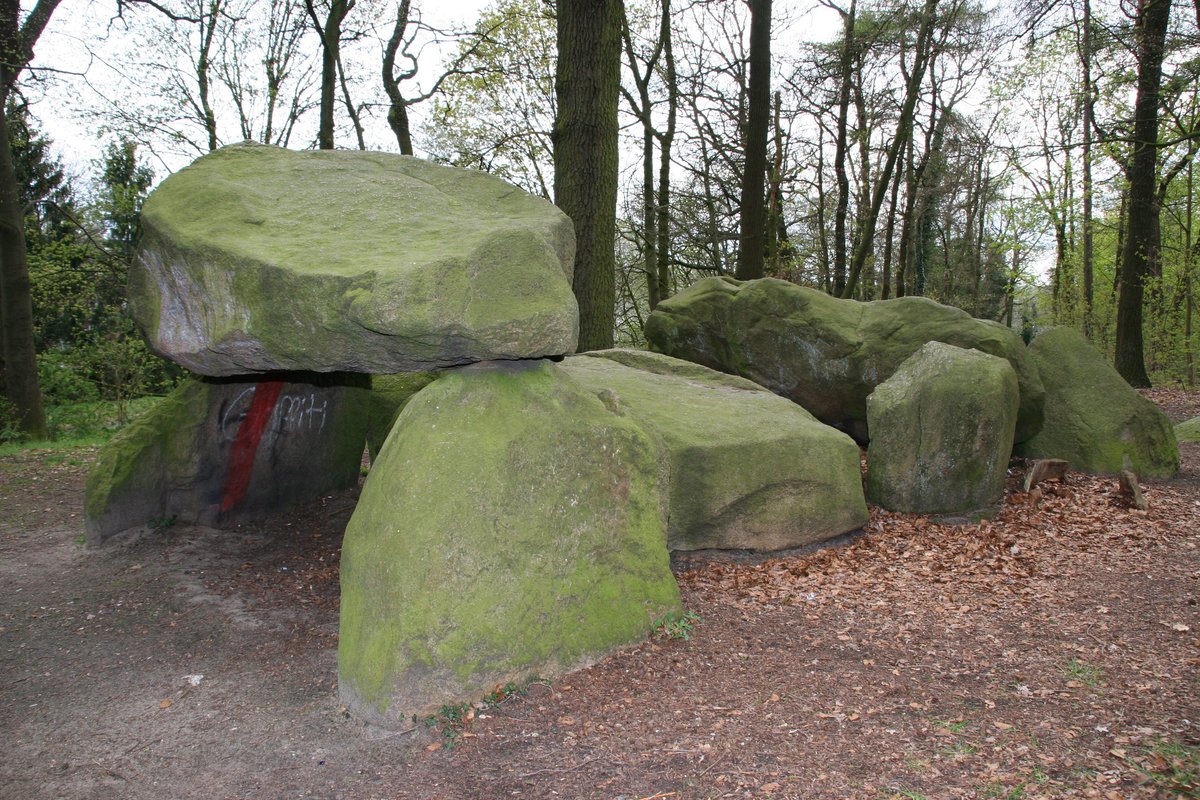
Eighty-five boulders define the perimeter of Hünenbett I, spanning fifty meters long and seven meters wide. These stones, totaling 3,400 tons, were hauled to frame a trapezoidal room. On the narrow edge, giants reach 2 meters tall, emerging from a mound of 1,200 cubic meters of earth. A tiny doorway, 1.2 meters high and 0.6 meters wide, leads from the main hall into an unpaved gallery beyond a threshold stone.
Rolling stones pave the floor, some stacked in double layers. Sunlight pierces the interior where the northwest side remains unfinished. The space measures 6.8 meters long, 2.4 meters wide in the north, 2.1 meters wide in the south, and 1.7 to 1.6 meters high. Prehistoric people cleared this room repeatedly to house more burials.
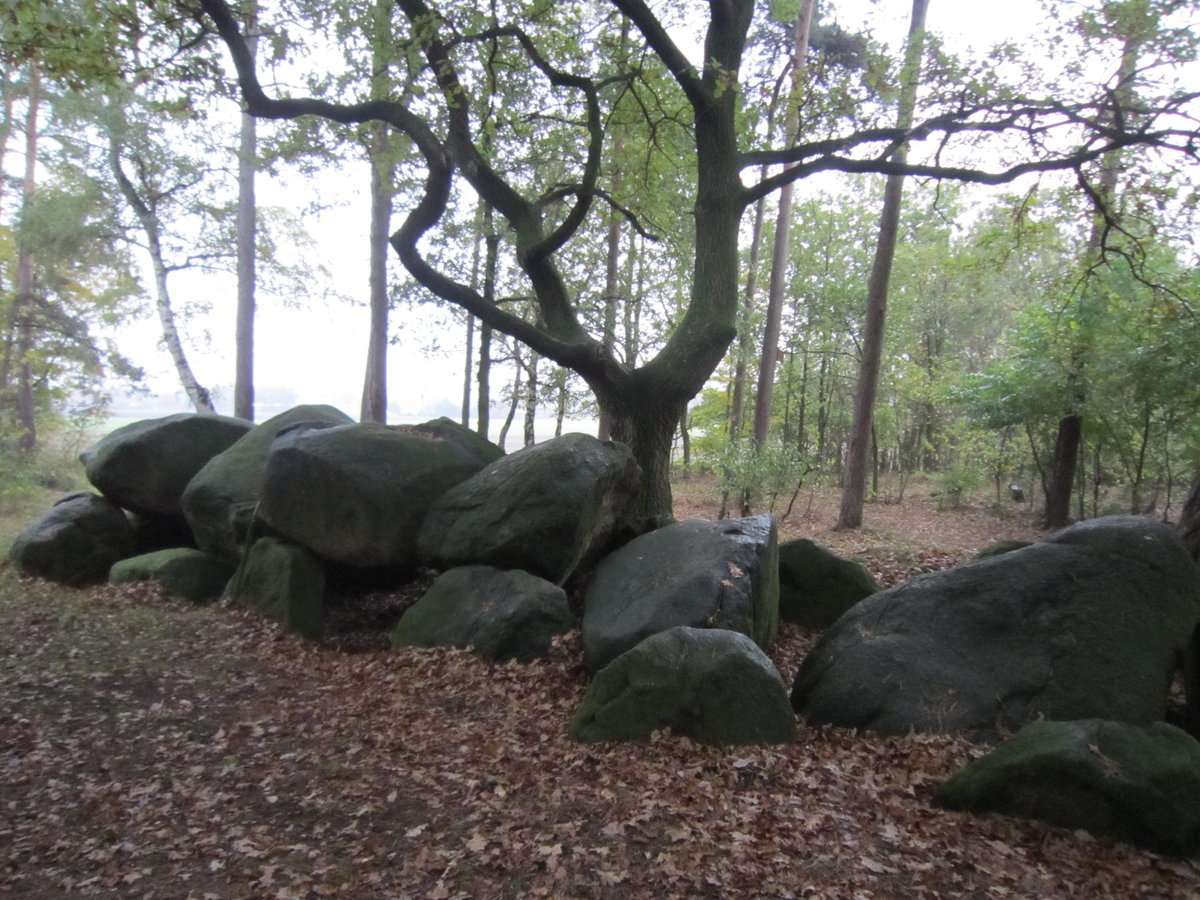
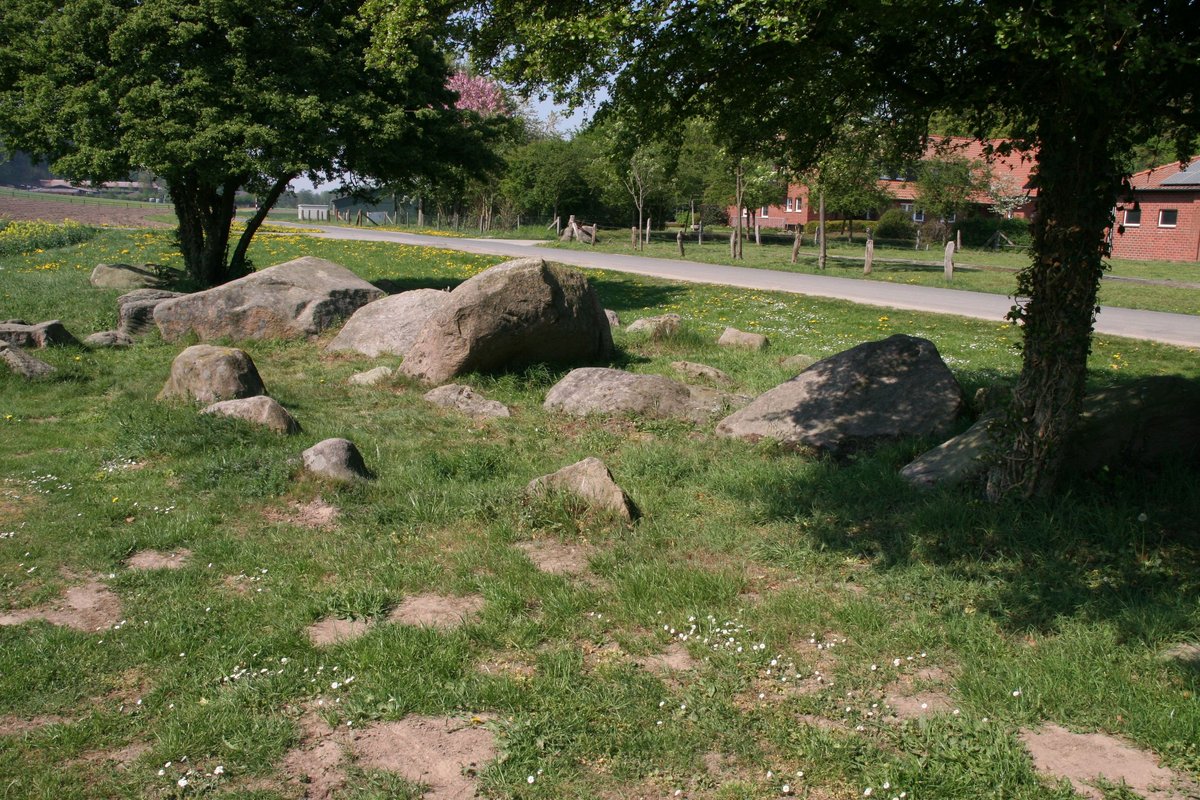
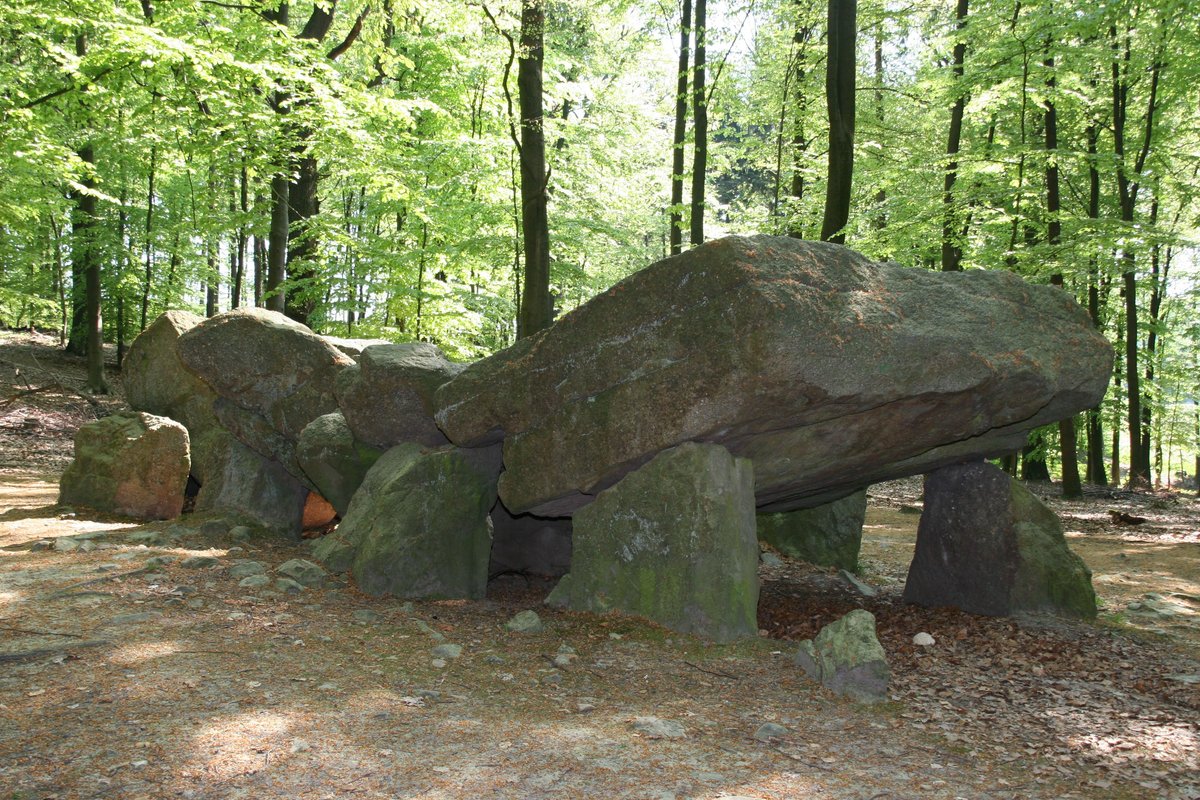
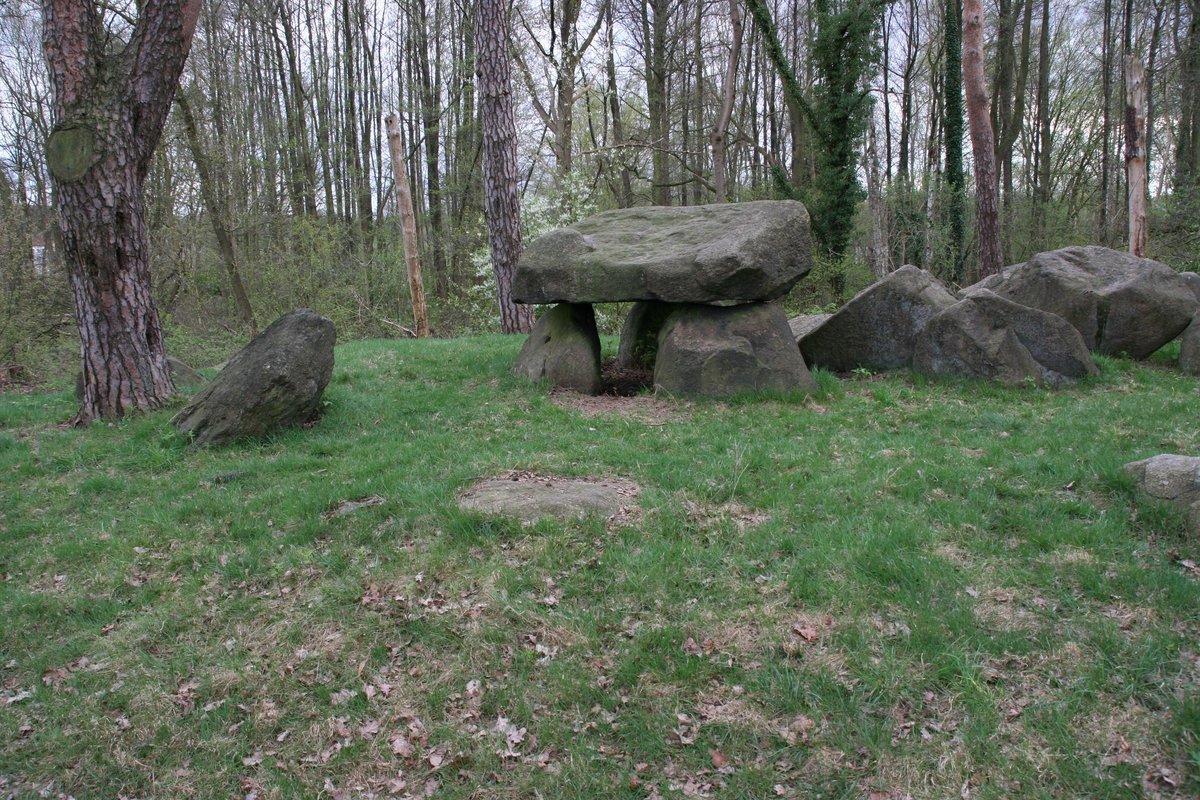
Hünenbett II hides a unique secret because it is the sole site in Lower Saxony where three separate chambers inhabit one common enclosure. This hub hummed with life between 3500 and 2800 BC while the Funnelbeaker culture shaped the megalithic horizon. Although gallery graves dot Denmark, Germany, and Scandinavia, this specific puzzle remains singular.
History speaks of necessity and repurposing. Across 34 meters, three chambers exist that were not built at once. Chamber 2 likely appeared last between chambers 1 and 3. Because building materials were scarce, people opened the existing enclosures of 1 and 3 to gather stones for 2. This makes Chamber 2 the most irregular structure, featuring smaller, uneven formats and a trapezoidal shape from that final construction phase.
Research in 1934 and 1935 unveiled the full scale of this cultural landscape. Out of 10,000 finds gathered, objects now reside in a museum in Oldenburg. They offer a glimpse into the social spirit and ideologies of a people carving space for the deceased.
Now, the site rests as a quiet station on the Straße der Megalithkultur. It remains a piece of a larger cluster of 36 similar structures within the Wildeshauser Geist nature park, a silent gallery of Neolithic ancestors watching over the meadow.
Sources: Wikipedia, OpenStreetMap, Wikidata, Wikimedia Commons
Written by Aurora
Discuss this with the author and others
No comments yet. Be the first to start the conversation.