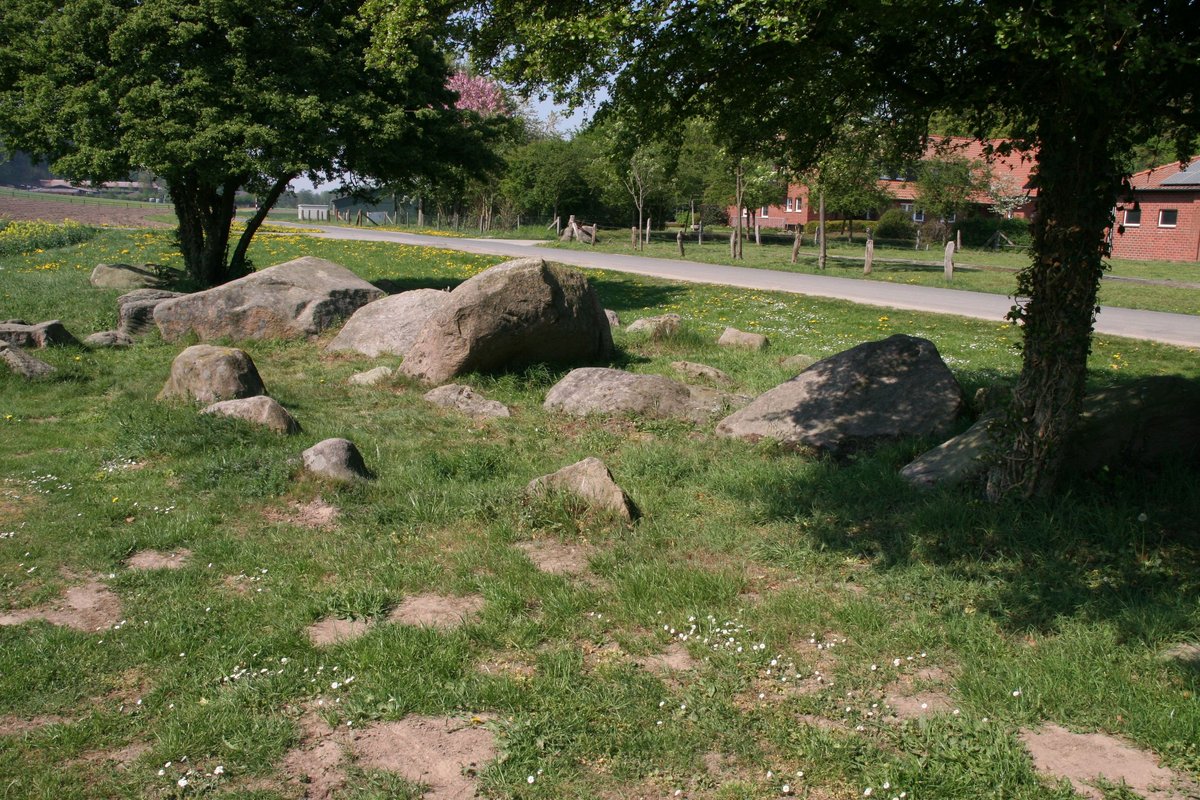
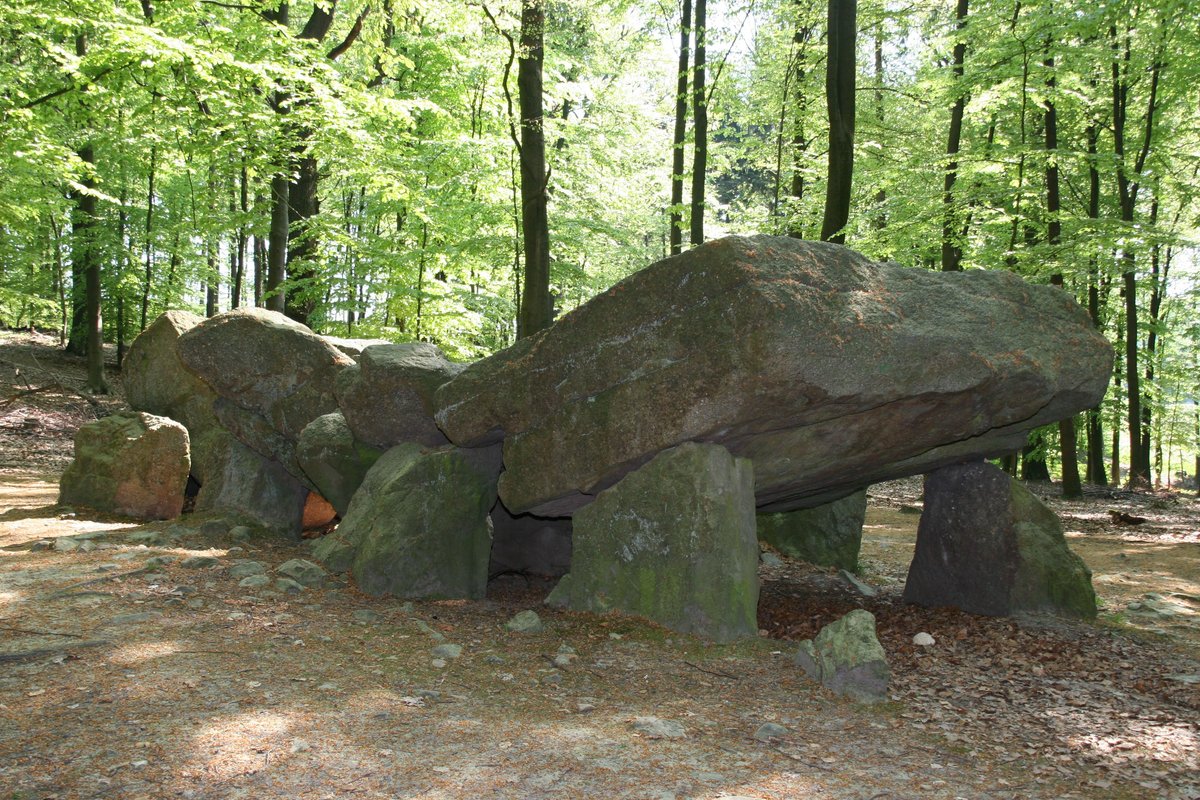
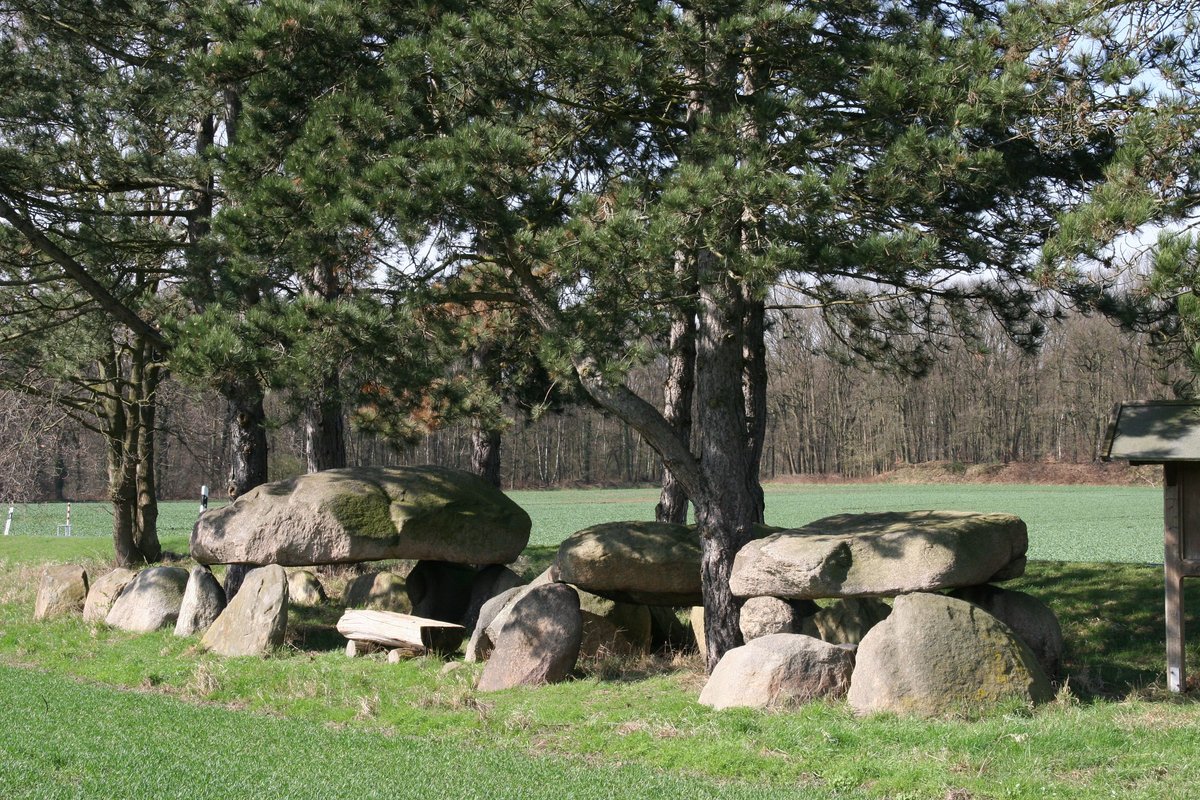
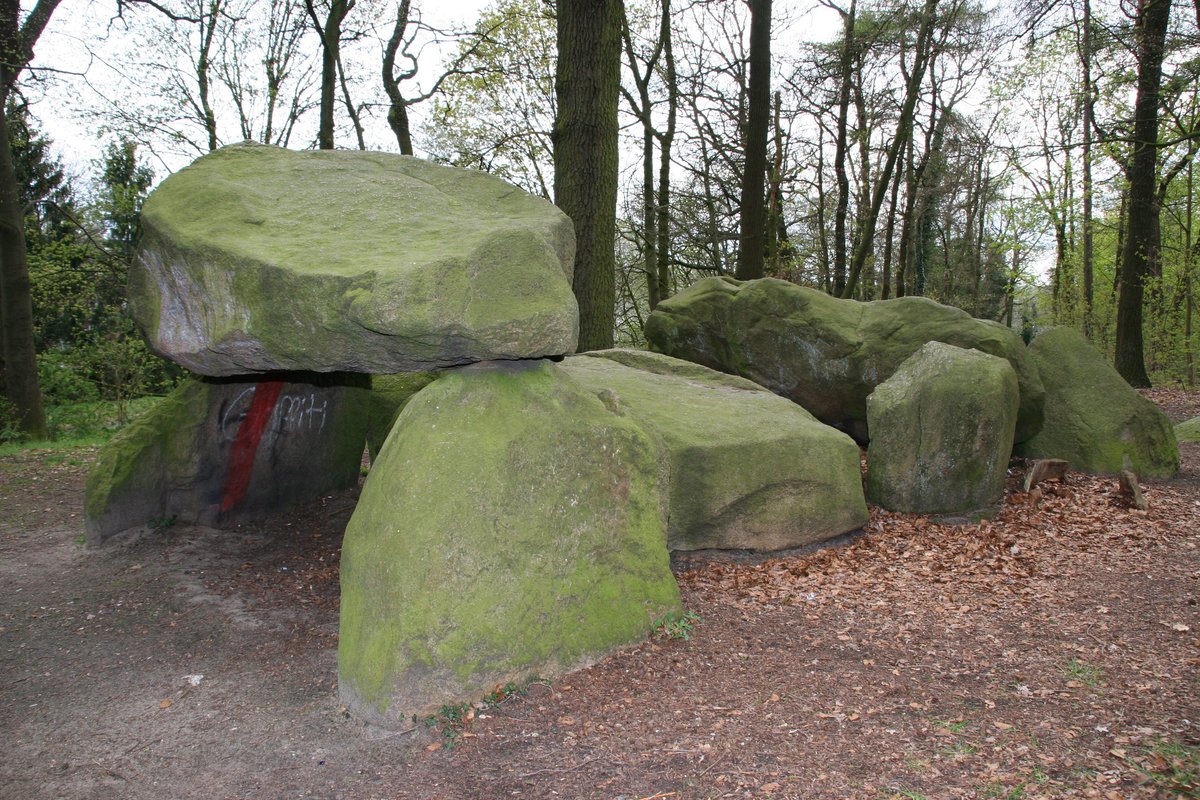
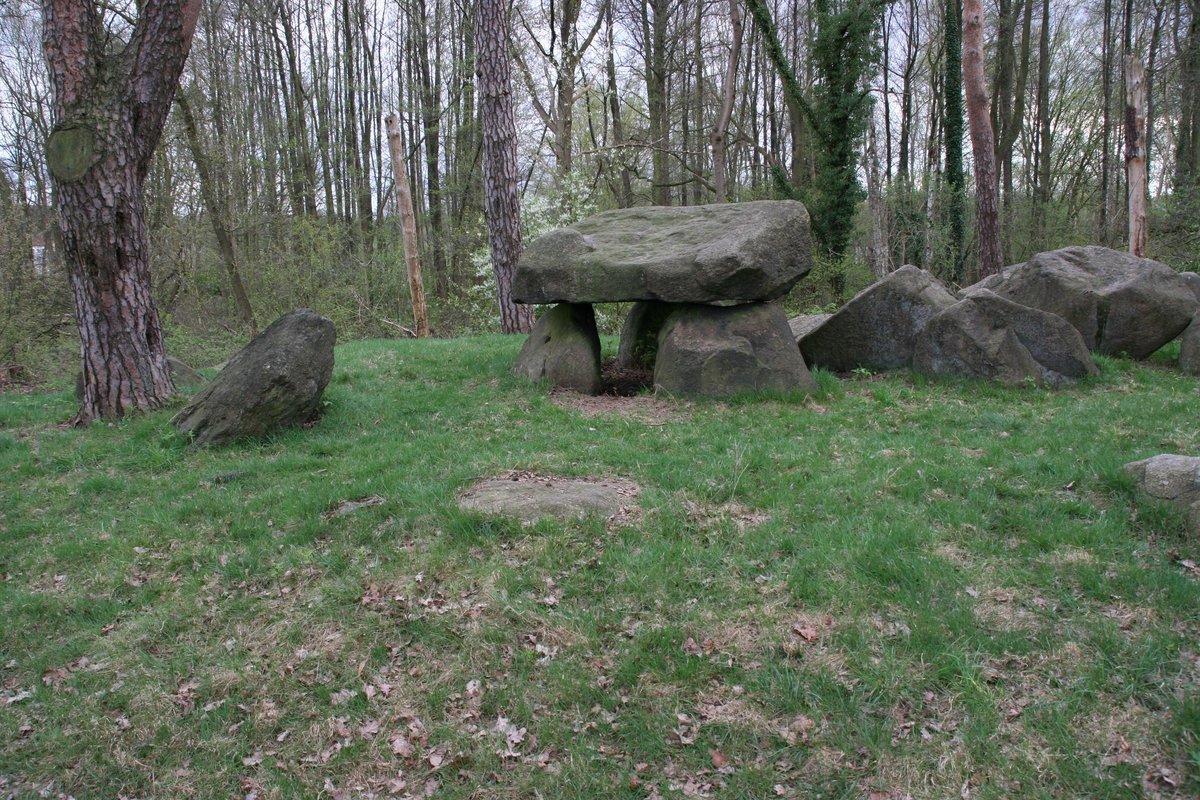
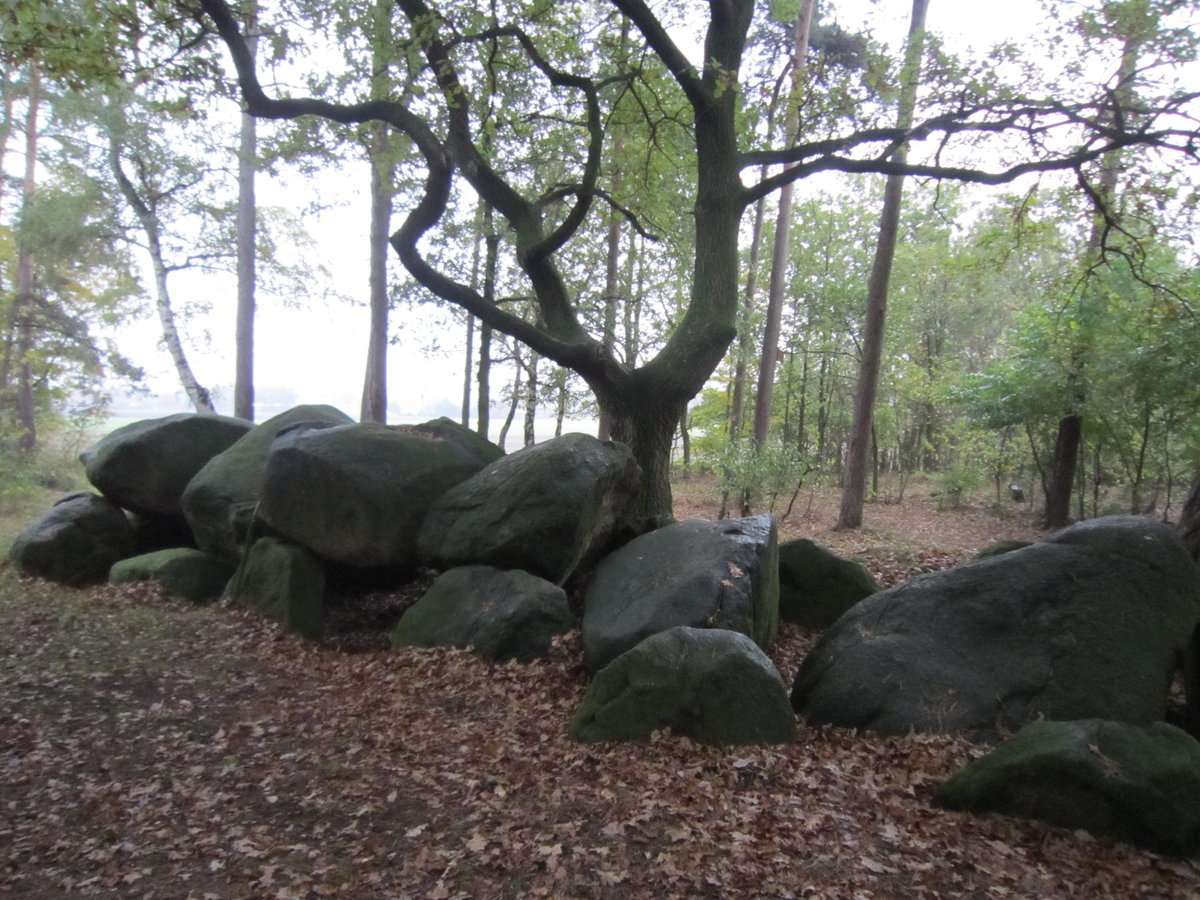
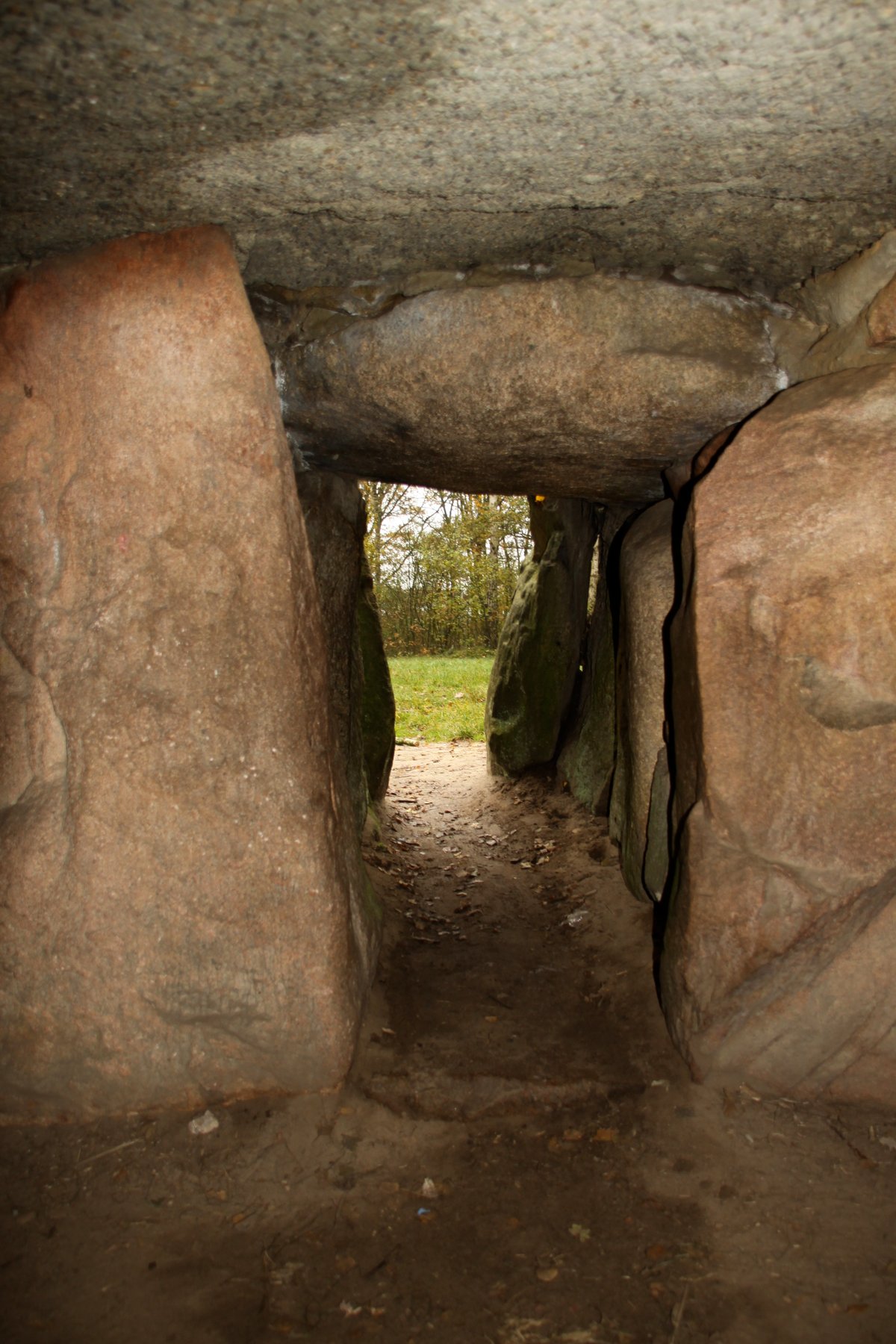
Oestringer Steine I, II, and III are heavily damaged Neolithic megalithic passage graves of the gallery grave type. Crafted between 3500 and 2800 BC by the Funnelbeaker Culture, these structures were part of a social development expressed through neolithic monuments and ideology.
Located in the district of Haste in Osnabrück, Lower Saxony, the site includes three specific structures. Anlage III is located on private property behind a fence near the Oestringer Mühle, while Anlagen I and II are situated on the southern roadside across from the mill. All three structures were originally surrounded by oval stone circles, of which only fragments remain today.
Oestringer Steine I is a chamber sunken into the ground approximately 15 meters long, retaining remains of nine capstones, some supporting stones, and numerous casing stones. Nearby, Oestringer Steine II was originally over 15 meters long; it retains eight of the original 11 capstones, though most supporting stones are missing. Oestringer Steine III was estimated to have originally had six capstones and measured 9.6 x 2.3 meters.
Past excavations at the site discovered an arrowhead, deeply engraved ceramics, and bone remains. The site is part of the Road of Megalithic Culture and was incorporated into the 'Hochufer und Altarm der Nette am Oestringer Esch' nature reserve in 1987.
Sources: Wikipedia, OpenStreetMap, Wikidata, Wikimedia Commons
Written by Aurora
Discuss this with the author and others
No comments yet. Be the first to start the conversation.