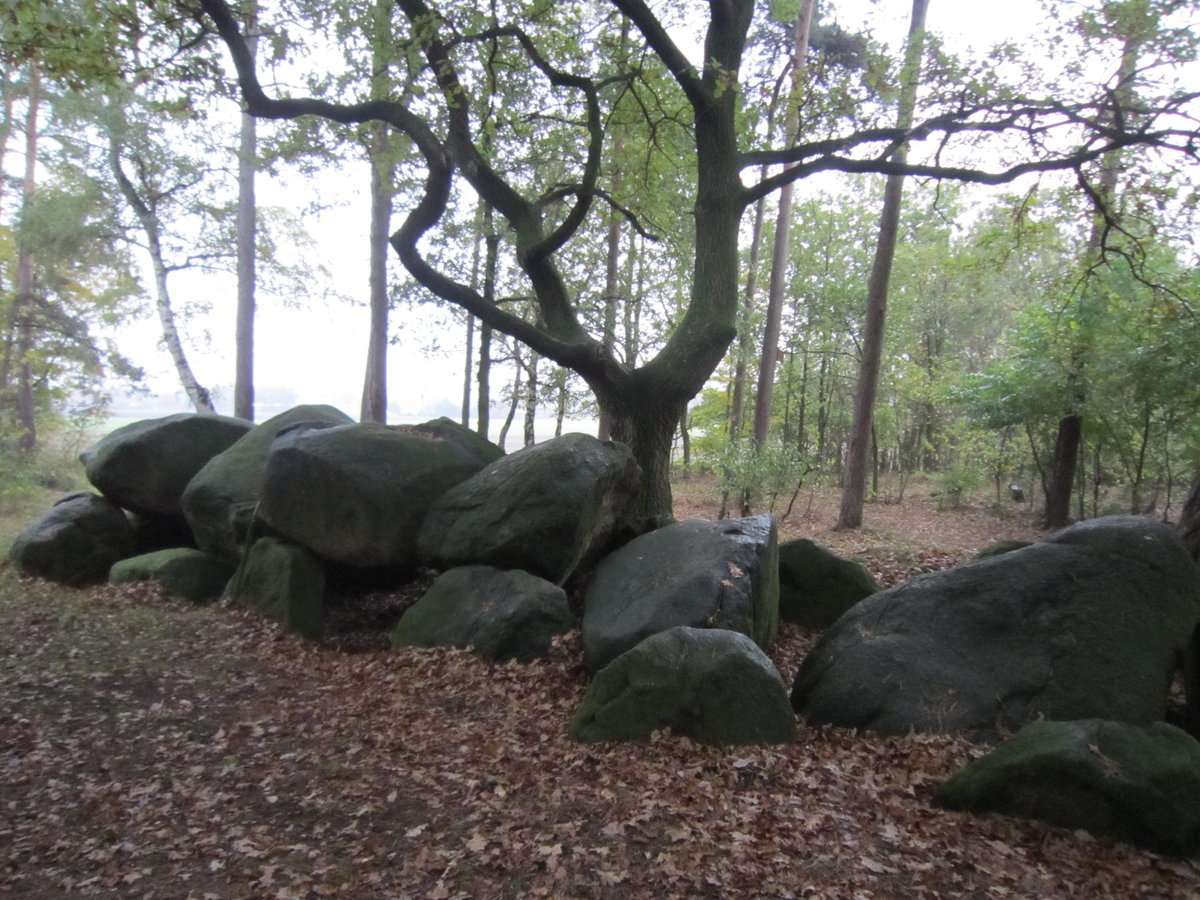
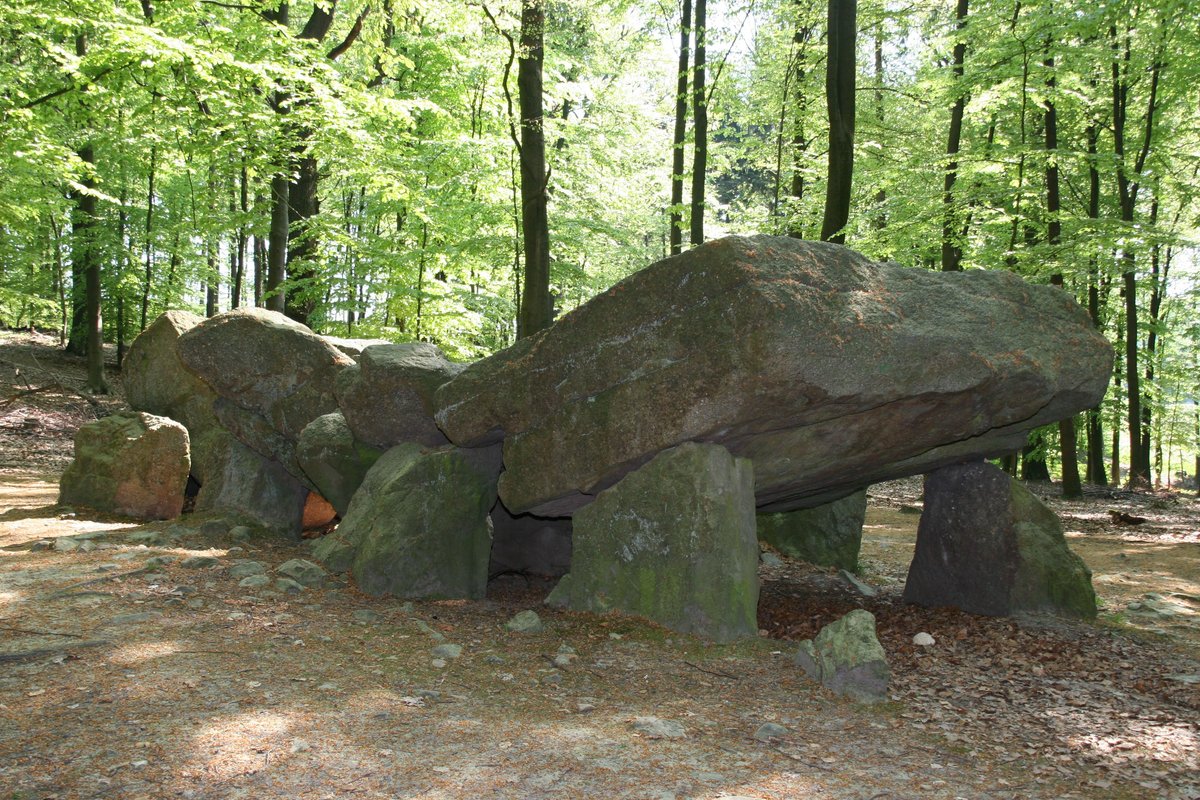
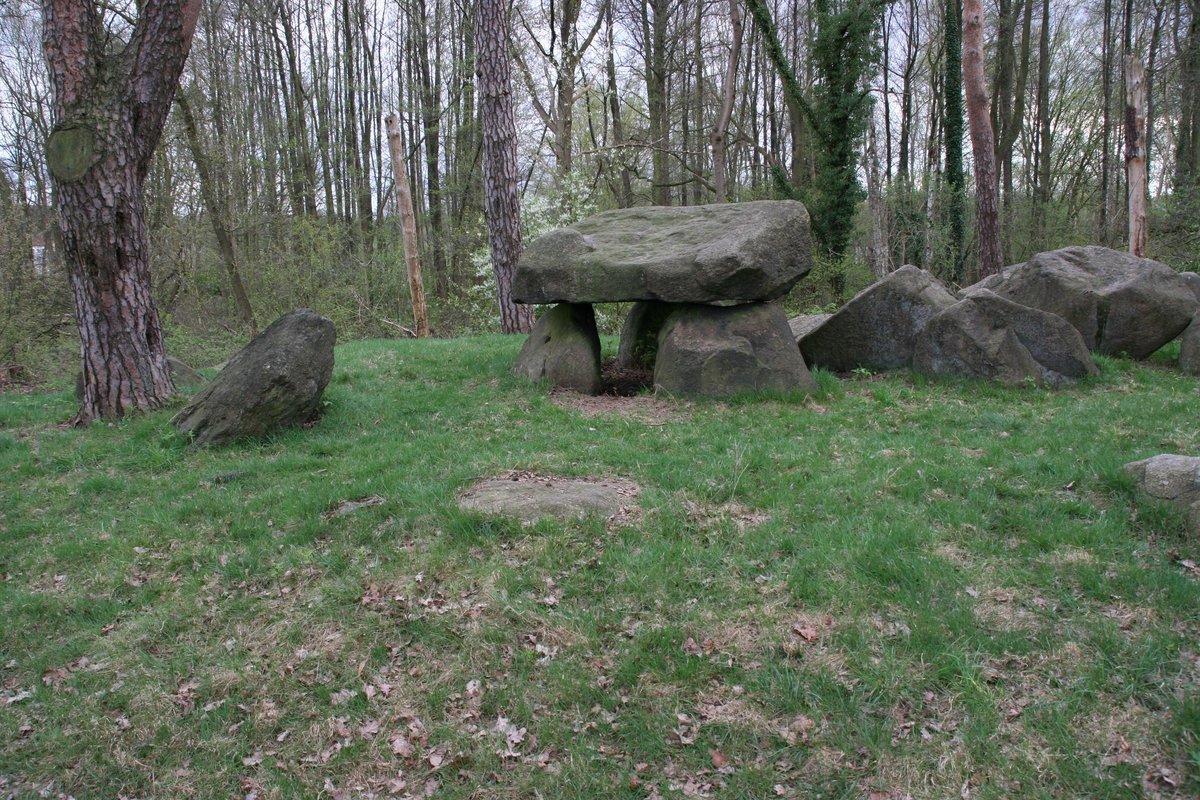
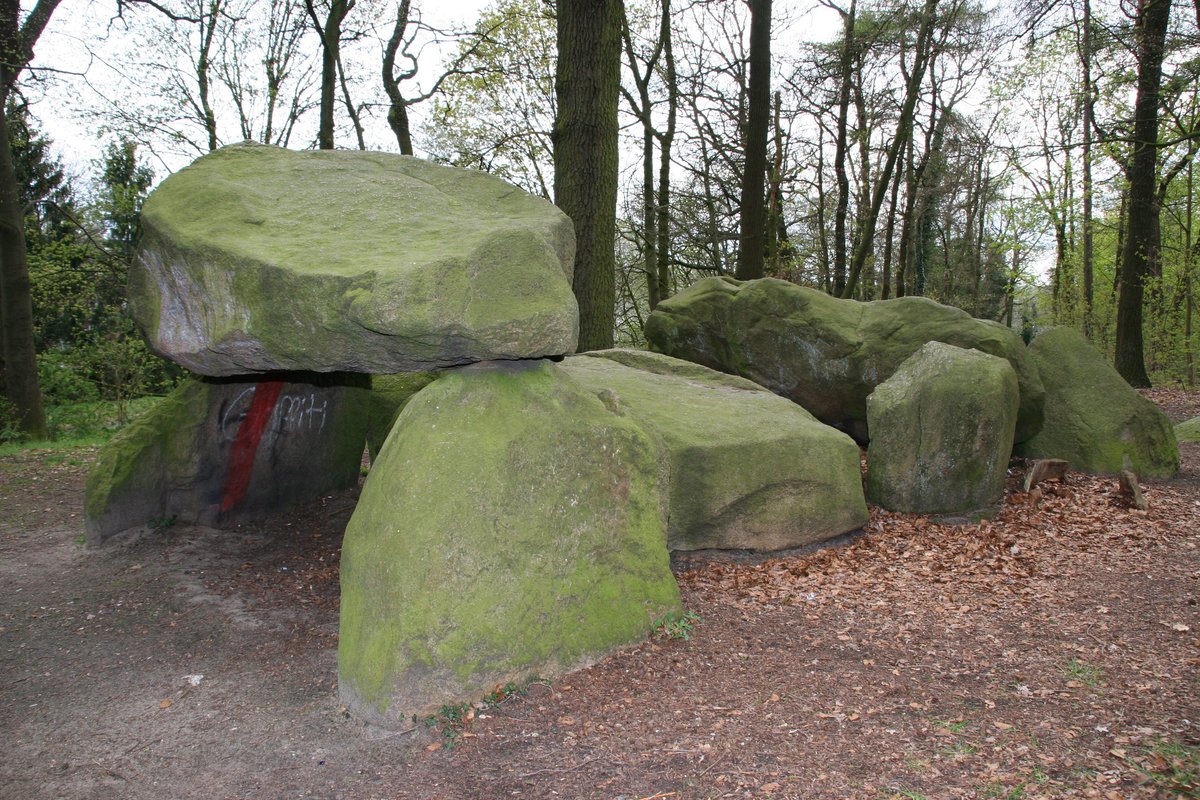
The Wiemelsberger Steine, also known as Ueffeln 1 or Sprockhoff-Nr. 897, is a Neolithic passage grave from the Funnelbeaker culture. Built between 3500 and 2800 BC, the site is located on the north edge of the Wiemelsberg in Ueffeln-Balkum, Lower Saxony. The facility consists only of an east-west oriented stone chamber that remains well preserved.
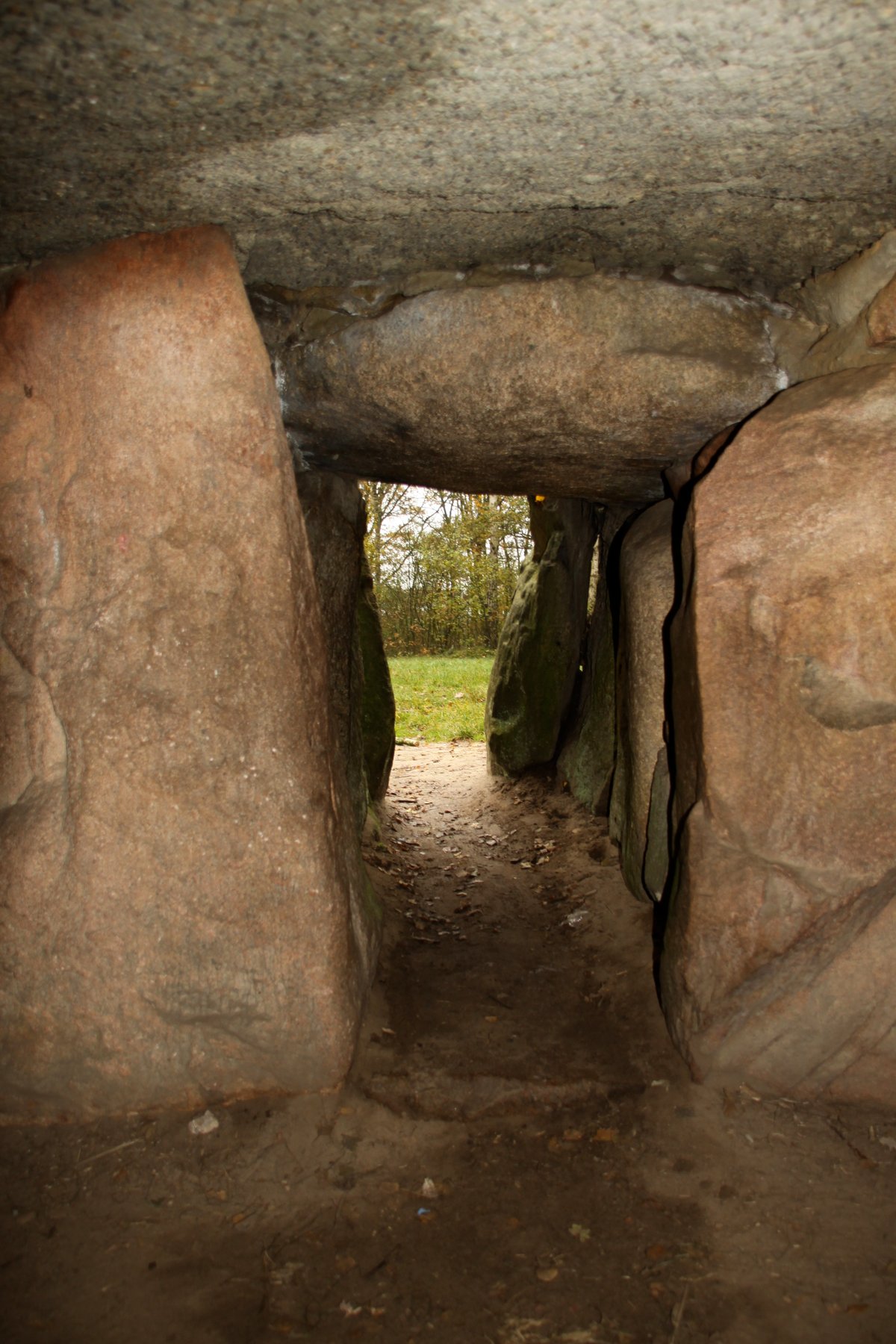
All 12 support stones of the chamber are standing in situ, and both end stones remain in place. Of the six preserved capstones, four are also standing in situ. The chamber measures 10.5 meters in length and 3.3 meters in width. On the south side, an entrance is visible, marked by two flattened stones. While the original mound has been largely lost, remains of it are still visible.
In 1807, an excavation took place at the site on behalf of Count Georg zu Münster. This work uncovered artifacts including amber beads, ceramics, and stone tools, which are now kept in the State Museum Hannover. The site represents the social development and ideology of Neolithic societies through its megalithic architecture.
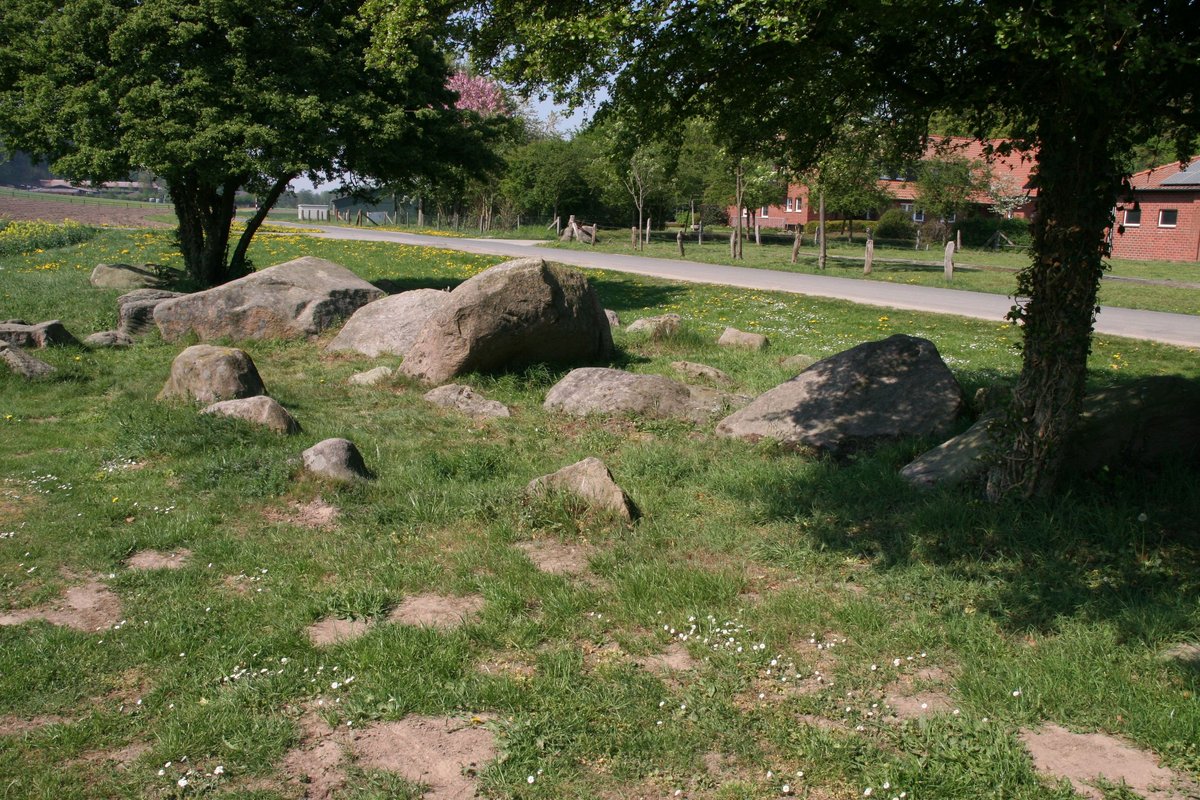
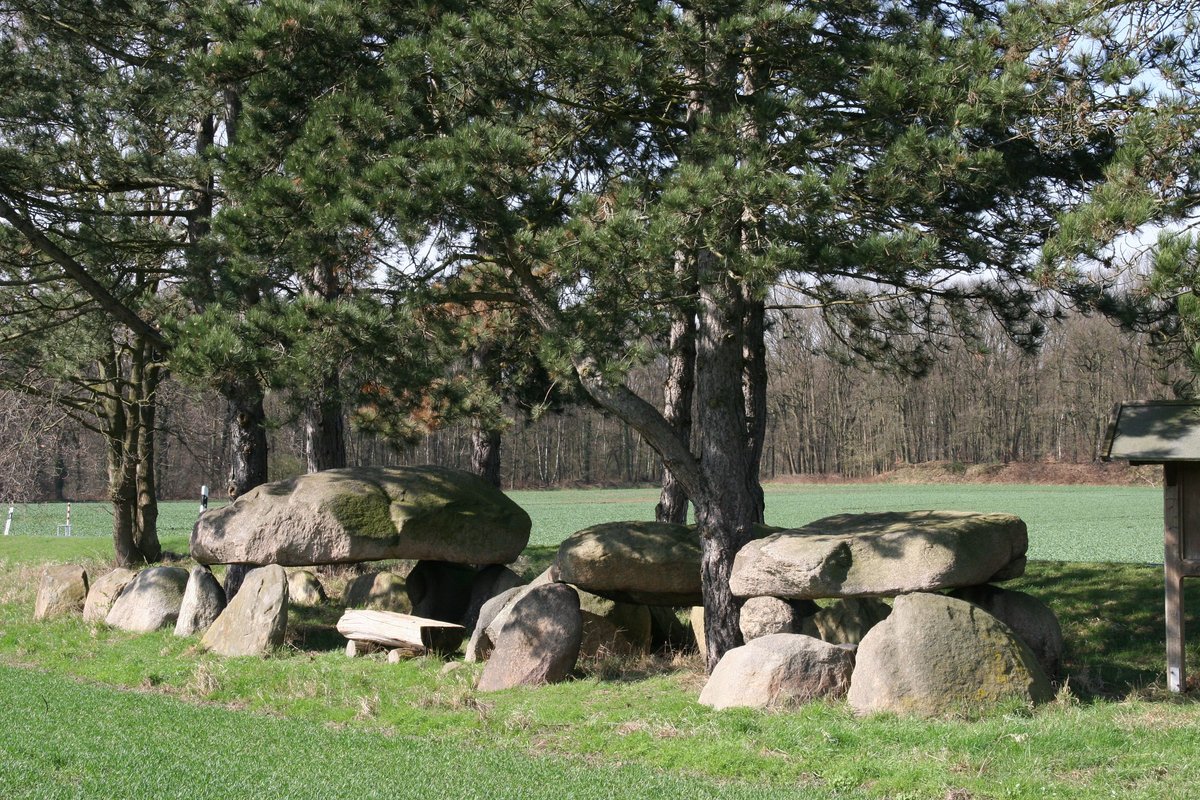
Nearby earth holds more secrets. About 900 meters southwest of the main site, a small stone chamber with only one intact end section remains in the farmland. Further north, the true location of a destroyed 19th-century megalithic grave was rediscovered in 1978 during surveying work 1.5 kilometers north of Ueffeln.
Sources: Wikipedia, OpenStreetMap, Wikidata, Wikimedia Commons
Written by Aurora
Discuss this with the author and others
No comments yet. Be the first to start the conversation.