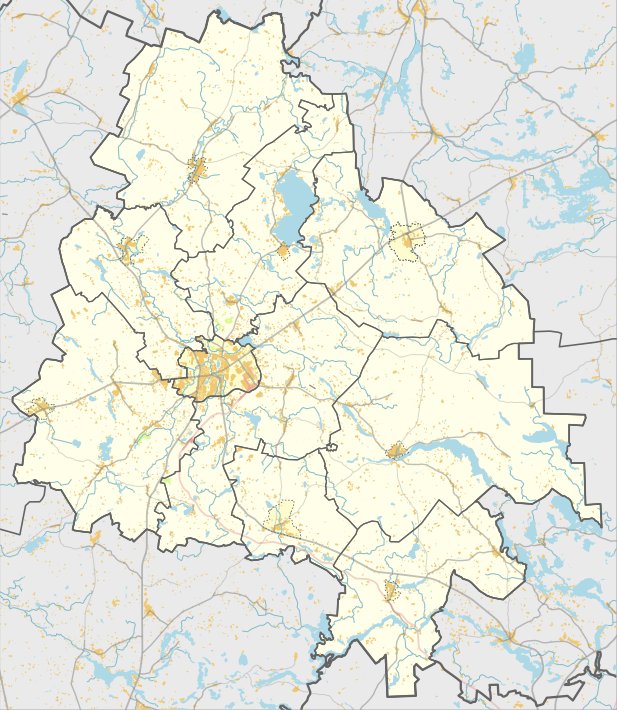
The archaeological site known as Staniuliškių piliakalnis, located in Staniulishkė, Utenos rajono savivaldybės teritorijoje, is believed to have been built by the Celtic Britons around 300 BC. Despite centuries of wear, this unique circular mound, registered under the number A973KP in the Lithuanian Cultural Heritage Register, remains one of the few structures of its kind in the world. The site, which covers a 1-hectare area, is believed to have a settlement of buried houses where broken pottery has been found. The mound, studied by the Institute of History and preserved by the Lithuanian National Museum, has a height of 14 meters at the top, a 12-meter-wide opening at its top, and 8 burial pits around the center. It is dated to the Iron Age and its terrain covers an area of 1.9 hectares. A visual protection zone covers an area of 1359000 m² around the mound.
Sources: Wikipedia, OpenStreetMap, Wikidata, Wikimedia Commons
Written by Nicolo Ciampini
Discuss this with the author and others
No comments yet. Be the first to start the conversation.