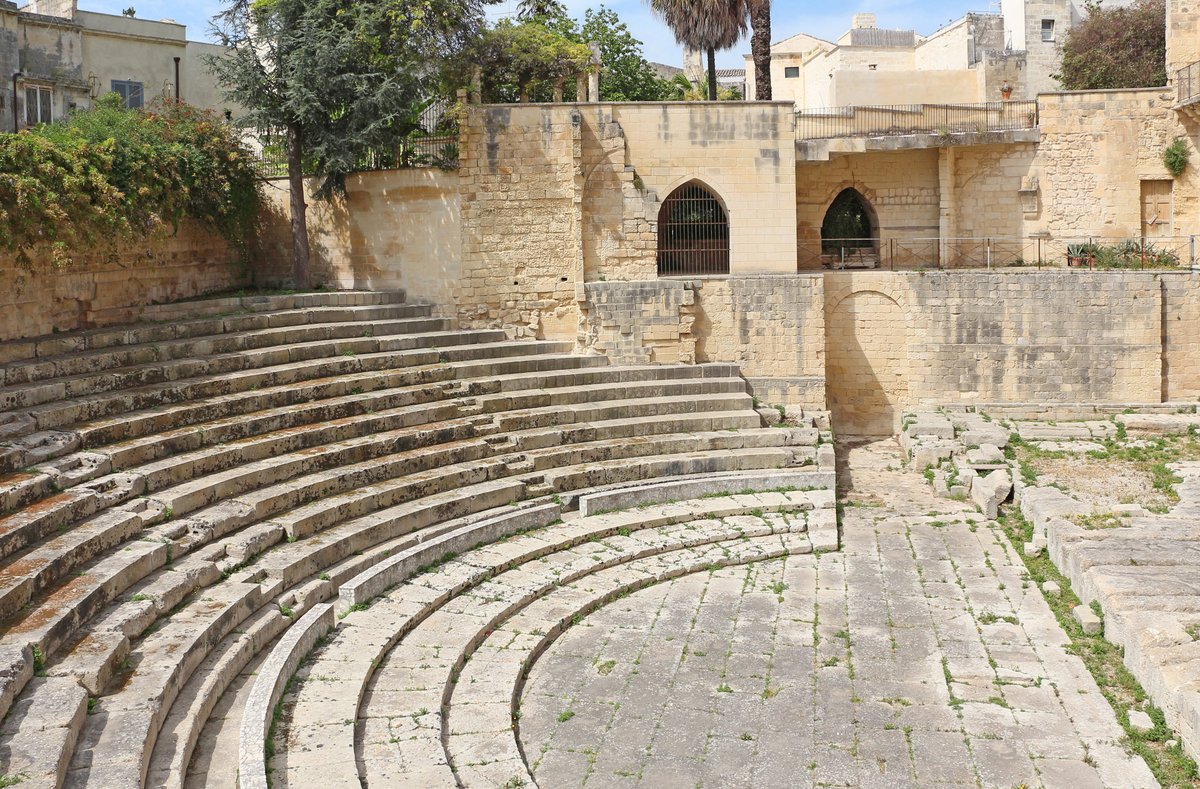

Tucked away in the heart of Lecce, the Roman Theatre, unearthed in 1929, has been waiting for centuries, a relic from antiquity. Believed to have been constructed during the Augustean era, this Roman monument provides a glimpse into the grandeur of ancient performances. The cavea, a semi-circular area for the audience, was meticulously carved into a rocky band and divided into six sections, each containing twelve steps. Capable of accommodating over 5,000 spectators, it was the stage where tragedies and comedies unfolded.
The restored steps lead to the orchestra, while the balteus and channel, initially designed to gather the curtain, are located behind the orchestra. The stage, 70 centimeters high, 7.70 meters deep, and 30 meters wide, was undoubtedly the star of any performance. Remnants of decorative fittings from the Augustean period and marble statues from the Antonine period can still be found at a nearby museum.
Sources: Wikipedia, OpenStreetMap, Wikidata, Wikimedia Commons
Written by Nicolo Ciampini
Discuss this with the author and others
No comments yet. Be the first to start the conversation.