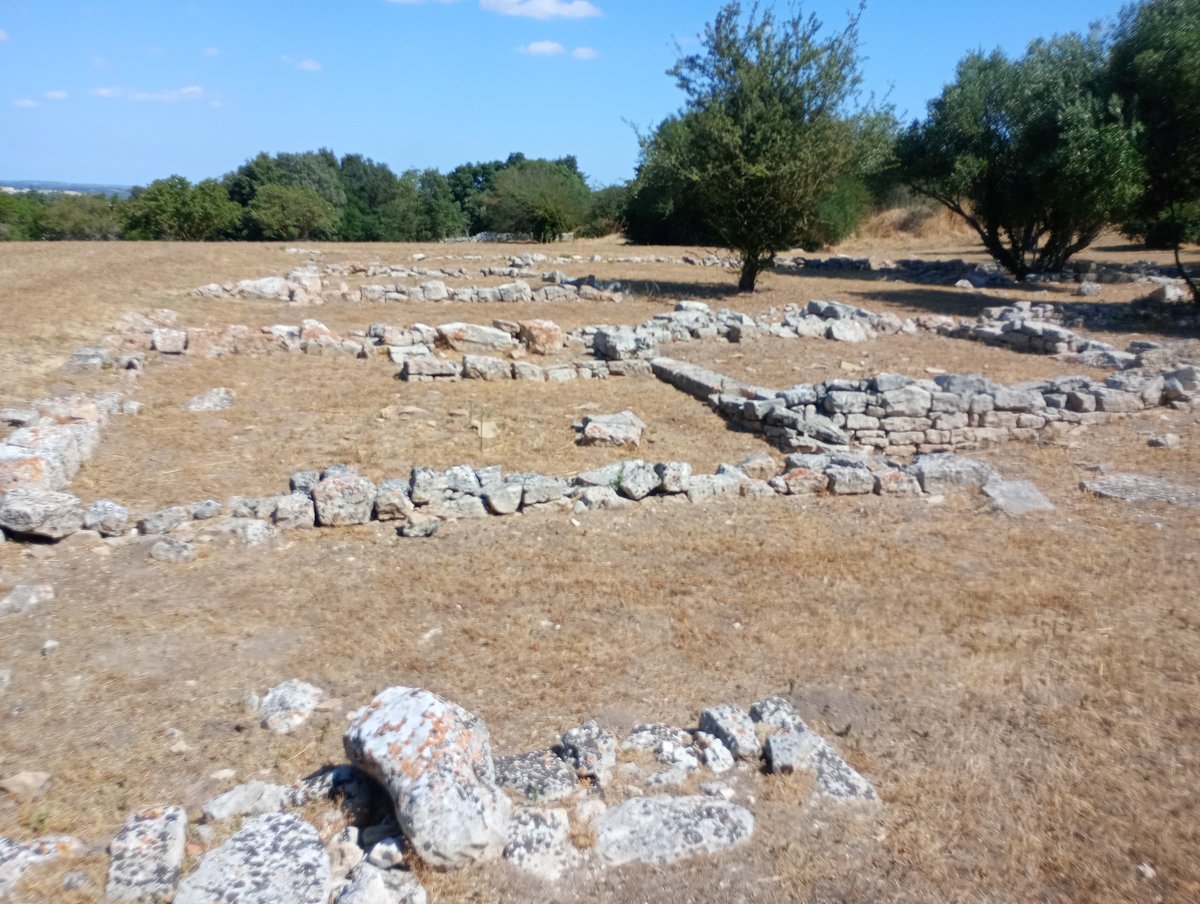

Standing on Monte Sannace, a spot near Gioia del Colle, you find Thuriae, a lost city. The tale of its name wears as many layers as Thuriae itself, the archaeological park atop the hill revealing only a shadow of the farmstead that once crowned the summit. Scholars debate about whether 'Thuriae' or 'Turi', mentioned by Roman historian Tito Livio in his works, was the name of this lost city or a nearby settlement. The first glimpse of the city's layout came in the 20th century, when archaeologists began digging on the site.
The original excavations brought up the remains of a cluster of thatched houses, while more recent digs brought more homes and tombs to light, along with a possible defensive wall. During the Iron Age, residents moved to Monte Sannace from the plains, where small settlements were focused on agriculture. By the sixth century BC, the settlement on Monte Sannace was fairly advanced, with organized commercial relationships with Greece. Steeped in history, Monte Sannace has inspired much speculation among archaeologists.
Some believe the site's sheer geographical power made it a desirable place for the agricultural rich, the stream nearby providing a water source and fast connection to the sea. Today, Monte Sannace reveals some faint clues to the lost city and its residents, but only a shadow of its ancient grandeur remains - a stone foundation here, or a fragmented vase there, serve as reminders of a way of life lost to the ages. Often shrouded in fog and with views that stretch for miles, Monte Sannace serves as a reminder of a time when the world was vast and unfathomable.
Sources: Wikipedia, OpenStreetMap, Wikidata, Wikimedia Commons
Written by Nicolo Ciampini
Discuss this with the author and others
No comments yet. Be the first to start the conversation.