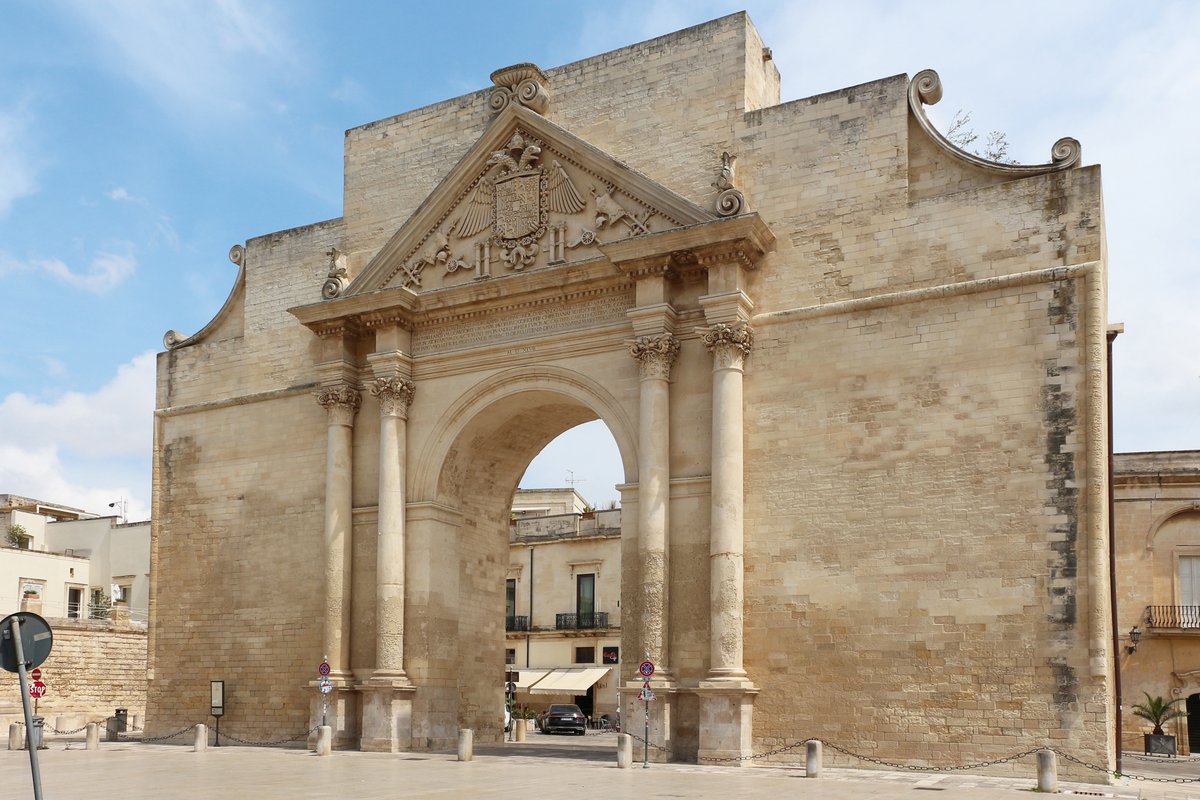

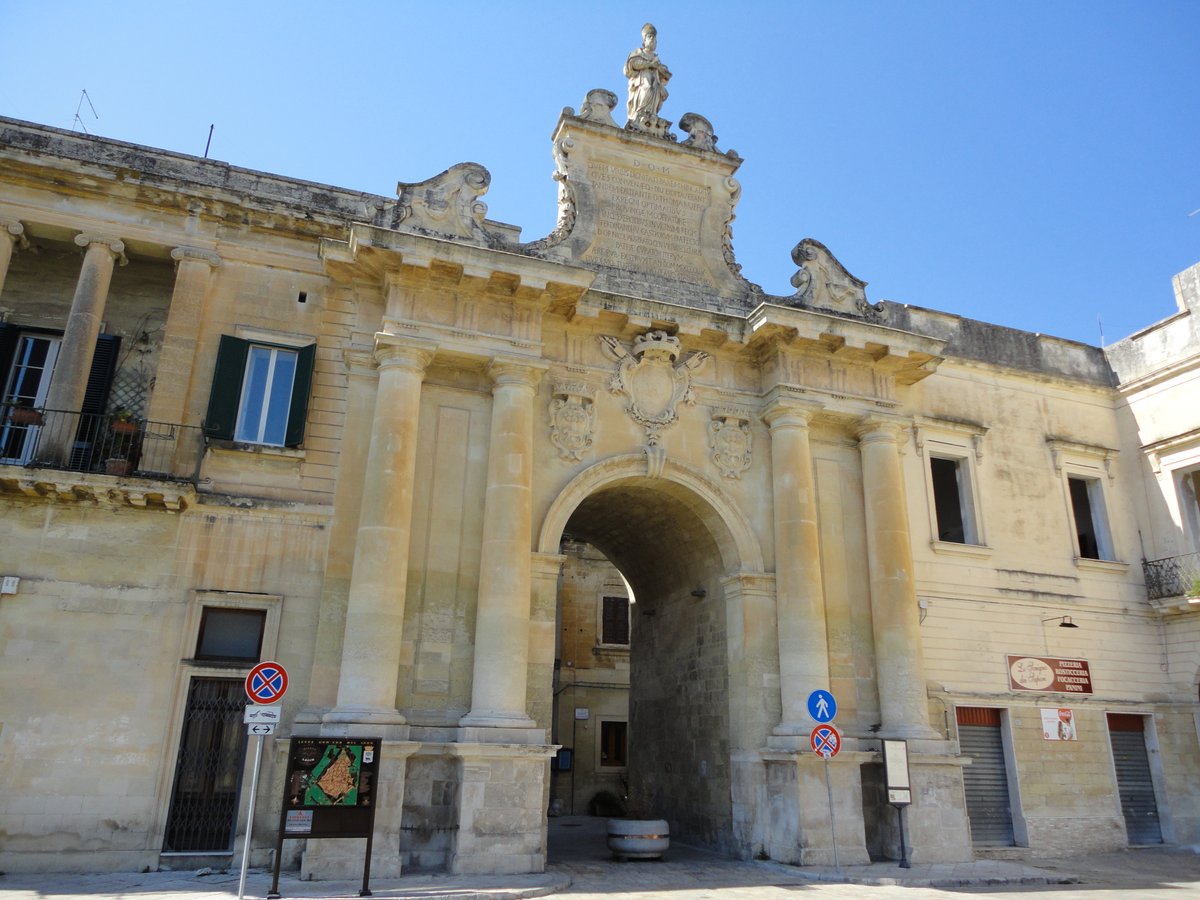
Why does this gate stand? It was built in 1548 to celebrate the power and Empire of Carlo V. The people of Lecce and their governor, Ferrante Loffredo, wanted to immortalize the man who provided military aid to the province of Terra d'Otranto against incursions. They gave him an elaborate tribute - a triumphal arch complete with carvings of cannons and armor, mimicking the style of Roman triumphal arches.
On the fronton, the imperial coat of arms of Carlo V is located in the center. The inscription is a significant tribute to the 16th-century ruler. It calls him the exterminator of the Turchi and a spreader of religion across the world. The gate was built on the site of the ancient Porta San Giusto and was named Porta Napoli because it was the road from which one took the consular way toward the city of the same name.
When the city walls were overhauled in the 1800s, the sections flanking the gate were stripped away. The arch stands opposite the obelisk of Terra d'Otranto.
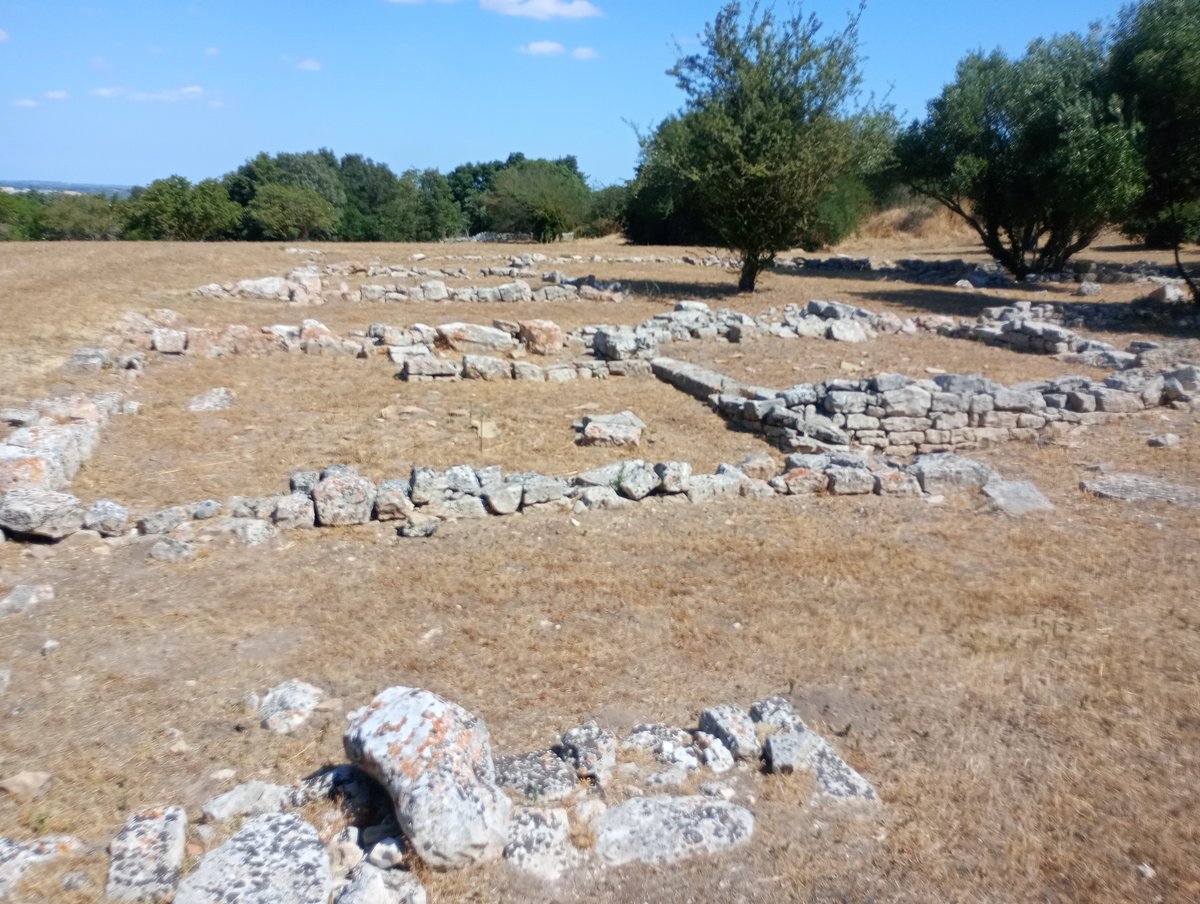
There is some mystery nearby, too. Archeologists from the University of Salento dug around the area and found Messapian burials. So, while the arch celebrates a ruler from hundreds of years later, the ground beneath it holds the remains of people from even further back.
Sources: Wikipedia, OpenStreetMap, Wikidata, Wikimedia Commons
Written by Nicolo Ciampini
Discuss this with the author and others
No comments yet. Be the first to start the conversation.