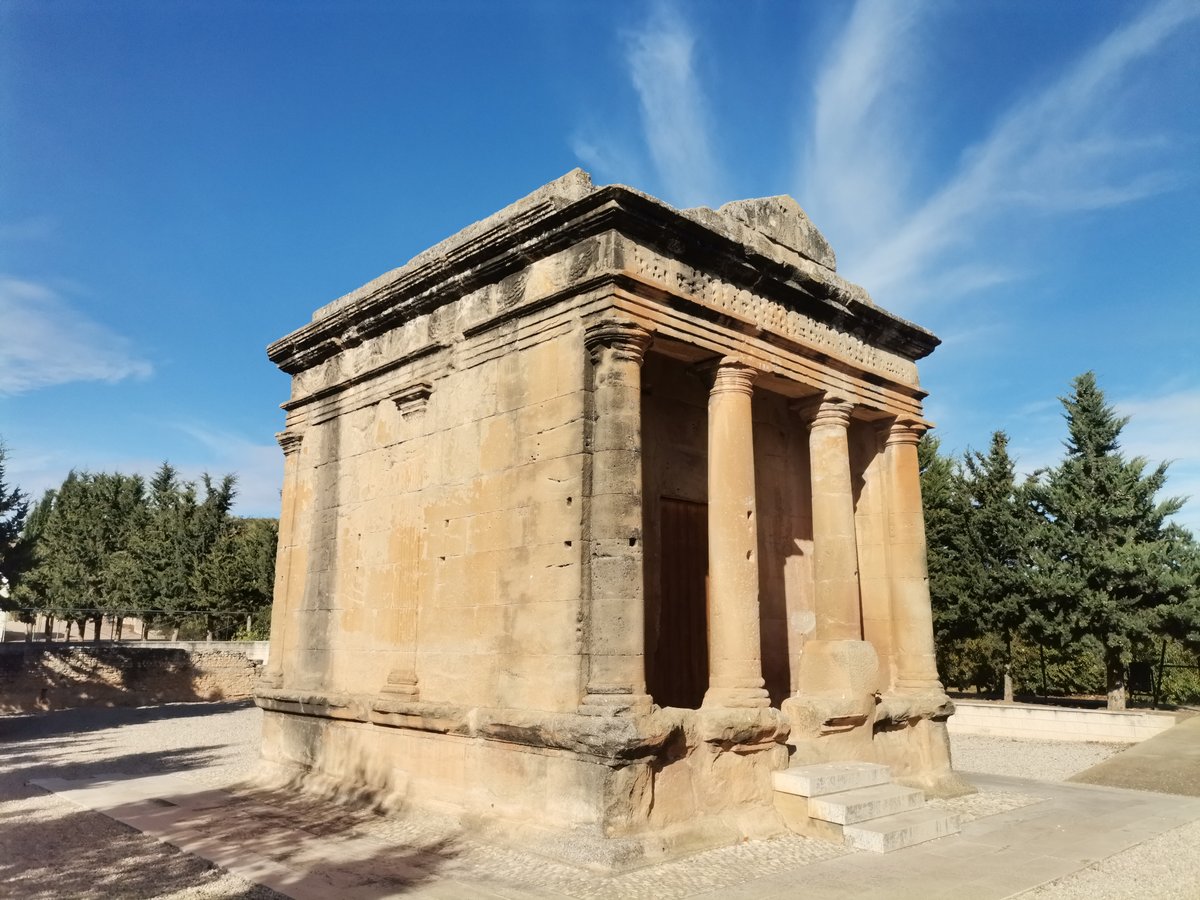

The Roman mausoleum of Fabara, located near the village of Fabara in the Spanish province of Zaragoza, is a remarkable relic of the past. Dating back to the 2nd century AD, this tomb, which is possibly the best-preserved monument of its kind in the Iberian Peninsula, is located in an area with a high density of rural Roman remains. The tomb had gone virtually unnoticed by scholars until it was officially reported in 1874. The mausoleum is a rectangular building, coated with sandstone, without the use of mortar.
It is perfectly oriented along the cardinal points, with the main entrance on the eastern side. The tomb is surrounded by other buildings of its type. Located in an area with a high density of rural Roman remains, the tomb is a temple of classical type, known as prostyle, with four columns and two pilasters on the walls. The entablature on the facade was decorated with an inscription, now lost. Reliefs with floral motifs and garlands decorate the walls and columns.
There are two pediments, one at the front, damaged, and one in the back, smoother and better preserved. The inscription on the front pediment still remains, reading L' A MILI LVPI.
Sources: Wikipedia, OpenStreetMap, Wikidata, Wikimedia Commons
Written by Nik Frost
Discuss this with the author and others
No comments yet. Be the first to start the conversation.