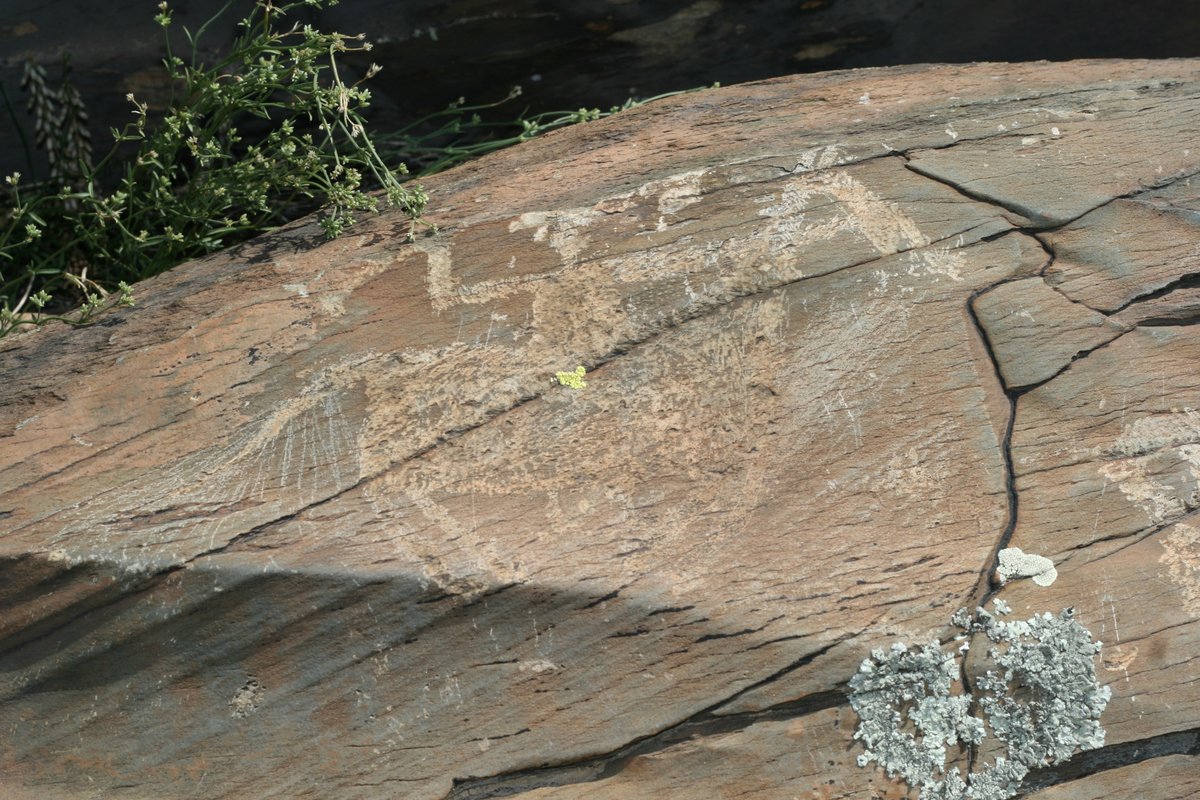

The open-air rock art site at Domingo García, located in the Segovia municipality, consists of a collection of engravings that date from the Upper Paleolithic through to the Contemporary Age. The authors of these works used techniques of pecking and incision, though no remains of paint have been found in either case, even though its use cannot be ruled out.
Dating the site is difficult due to the absence of direct dating techniques. Because of this, researchers tend to divide the site into two periods: a Paleolithic phase and a post-Paleolithic phase, which some authors refer to as a scenographic phase.
The most striking representation of the Paleolithic period is a pecked equid, probably created over a previous engraving. Its style could be Solutrean or, by analogy with the engravings of Siega Verde and Foz Côa, specifically between the Upper Solutrean and the beginning of the Magdalenian.
Sources: Wikipedia, OpenStreetMap, Wikidata, Wikimedia Commons

Written by Nik Frost
Discuss this with the author and others
No comments yet. Be the first to start the conversation.