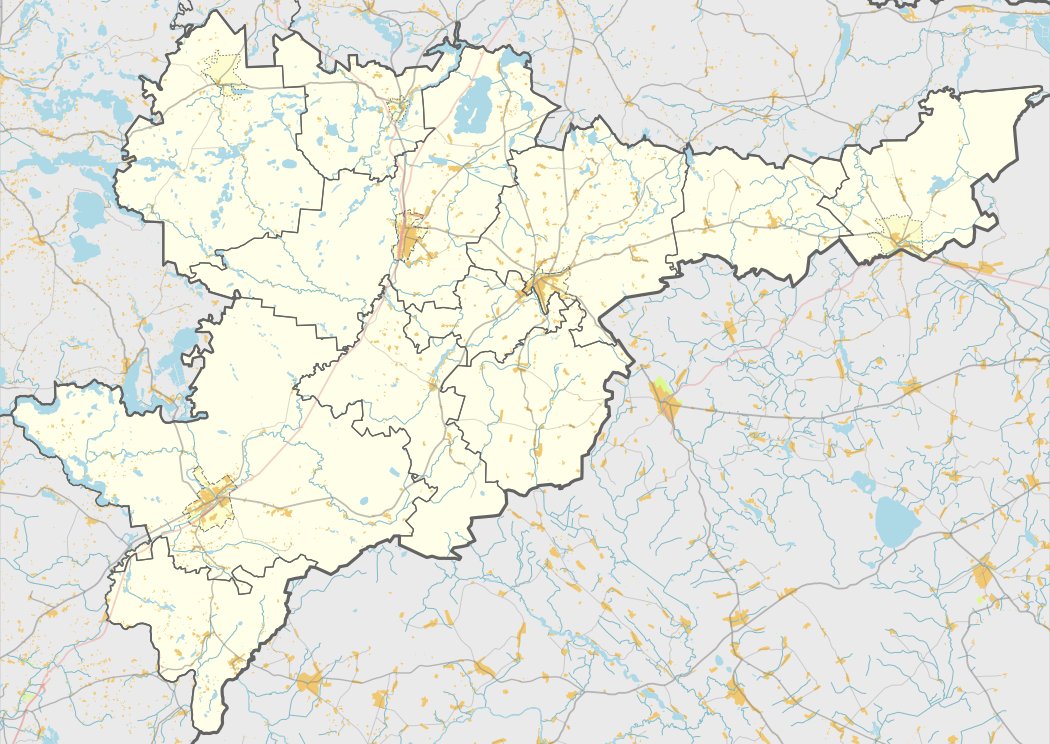

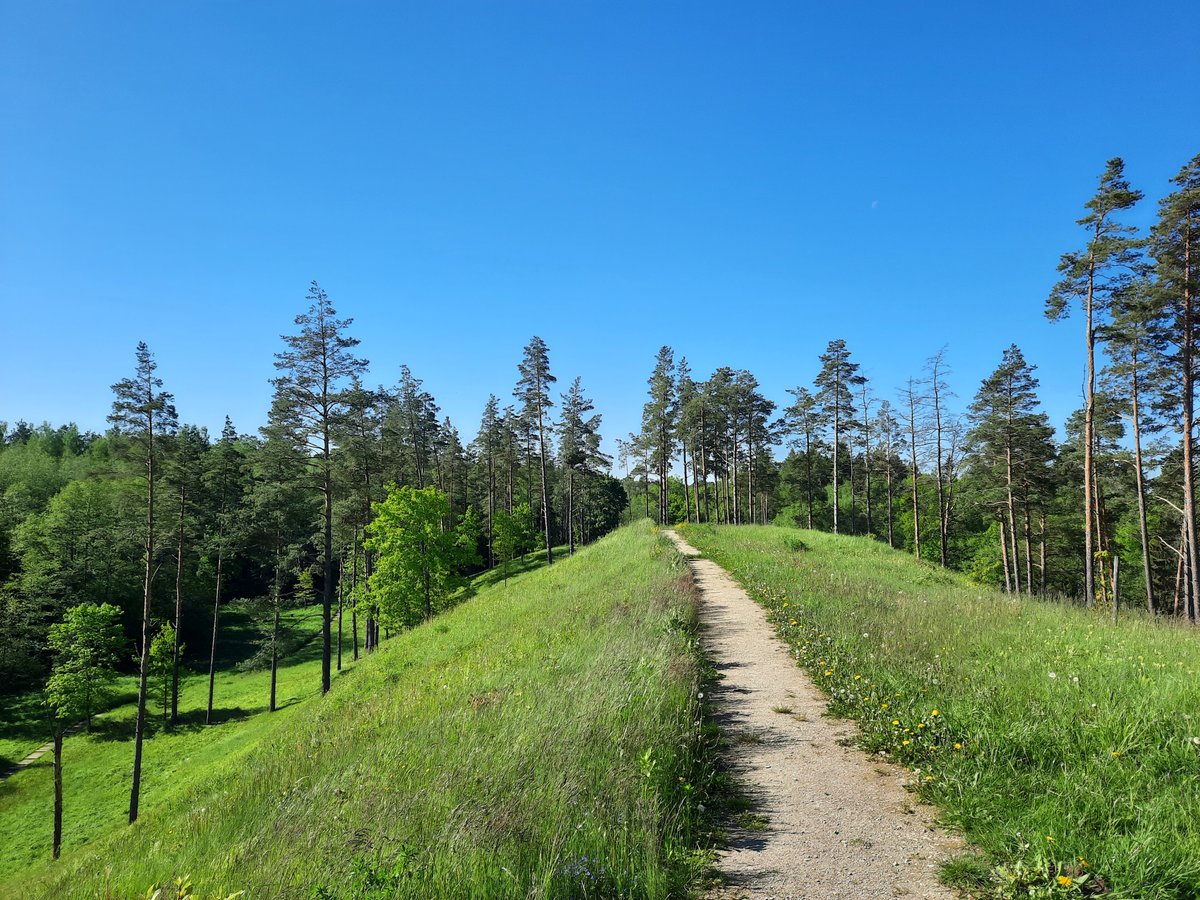
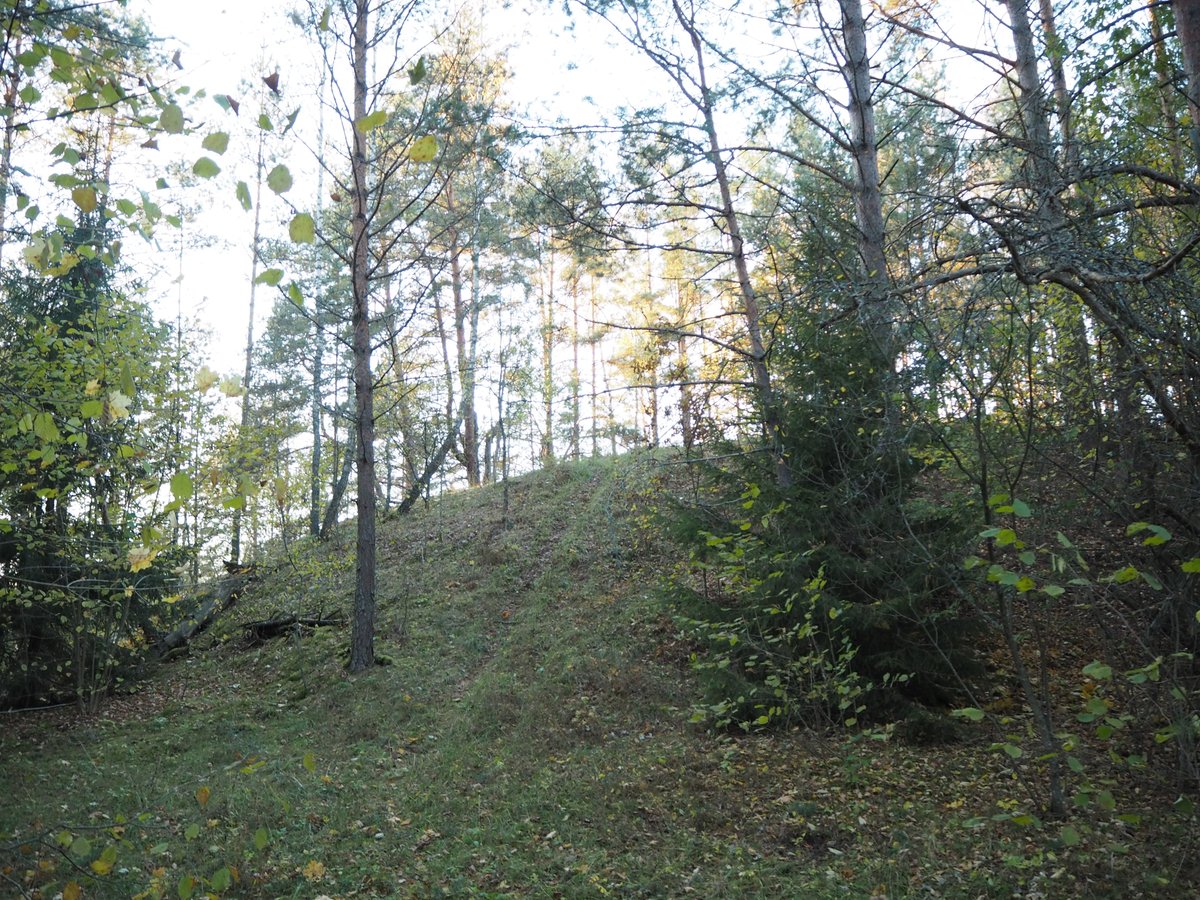
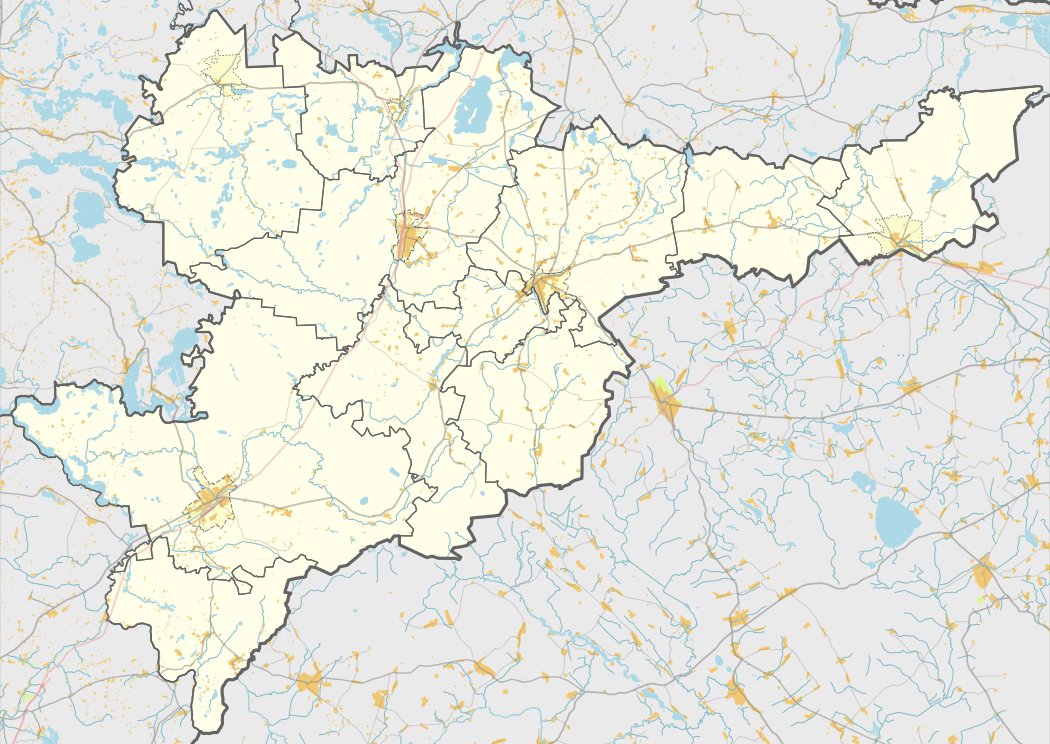
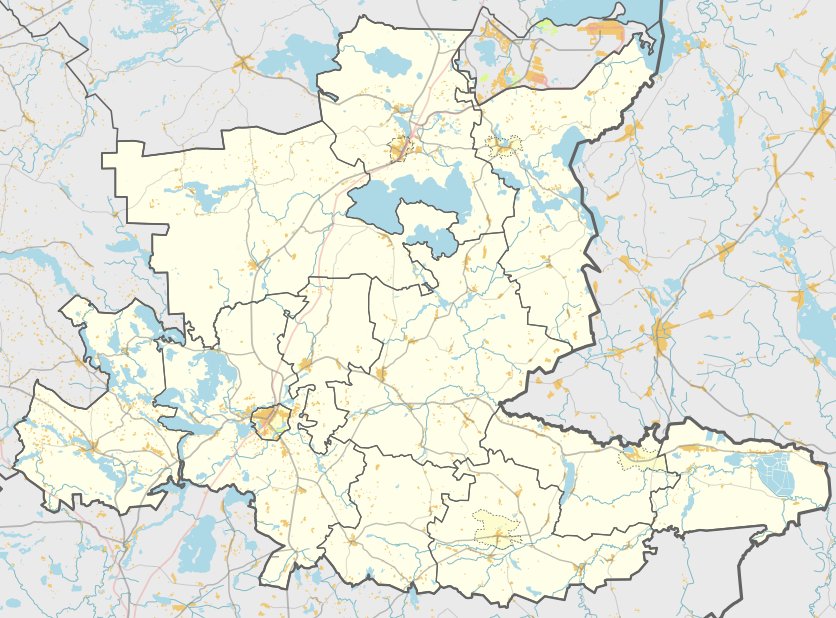
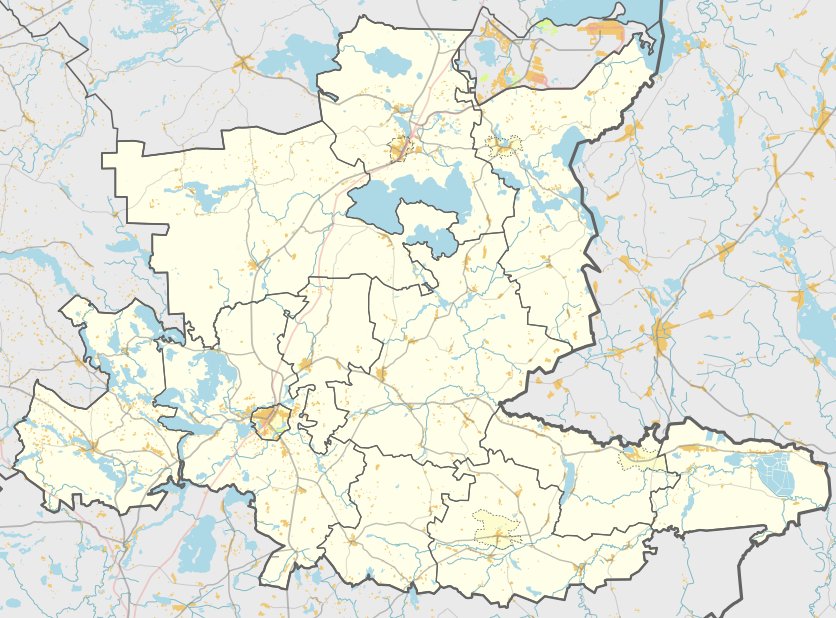
Located south of Nevieriškės in the Švenčionių seniūnija, Nevieriškės piliakalnis is a hillfort and settlement. To reach the site from the Švenčionys – Reškutėnai road, one turns left at the start of Nevieriškių, passes a cemetery, and follows a field path for 640 m. The site is located across from the canalized Dėmės. The fort features a rounded courtyard with a diameter of 50 m, with a northern slope built to a height of about 2 m. The hillfort is heavily damaged by roots and overgrown with vegetation.
In 1971, the History Institute surveyed the hillfort, and in 1976–1978, Elena Grigalavičienė researched a large part of the courtyard covering 1486 m². The research established that the hillfort underwent at least 4 reconstruction phases. Early findings revealed structures consisting of 4–6 m tall wooden posts arranged in quadrangles for dwellings, protected by double wooden fences. The inhabitants left behind stone axes, bone needles, and various pottery. These structures were rebuilt multiple times, covering larger areas as the courtyard was expanded. The construction horizons belong to the second half of the 1st millennium BCE.
In the third phase, remains of bronze casting furnaces appeared, showing that the inhabitants were already capable of processing metal. During the final settlement phase in the first half of the 1st millennium BCE, the courtyard was surrounded by a clay wall 5–9 m wide. During this time, the inhabitants used metal tools and jewelry, including iron needles, knives, and bronze rings. The site was declared a cultural monument by a government resolution in May 1998. The visual protection zone for the site covers 1025000 m².
Sources: Wikipedia, OpenStreetMap, Wikidata, Wikimedia Commons
Written by Nicolo Ciampini
Discuss this with the author and others
No comments yet. Be the first to start the conversation.