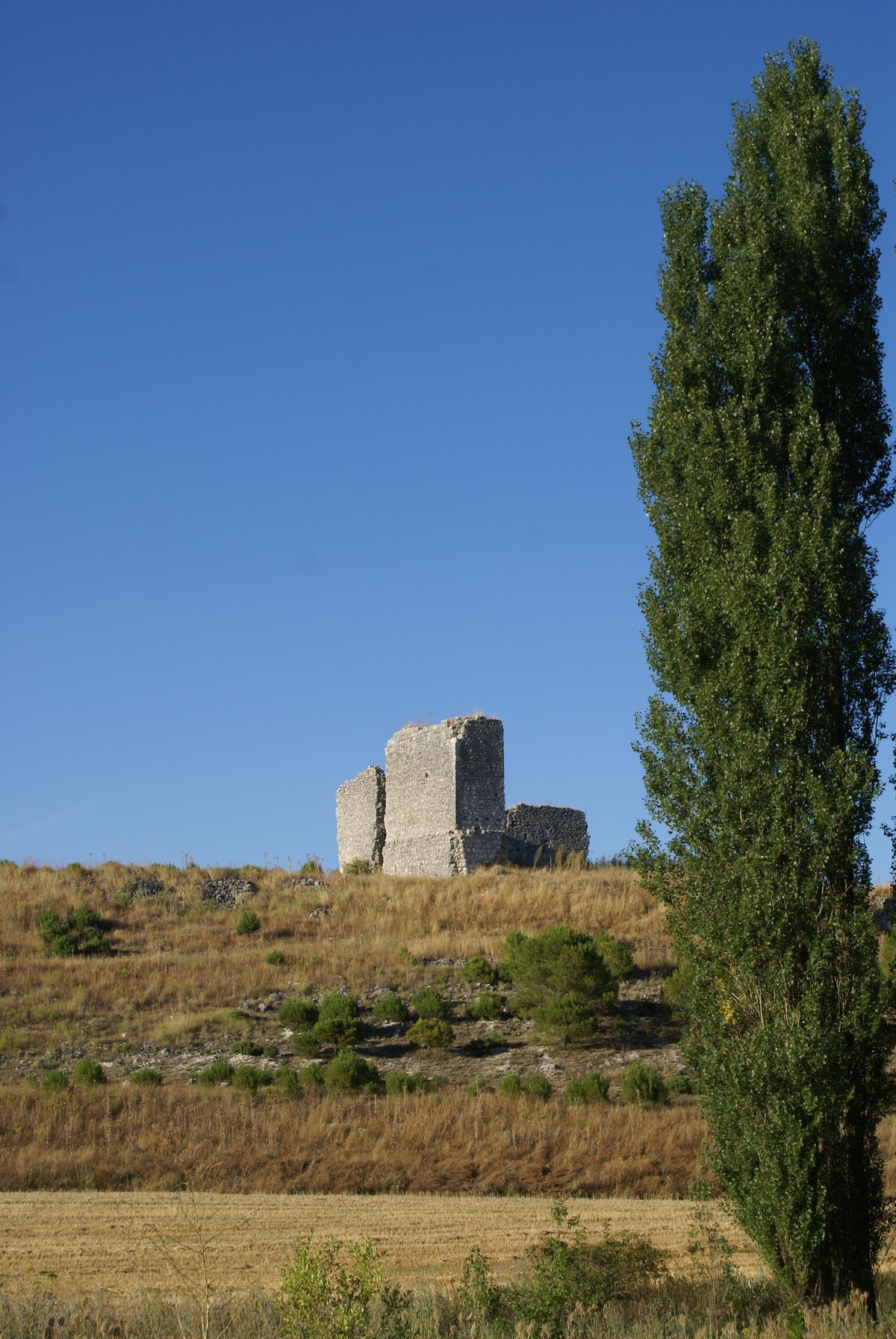

Minguela, a village located in the south of the Duero Valley in the southwest of the Campo de Peñafiel, and to the northeast of the old Community of Villa and Tierra of Cuéllar, dates back to the 11th century during the repopulation of the Duero valley during the Reconquista. Initially part of Segovia province, Minguela later belonged to Valladolid. Belonging to the Comunidad de Villa y Tierra de Cuéllar, within the Sexmo of Valcorba, the majority of what was Minguela now lies in the municipality of Bahabón, while the rest is in Campaspero.
The area where the settlement stood is characterized by numerous springs and streams, including the one that forms the Arroyo Valcorba. It's likely that Minguela was abandoned definitively in 1638, although the last church records are missing, and it's difficult to pinpoint the exact date. However, it is certain that by 1640, Minguela was deserted. The only remaining architectural remains of Minguela are the ruins of its church, dedicated to Saint Christopher.
The tower of the church, destroyed, held bells of great value, which were moved to the cathedral of Segovia, as Minguela belonged to its diocese. Minguela is the only place in the province of Valladolid where rock paintings have been found. These are located in the surroundings of the abandoned town, and date back to the Bronze Age. They are schematic, colored red, and depict two anthropomorphic figures, one of them carrying a bow and arrow. Today, Minguela is best known for its rock paintings, which have been the subject of many local legends and speculation.
Sources: Wikipedia, OpenStreetMap, Wikidata, Wikimedia Commons
Written by Nik Frost
Discuss this with the author and others
No comments yet. Be the first to start the conversation.