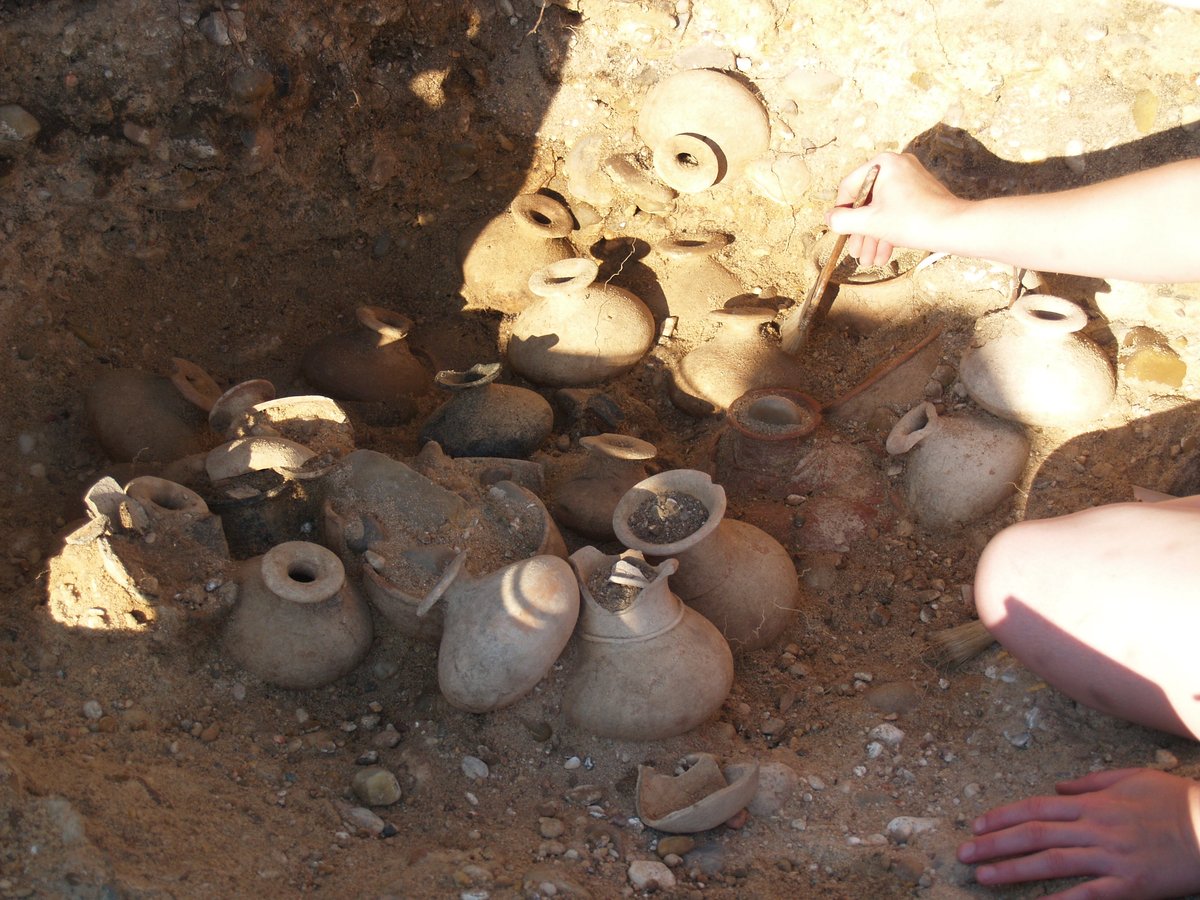

Originating in the region of contemporary Padilla de Duero, Spain, Pintia was a settlement of the Vaccaei. These were an early Celtic society in northern Europe that arrived in this area during a period of growth. Their cities, including Pintia and Pallantia, had almost independent governments as city-states but maintained relations with their sister cities in the surrounding area.
Because of their relations, the Vacceans helped the Arevaci of Numancia during the Roman siege. Because of this assistance, the Roman invaders conquered the Vaccean cities after they had been victorious at Numancia. Pintia was besieged and destroyed by the Romans, which buried the Vaccean culture, religion, and language.
Years ago, it was believed that Valladolid was the ancient Pintia, but neither the location nor the archaeology supported this belief. Archaeological excavations conducted in Padilla de Duero uncovered an important settlement that has been interpreted as its possible location. The archaeological zone consists of three different parts: the city of Las Quintanas, the necropolis of Las Ruedas, and the potter's district of Carralaceña.
The necropolis of Las Ruedas contains rich burials of elderly soldiers. In the nearby town of Pesquera de Duero, they have found the artisan district of Carralaceña. Since the kilns had such a large output, there could have been fires in the city during the period the kilns were used, so they constructed the kilns on the other side of the river. These kilns are unique in Europe, but they cannot be visited because the Executive of Castile and León do not think it would be profitable to set up the site for tourism.
Sources: Wikipedia, OpenStreetMap, Wikidata, Wikimedia Commons
Written by Nik Frost
Discuss this with the author and others
No comments yet. Be the first to start the conversation.