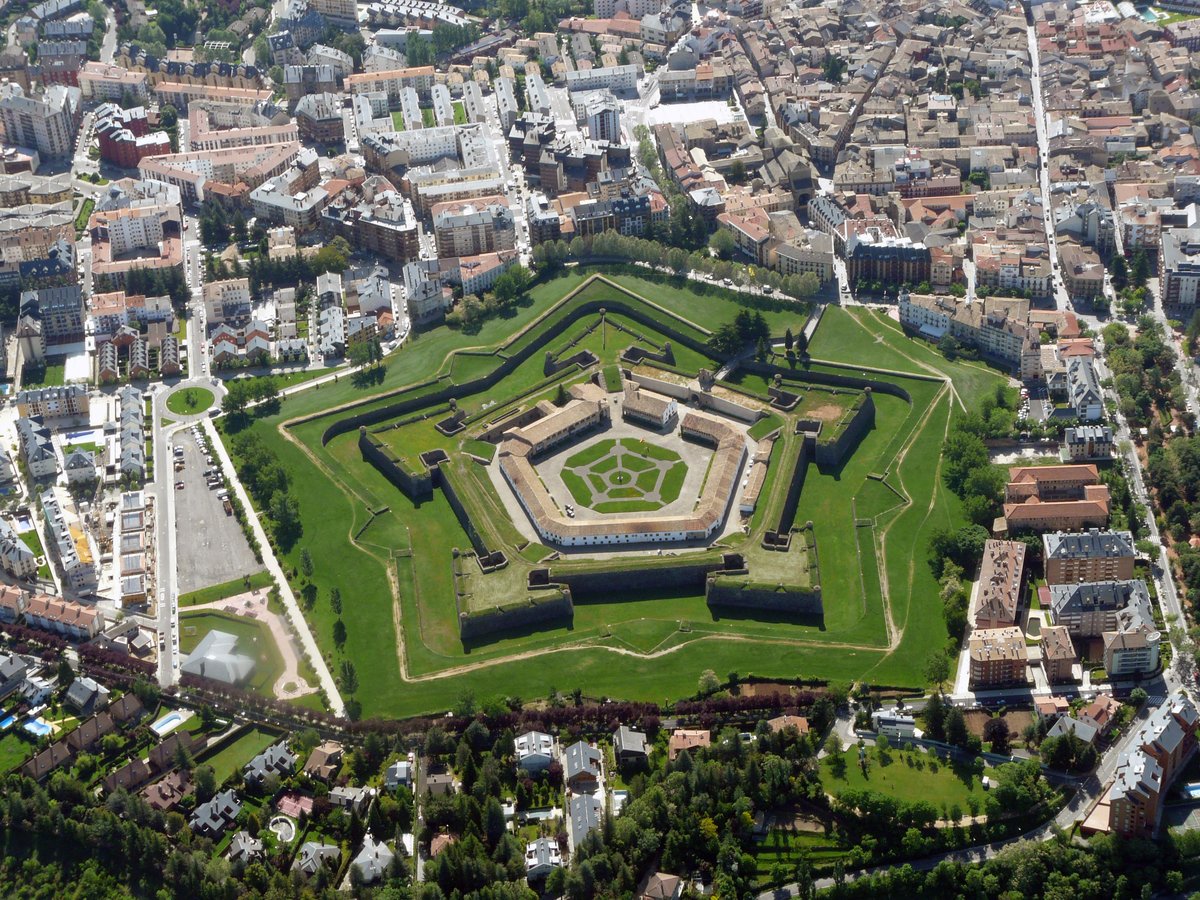

The Jaca Citadel, dating back to the 16th century, stands as a remarkable testament to the political alliances and maneuvers of the time. Constructed under the patronage of King Philip II of Spain, the Italian engineer Tiburzio Spannocchi was tasked with its creation. The citadel was part of a defensive line against France, along with other fortifications in cities such as Biescas and Pamplona, designed to control the border and deter French incursions.
Remarkably, the citadel was never successfully captured by the French, even during the War of the Spanish Succession when it supported the Spanish monarchy, earning it the titles ‘Fidelísima’ and ‘Vencedora’. Despite being captured by Napoleon's troops in 1809, the citadel was returned to Spanish control in 1814. During the Carlist Wars, it remained under government control, and during the Spanish Civil War, it served as a prisoner-of-war camp. Today, the Jaca Citadel is managed by the city council and houses the Museum of Miniature Military Dioramas.
This museum showcases miniature dioramas depicting military scenes from ancient Egypt to the present day, with a focus on Spanish military history. On January 5, 2021, the Chief of the Spanish Army, General Francisco Javier Varela Salas, inaugurated the 'Sala de Batallas' at the Jaca Citadel, which displays the permanent exhibition 'Hechos de armas, hechos de arte'. The citadel boasts a star-shaped plan with five points and is nearly intact since construction.
It is located outside the walls of Jaca in the 'Burgo Nuevo' district. The ditch surrounding the fortress measures 1066 meters in circumference and was not built to be filled with water.
Sources: Wikipedia, OpenStreetMap, Wikidata, Wikimedia Commons
Written by Nicolo Ciampini
Discuss this with the author and others
No comments yet. Be the first to start the conversation.