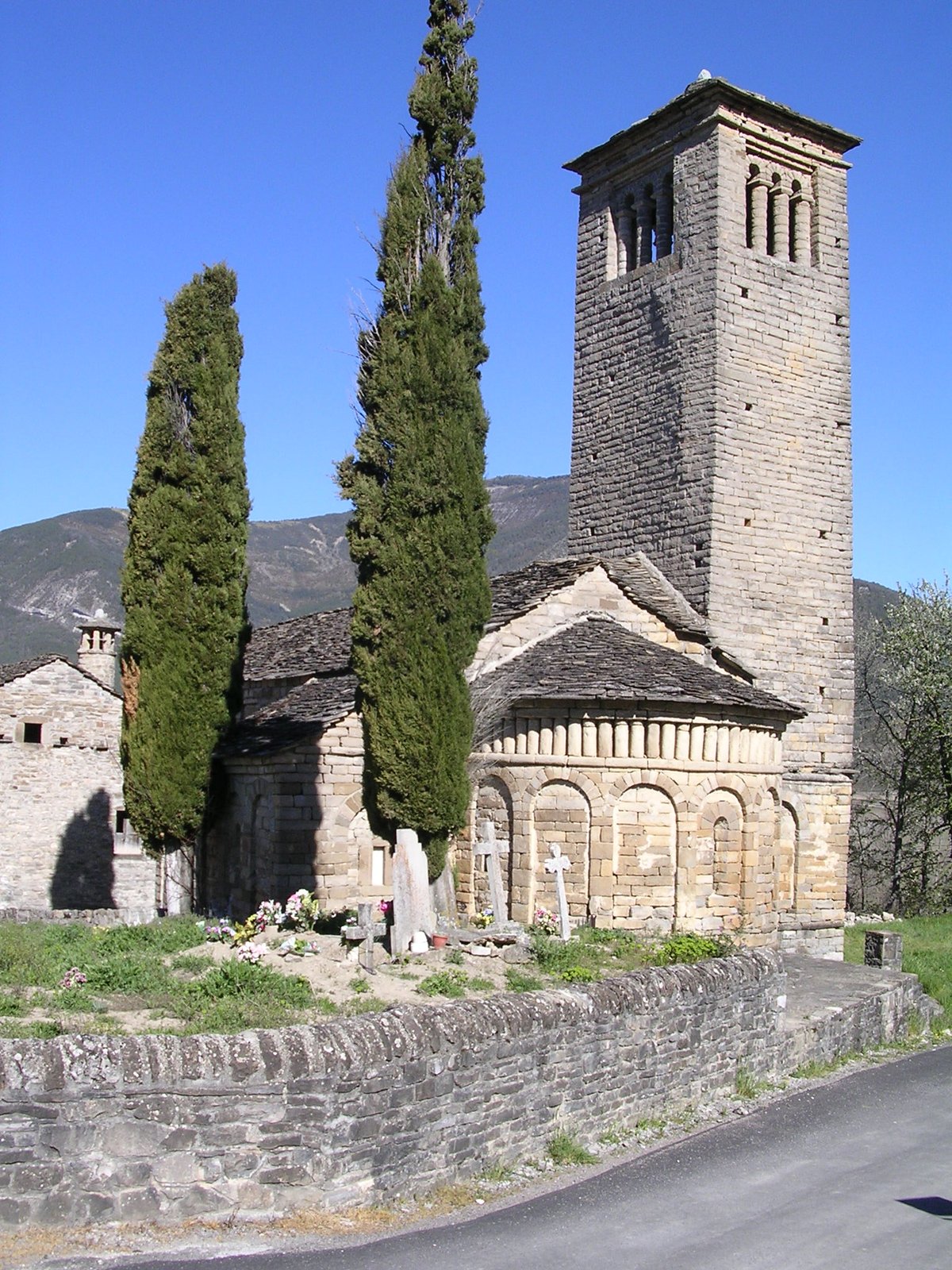

Huddled in the scenic hills of Alto Gállego, a historical comarca in Huesca, Aragon, Spain, the Serrablo Churches are a group of Romanesque edifices steeped in enigma. Their origins remain a topic of debate among historians, with no definitive evidence to trace their lineage.
The Church of San Pedro, dedicated to Saint Peter, is one of the most characteristic examples of these mysterious structures, believed to have been constructed around the middle of the 11th century. Located in the comarca of Alto Gállego, the Church boasts a Latin cross plan and a chapel integrated within its tower. Declared a monument of historical-artistic interest in 1931, it underwent restoration in the following year, during which its nave's ceiling arches and barrel vault were rebuilt.
Featuring an absence of figurative and ornamental sculpture, the Serrablo Churches are characterized by thick, rounded moldings. Some theorize they are the product of an autonomous development of Peninsula architecture, while others argue their style suggests a Lombard influence.
Sources: Wikipedia, OpenStreetMap, Wikidata, Wikimedia Commons
Written by Nik Frost
Discuss this with the author and others
No comments yet. Be the first to start the conversation.