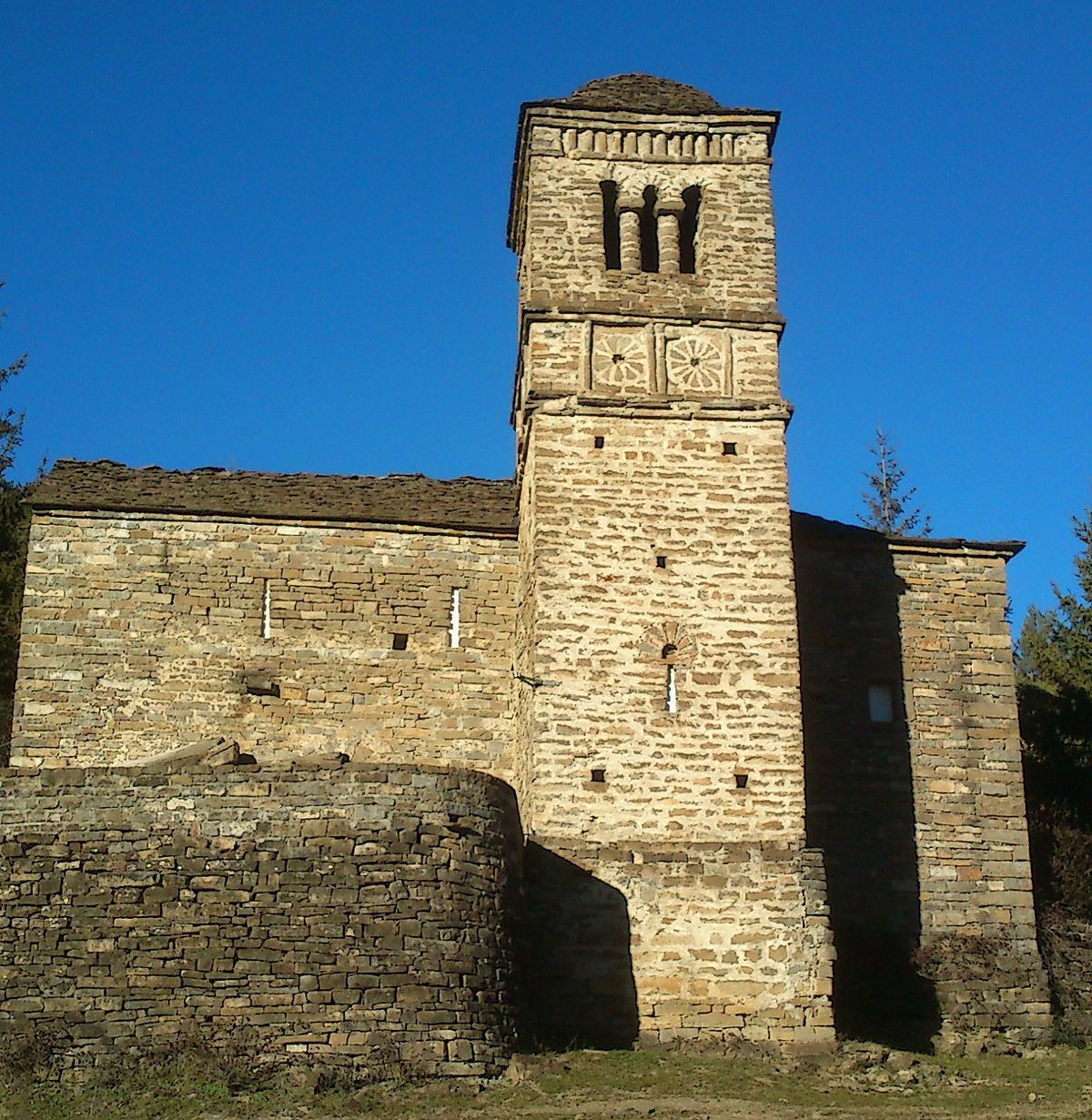

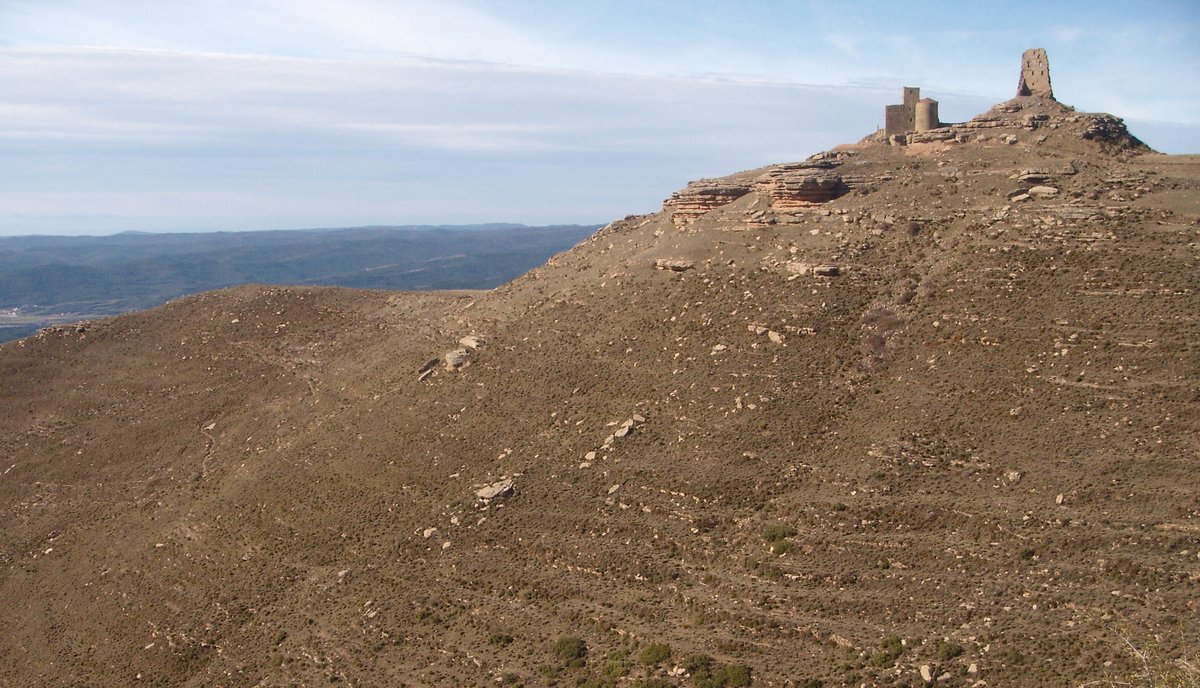
The church of San Bartolomé stands as a solitary survivor. Once part of a functioning community, the buildings have since vanished, leaving this single monument as the only trace of the people who lived here.
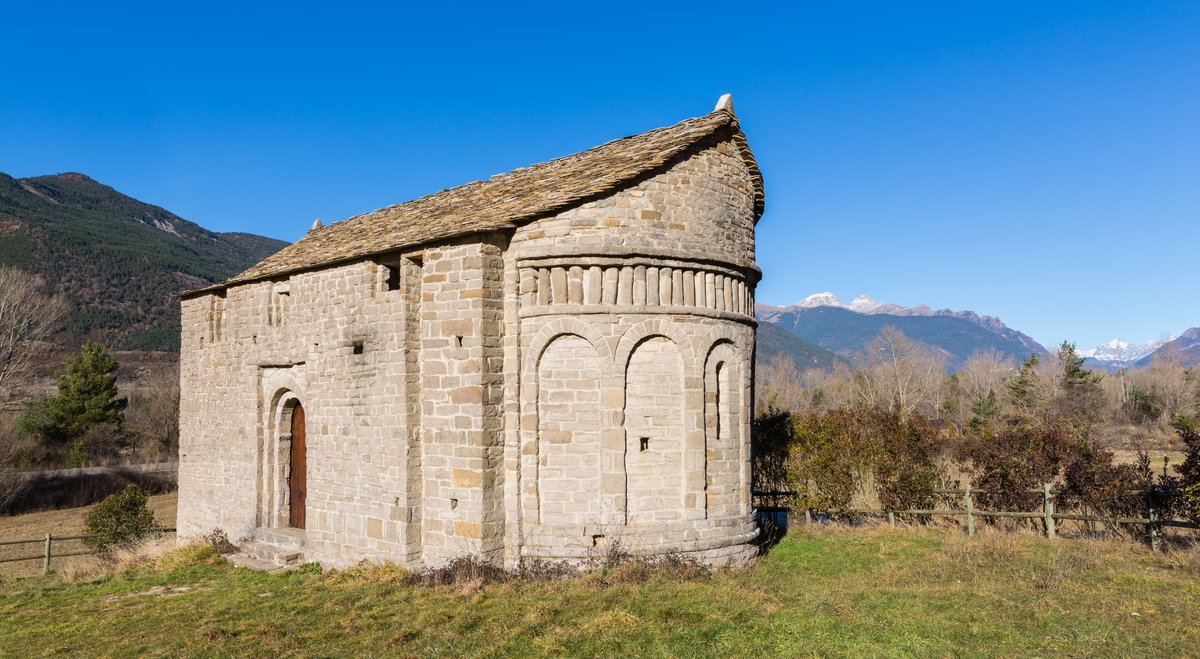
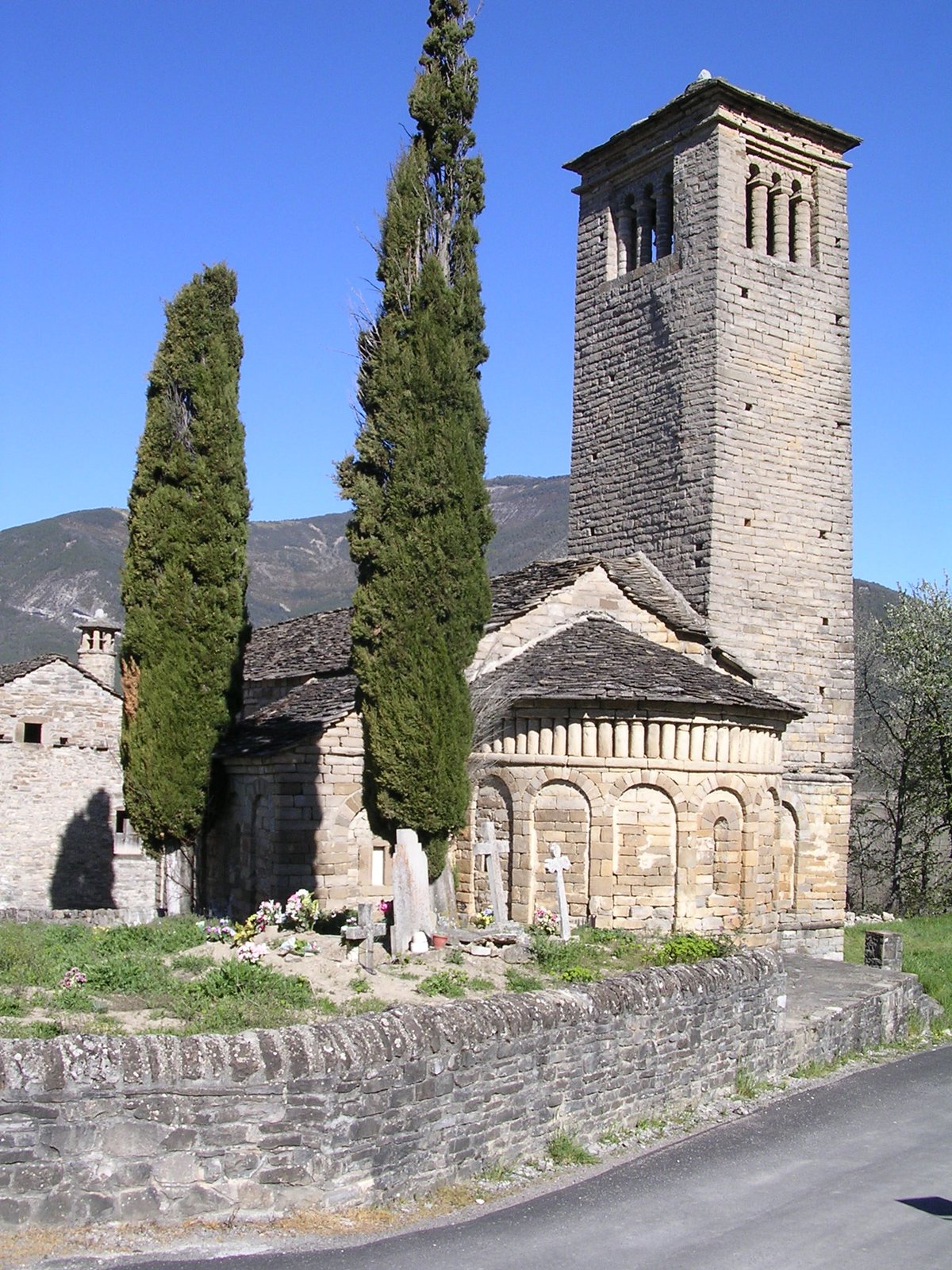
Constructed between the 10th and 11th centuries, the building belongs to the group of churches of Serrablo. This style is characterized by a lack of sculptural elements, single-aisle layouts ending in a semicircular apse or flat wall, horseshoe arches, and baqueton friezes. These features are typical of the group of churches in Serrablo, especially those that most closely follow the model of San Pedro de Lárrede.
While the walls and roof of the church are the product of a current restoration based on the original footprint, the tower remains the only original element. It is formed by two sections that may belong to different construction phases. The upper section shows a different stone color and size, suggesting it may be an addition from a later period. It features a window with two columns and three horseshoe arches, topped by a baqueton frieze.
Between the tower and the nave, there is a vaulted access with a doorway finished in a horseshoe arch. This entrance may be of Visigothic, Mozarabic, or Islamic influence.
Sources: Wikipedia, OpenStreetMap, Wikidata, Wikimedia Commons
Written by Nik Frost
Discuss this with the author and others
No comments yet. Be the first to start the conversation.