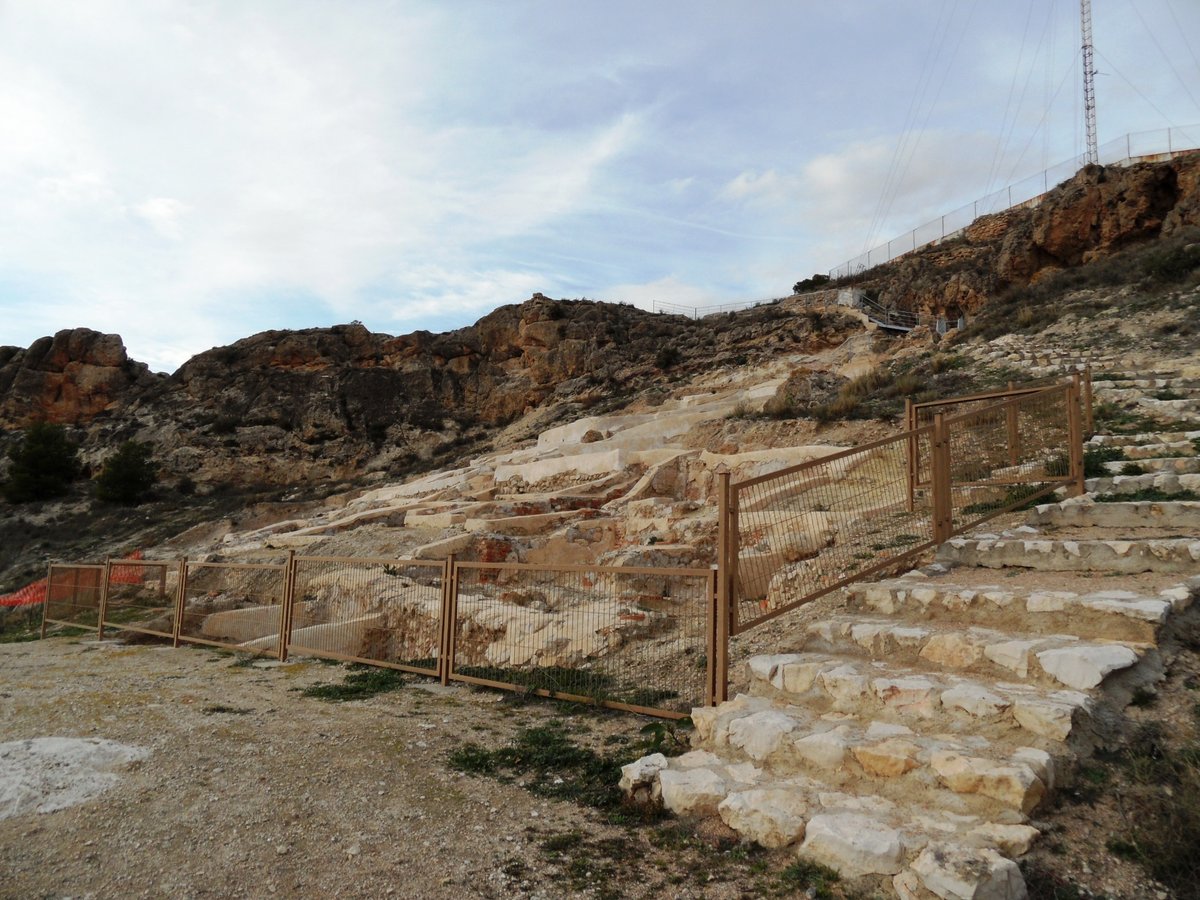

Hisn Yakka, also known as Madina Yakka or simply Yakka, was an ancient Muslim settlement and fortress, the predecessor of the current city of Yecla (Murcia). It thrived between the 11th and 13th centuries, but was ultimately abandoned. The fortress is first mentioned in Arabic sources as ḥiṣn Yakka (fortress of Yakka) and was located in the lands of the cora of Tudmir. Yakka's name, Yakka, is not of Arabic origin and it is possible that it comes from the pre-Roman root Iko or Ika.
Hisn Yakka was likely built at the end of the 11th century, during the Almoravid period. The population grew, and by the 12th century, Yakka had become a major city. Yakka's houses were built on terraces due to the steep terrain. The houses had two floors, with rooms for habitation constructed in the lower floor, accessed by stairs from the central courtyard. The urban plan of Yakka consisted of narrow, winding streets that intersect with small courtyards.
The streets were sloped to drain water, aided by a simple sewage system and cisterns. The water supply in Yakka was stored in cisterns called aljibes. The primary materials used in the construction of buildings in Yakka were stone, mud, and lime, and to a lesser extent brick. The entire complex of buildings was protected by a wall or fortification. The planning of Yakka allowed for the maximum sunlight during the harsh winter. The cemetery (maqbara) was located a few meters outside the city but within the walls, south of the city.
In the early 13th century, Yakka experienced a period of splendor, but it was ultimately abandoned during the Mudéjar Revolt.
Sources: Wikipedia, OpenStreetMap, Wikidata, Wikimedia Commons
Written by Nicolo Ciampini
Discuss this with the author and others
No comments yet. Be the first to start the conversation.