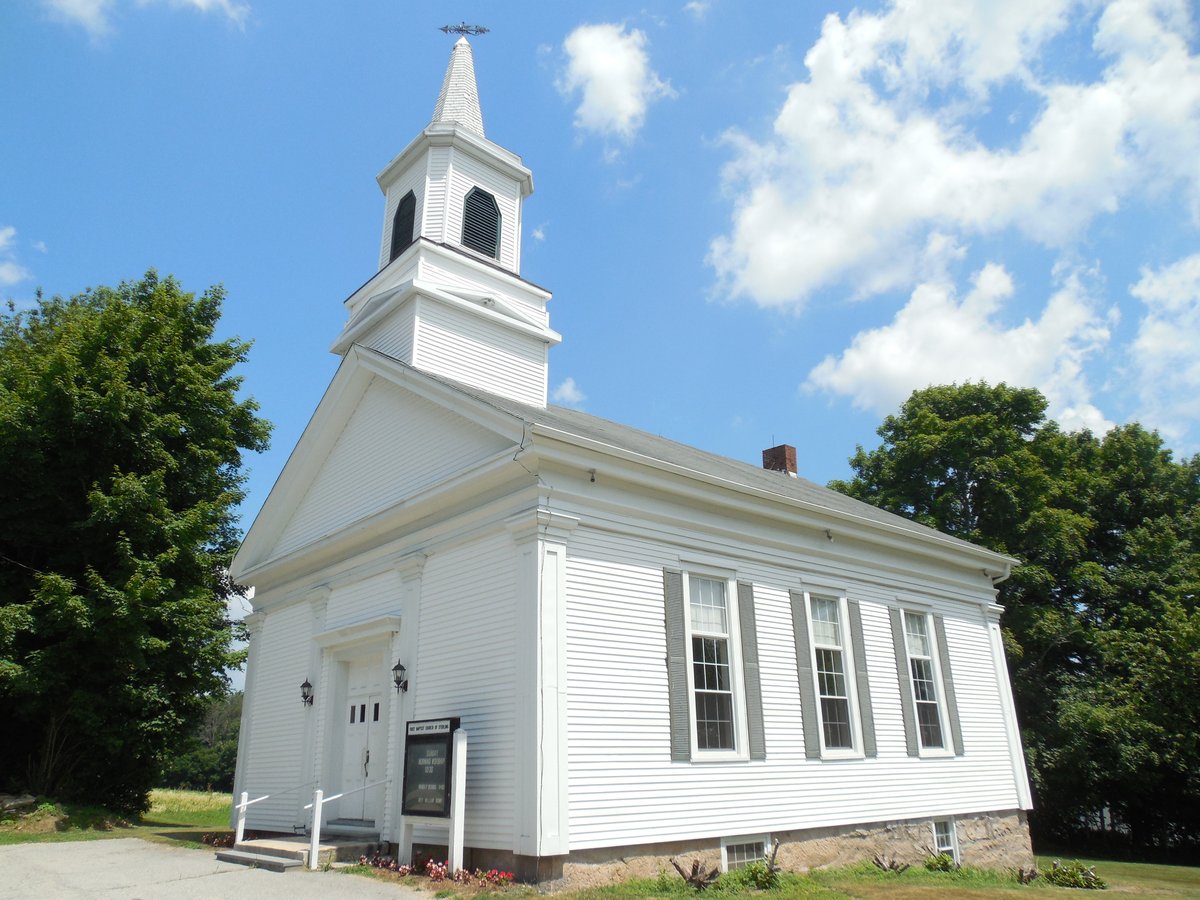

Nestled in the foothills of Connecticut, Sterling Hill Historic District is a well-preserved 19th-century rural village center, largely unaffected by industrial development. This small, quiet cluster of houses and the Sterling Hill Baptist Church was originally part of Voluntown, incorporated separately in 1794. Plainfield Pike, a major east-west road, was already a bustling route between Providence, Rhode Island, and Hartford, Connecticut, by this time.
The town hall, not built until 1812, was eventually made available to a Baptist congregation and still stands today as the Sterling Hill Baptist Church. Interestingly, the village center bypassed industrial development during the 19th century, although the railroad passed close enough to have an impact on the village's development. The church itself was given Greek Revival styling in 1859. Various houses in the district display Greek Revival, Italianate, and Federal architecture.
A portion of the Plainfield Pike running through the village is historically significant as the travel route of the French Army during the Revolutionary War; they camped overnight in Sterling Hill on both occasions in 1781 and 1782.
Sources: Wikipedia, OpenStreetMap, Wikidata, Wikimedia Commons
Written by Friendly Jane
Discuss this with the author and others
No comments yet. Be the first to start the conversation.