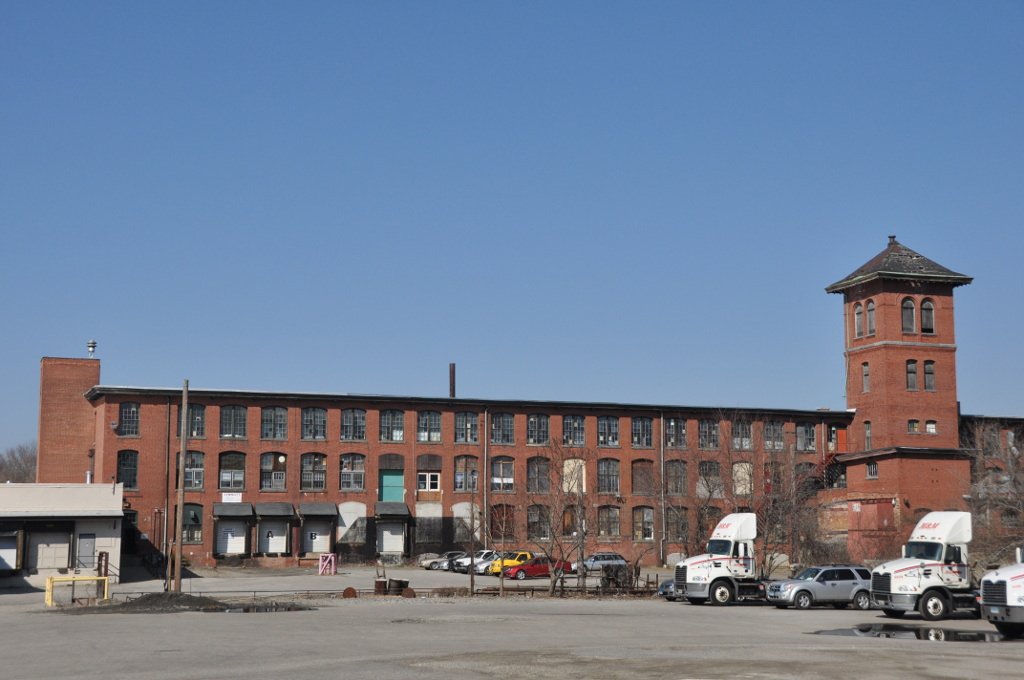
Harold Lawton, a superintendent at the Baltic Mill complex in Sprague, started the complex in 1905. By 1911, he doubled its size. The mill produced fine combed cotton textiles and reached a maximum capacity of 130,000 spindles.
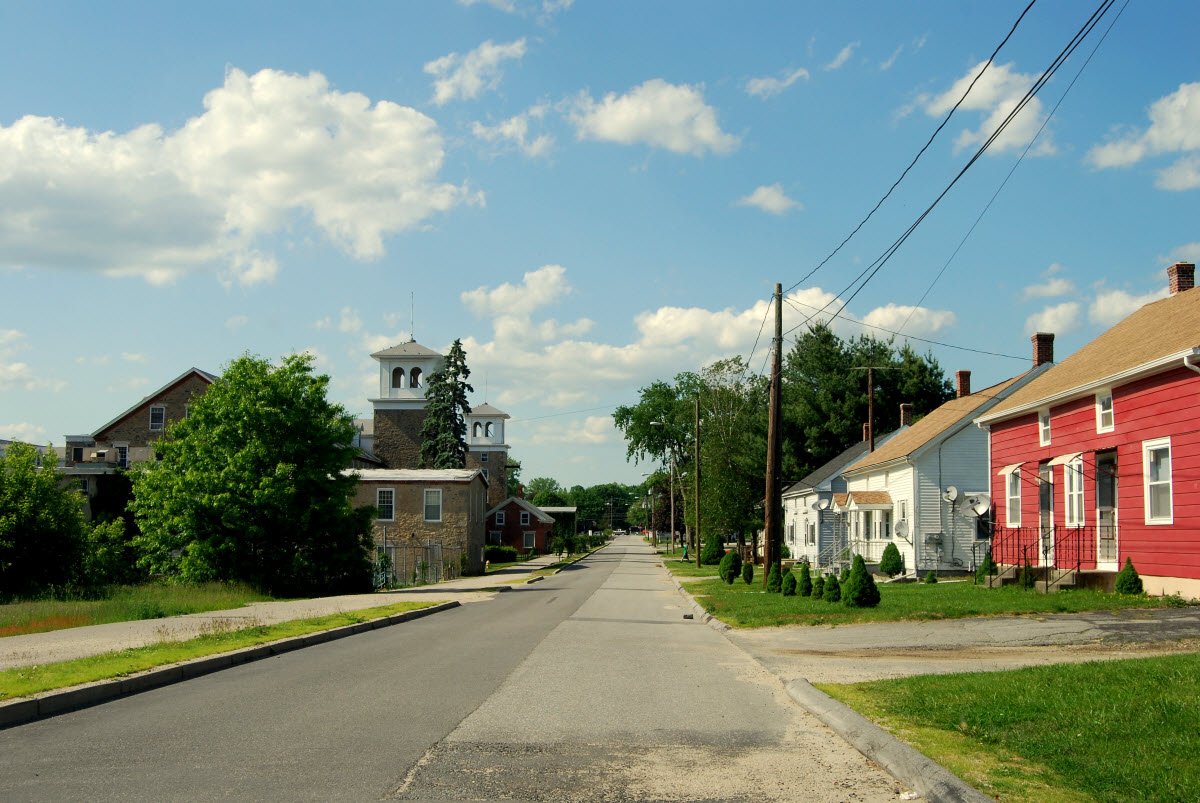
Lawton built a planned worker village. Between 1906 and 1911, he erected 125 Colonial Revival duplexes as housing for some of those workers. These homes sat by the large brick mill complex along Horse Brook.
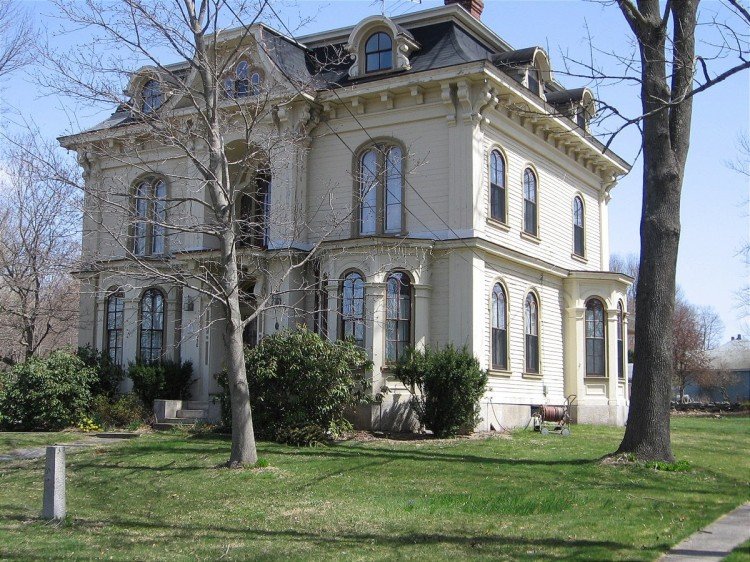
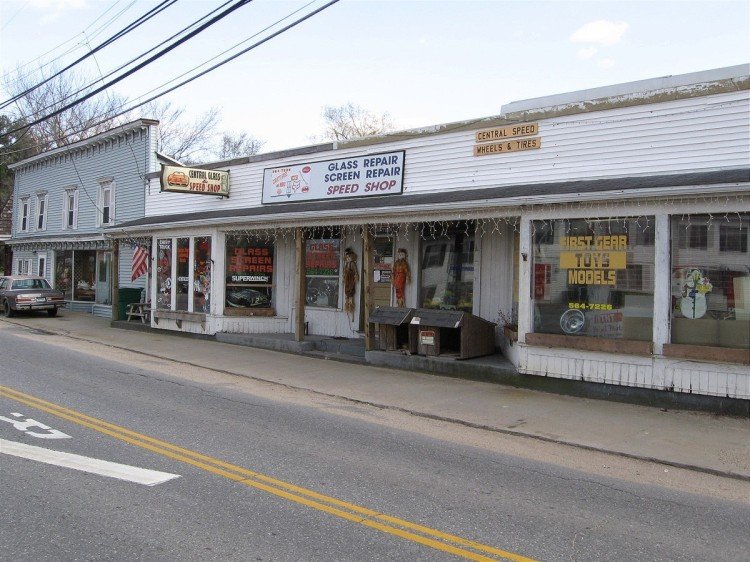
Success meant growth for Plainfield. A bank and an opera house appeared. Large commercial blocks rose up. There are a few commercial buildings in the district built to provide services to the works, and a community hall that now serves as Plainfield's town hall. The company suffered financial reverses during the Great Depression and closed in 1936.
Most housing survives with modest changes. You can walk the streets to see more than 100 historically significant structures. Part of the mill is gone and has been replaced by a large modern warehouse.
Sources: Wikipedia, OpenStreetMap, Wikidata, Wikimedia Commons
Written by Leroy
Discuss this with the author and others
No comments yet. Be the first to start the conversation.