
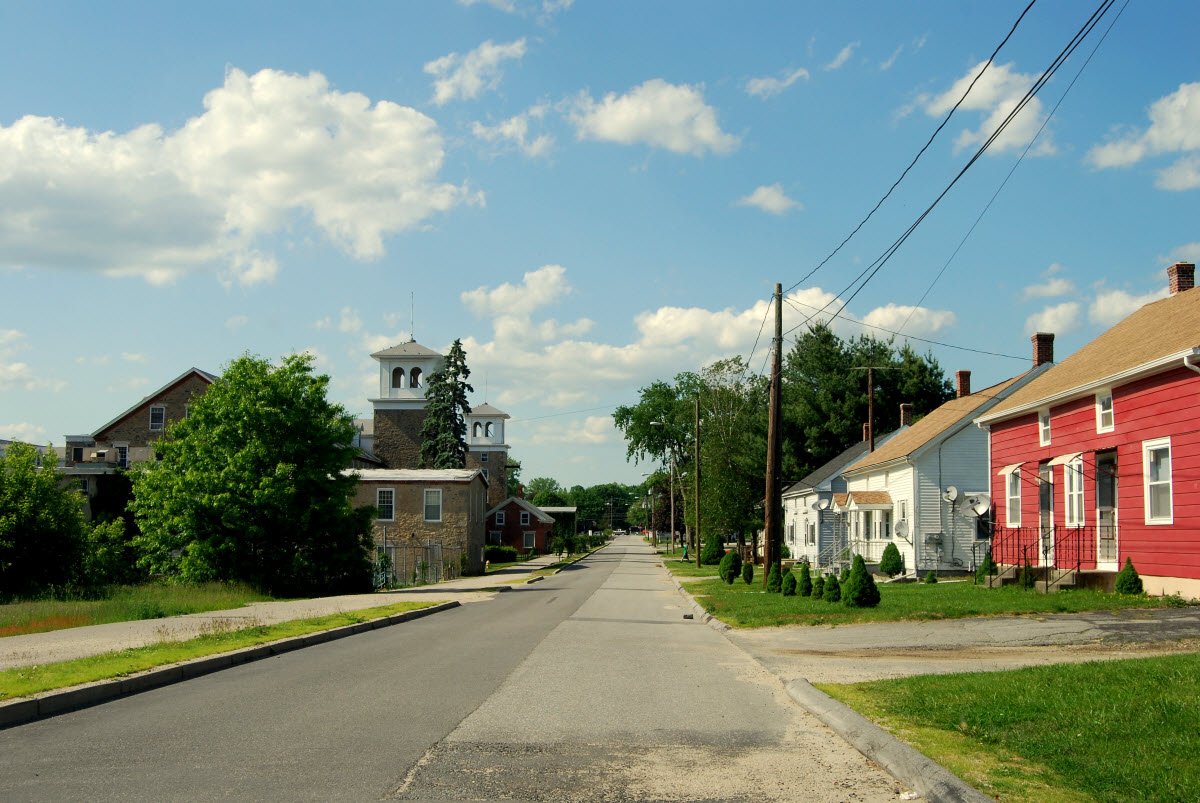
Located in the town of Brooklyn, extending partly into Killingly, the Quinebaug Mill–Quebec Square Historic District is a well-preserved 19th-century mill village. Bounded by the Quinebaug River, Quebec Square, and Elm and S. Main Streets, the district was added to the National Register of Historic Places in 1985.
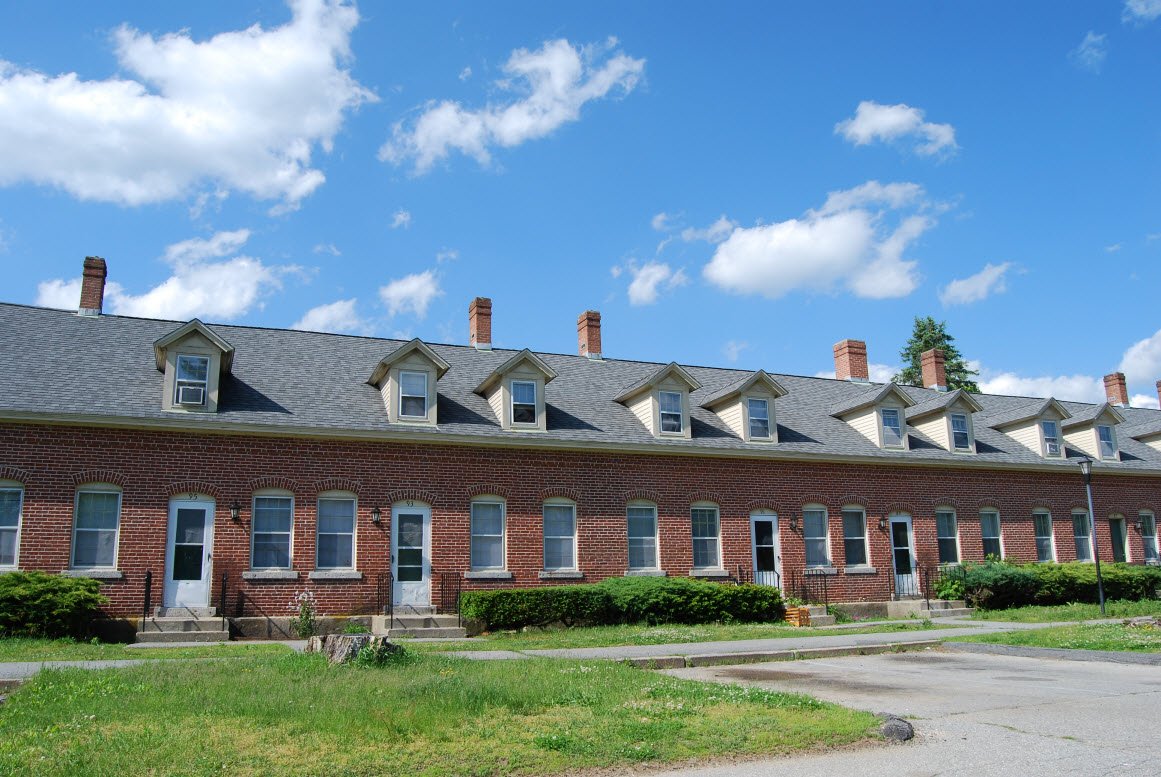
The district is primarily located within East Brooklyn and the village of Quebec. It includes the weave shed built by the Quinebaug Mill Company and the surrounding residential area of Quebec village. The residential portions are characterized by rows of brick mill worker housing, ranging from long rows of attached units to smaller combinations of two to four units. These buildings reflect architectural styles from the Greek Revival to the Queen Anne.
Amos D. Lockwood began building the Quinebaug Mill in 1851 on the Quinebaug River, near the site of an 1820 Tiffany Mill. By the end of the 19th century, it became one of the largest and most complete cotton mills in Connecticut. While most of the mill was destroyed by fire, the weave shed and the worker houses survived. The housing area, dating back to 1881, was rebuilt as low-cost housing in 1984 and now contains six brick row houses, each with eight apartments, surrounding a green space.
The historic district serves as a well-preserved example of a textile mill village, a type of company town that was common in 19th-century eastern Connecticut.
Sources: Wikipedia, OpenStreetMap, Wikidata, Wikimedia Commons

Written by Friendly Jane
Discuss this with the author and others
No comments yet. Be the first to start the conversation.