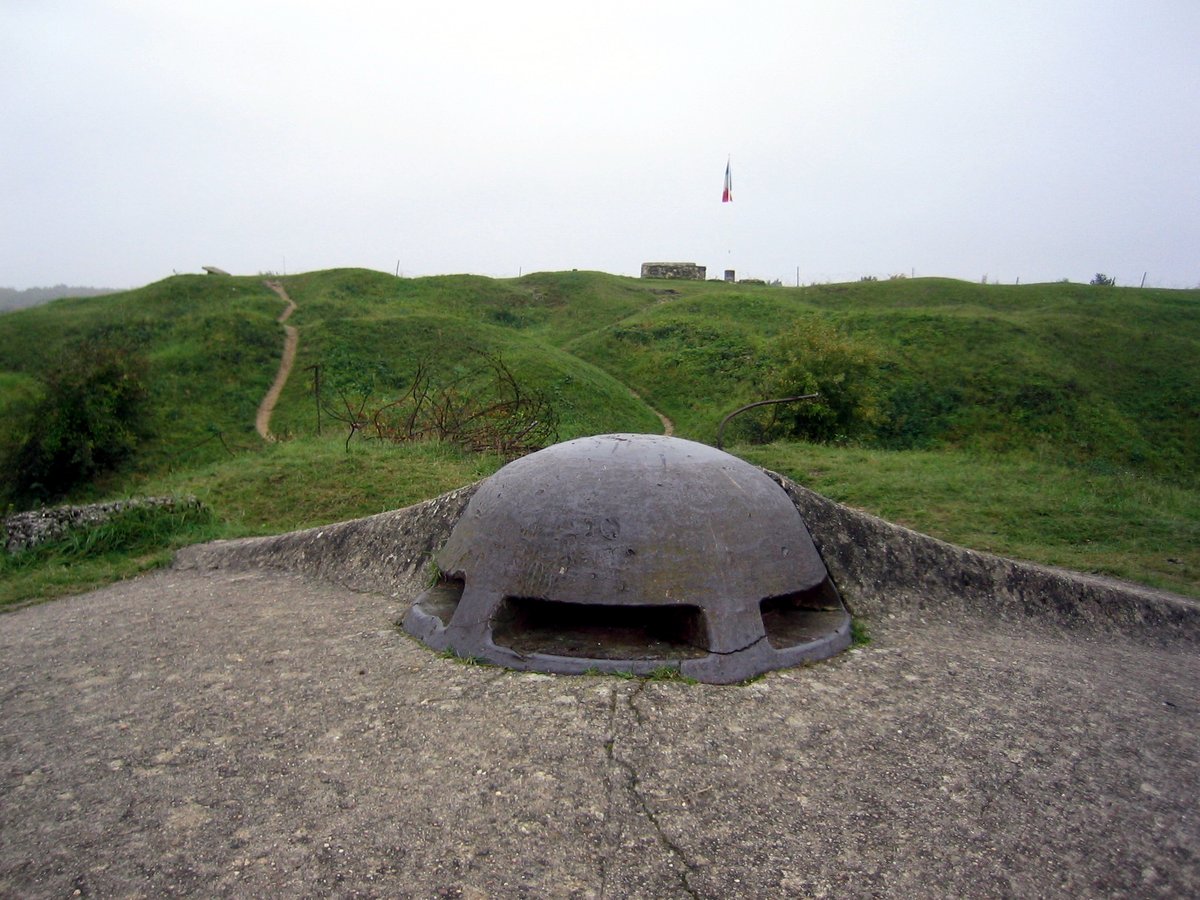

Built between 1881 and 1884 for 1,500,000 francs, Fort de Vaux was a polygonal fort designed to protect the city of Verdun. It was part of a ring of 19 large defensive works and housed a garrison of 150 men. Although its superstructure was damaged by 420-millimetre howitzers, the fort's reinforced concrete protection kept the deep interior corridors and stations intact during the heavy shelling of early 1916.
On 2 June 1916, German Stormtroops attacked the fort. Because the French had already removed their artillery, the garrison was forced to fight from barricades inside the corridors. This marked the first big engagement inside a fort during the First World War. Under the command of Major Sylvain-Eugene Raynal, the French soldiers repulsed assaults for several days, fighting with grenades, guns, and bayonets. The garrison eventually surrendered on 7 June after running out of water, ammunition, medical supplies, and food.
After the surrender, Crown Prince Wilhelm presented Raynal with a French officer's sword as a sign of respect for his bravery. The Germans used the fort as a shelter and command post until late October 1916. The French eventually recaptured the fort on 2 November 1916 using two long-range 400 mm railway guns. Following its recapture, the fort was repaired, and several underground galleries were dug, including one stretching 1.5 km in length.
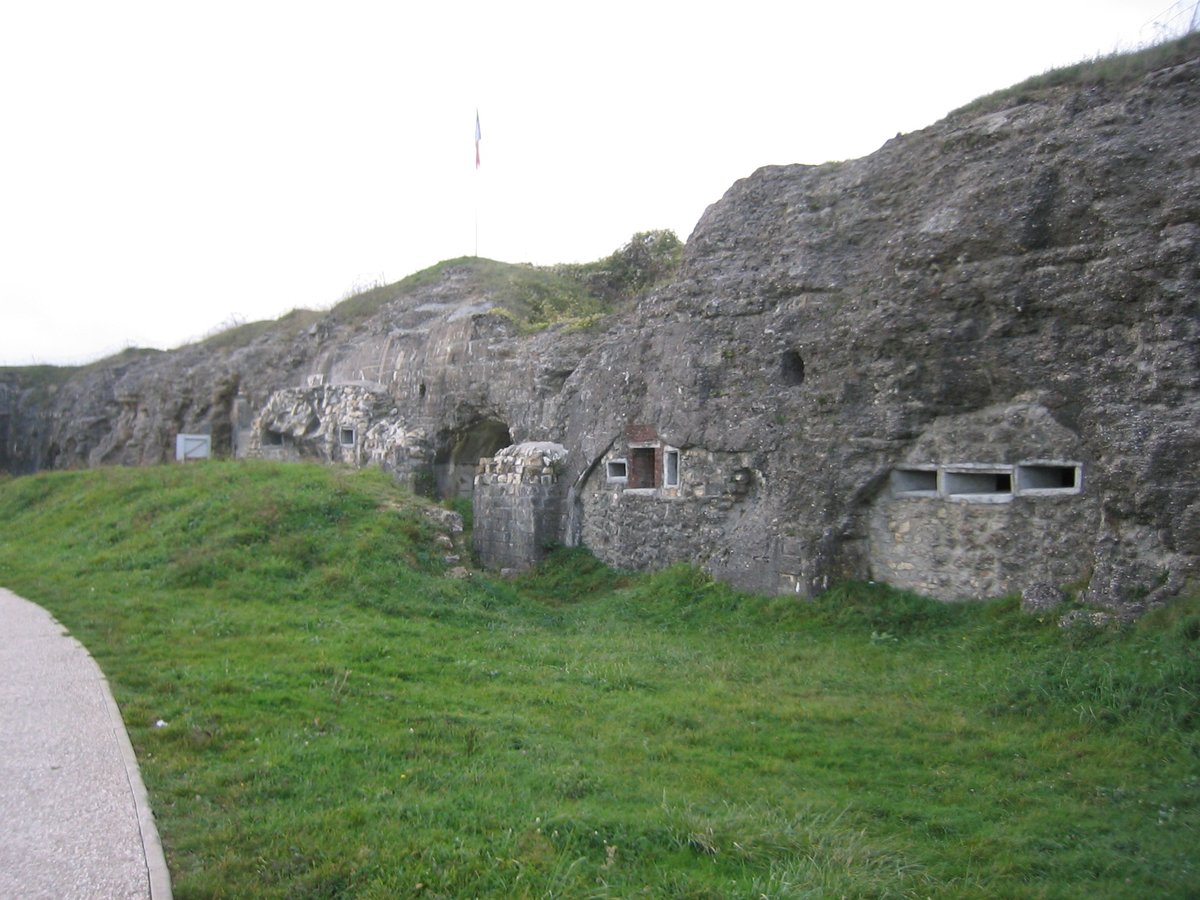
Today, the underground installations of Fort de Vaux are well preserved and open to the public for guided visits. Some damage from the fighting on 2 June can still be seen in the structure.
Sources: Wikipedia, OpenStreetMap, Wikidata, Wikimedia Commons
Written by Nicolo Ciampini
Discuss this with the author and others
No comments yet. Be the first to start the conversation.