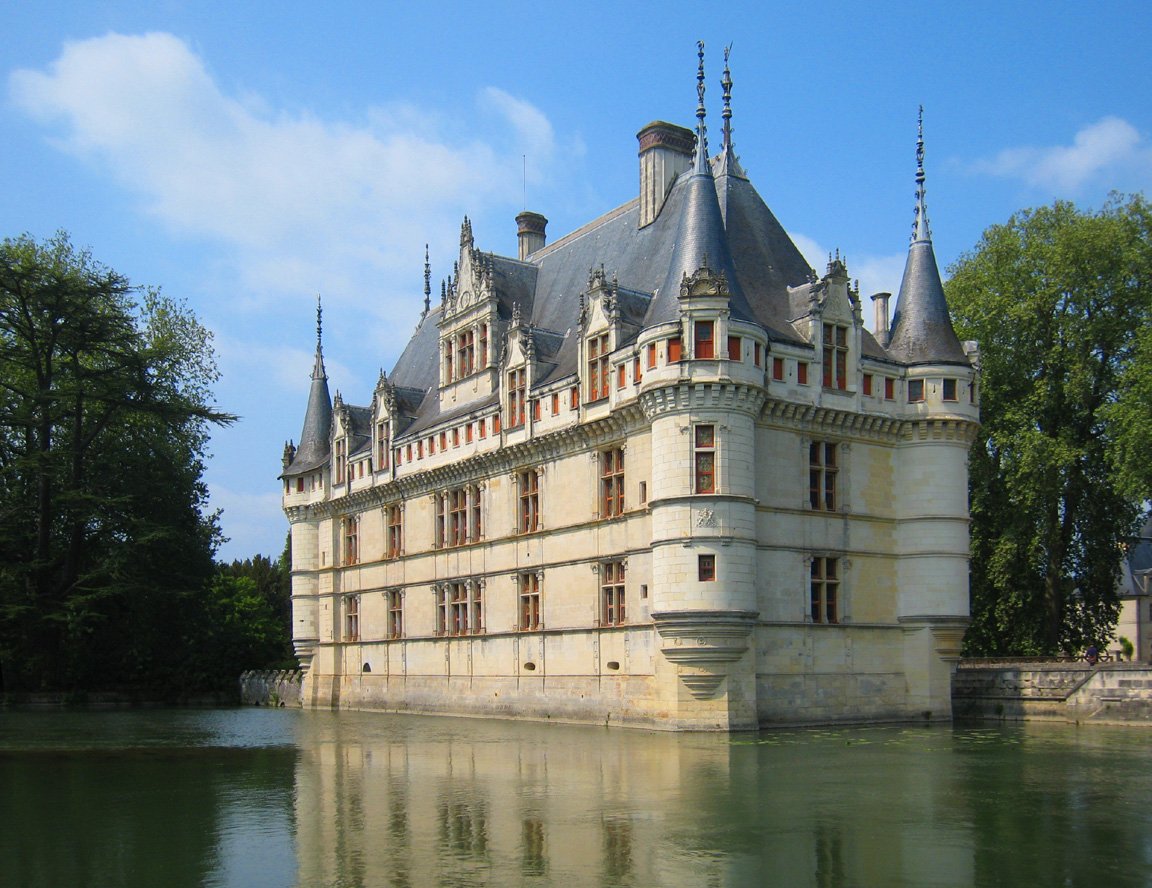

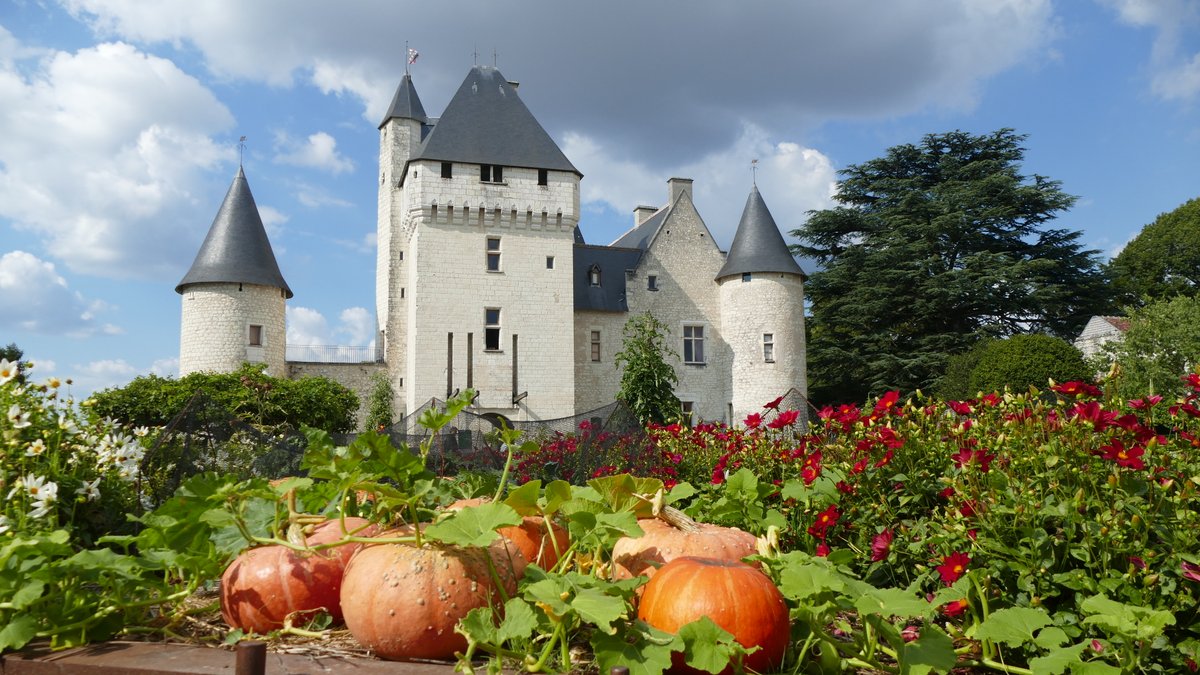
Château d’Azay-le-Rideau, situated on an island in the Indre river, exemplifies early French Renaissance architecture. Initially built as a medieval castle in the 12th century, it was destroyed during the Hundred Years' War. In 1518, Gilles Berthelot acquired the land and orchestrated the construction of a palace to symbolize his affluence and stature. The castle served both residential and defensive purposes and was started under Berthelot’s wife, Philippa Lesbahy, facing challenges in laying solid foundations and transporting stone from the Saint-Aignan quarry.
When Berthelot left the country following Jacques de Beaune’s execution in 1527, the unfinished château was confiscated by Francis I and given to Antoine Raffin. Raffin undertook only minor renovations, and so the building works remained incomplete, with only the south and west wings of the planned quadrilateral ever being built. This left the château with the distinctive, but accidental, L-shape it retains to this day.
During the Franco-Prussian War, the château served as the headquarters for Prussian troops. After a chandelier fell from the ceiling onto the table where their leader, Prince Friedrich Karl of Prussia, was dining, he suspected an assassination attempt and ordered his soldiers to set fire to the building. Only his officers' assurances that the lamp had dropped by accident persuaded him to stay his hand, saving the château from a second burning.
Sources: Wikipedia, OpenStreetMap, Wikidata, Wikimedia Commons
Written by Nicolo Ciampini
Discuss this with the author and others
No comments yet. Be the first to start the conversation.